Considering the deep and manifold flaws (to put it charitably) of his political opponents in the United States, President Donald Trump’s coronavirus diagnosis and his precautionary hospitalization at Walter Reed Medical Center after displaying what are, so far, mild symptoms, highlight the need to develop among the citizenry a living sense of the immortal mission of each human individual to advance his or her own creative powers of reason to better understand the universe and its potential, and to act to create a future that will increasingly foster and bring forth the power of reason of all human beings.
When Franklin Roosevelt died, there was a fundamental cultural, intellectual, and moral weakness in the country that allowed for the tragedies that followed: the militarily unnecessary nuclear bombing of Hiroshima and Nagasaki and the Cold War. When the Berlin Wall fell in 1989, far-seeing leaders who grasped the potential for what could be — leaders such as economist Lyndon LaRouche, Deutsche Bank chairman Alfred Herrhausen, and Treuhand manager Detlev Rohwedder — were imprisoned or assassinated, and a great chance was lost.
How can humanity be inoculated against the recurrence of such tragedies?
Neither events nor facts are self-evident entities in themselves. A person’s behavior is a response not only to their immediate surroundings but also a product of their worldview, historical experiences, and intentions. Similarly, the interpretation of current historical events hinges on an understanding of the dynamic field in which they occur.
Take the case of the rapid worsening of U.S.-China relations: Pompeo’s worldwide crusade to form an anti-China alliance, increasing U.S. military and diplomatic arrangements with Taiwan, and a growing bipartisan effort to score points in the November election by attacking the P.R.C., which on Thursday celebrated the 71st birthday of its founding. Following the British-Obama-run coup in Russian neighbor Ukraine, years of Russiagate madness following Trump’s 2016 victory, attempts to scuttle the Nord Stream 2 pipeline, and now the absurd claims of the poisoning of Alexei Navalny by a supposedly-extremely-deadly-while-repeatedly-ineffective Novichok compound, Russian relations are at their lowest post-Communist level, both with respect to the U.S. and the EU.
President Vladimir Putin’s proposal for a meeting of the leaders of the permanent five members of the UN Security Council can succeed at charting a new course to overcome these tensions, whose deliberate creation must be identified.
These growing tensions are the result of the oligarchical outlook of the British Empire, which seeks a unipolar “rules-based” financial order enforced by U.S. might (overseen by British experts, of course) and which cannot tolerate the existence of competing, independent powers on the globe. Consider this gameplan in a 2019 RAND report, totally coherent with the U.S. National Security Strategy’s designation of Russia and China as “strategic rivals,” which calls for destabilizing Russia: “We examine a range of nonviolent measures that could exploit Russia’s actual vulnerabilities and anxieties as a way of stressing Russia’s military and economy … these steps are conceived of as elements in a campaign designed to unbalance the adversary, leading Russia to compete in domains or regions where the United States has a competitive advantage, and causing Russia to overextend itself militarily or economically or causing the regime to lose domestic and/or international prestige and influence.”
Consider also Chief of the British Defense Staff Gen. Nick Carter’s Sept. 30 speech on “Integrated Operation Concept 2025,” in which he called for a blurring of lines between war-fighting and operating: “Competing involves a campaign posture that includes continuous operating on our terms and in places of our choosing. It will also require actions to be communicated in ways that may test the traditional limits of statecraft.”
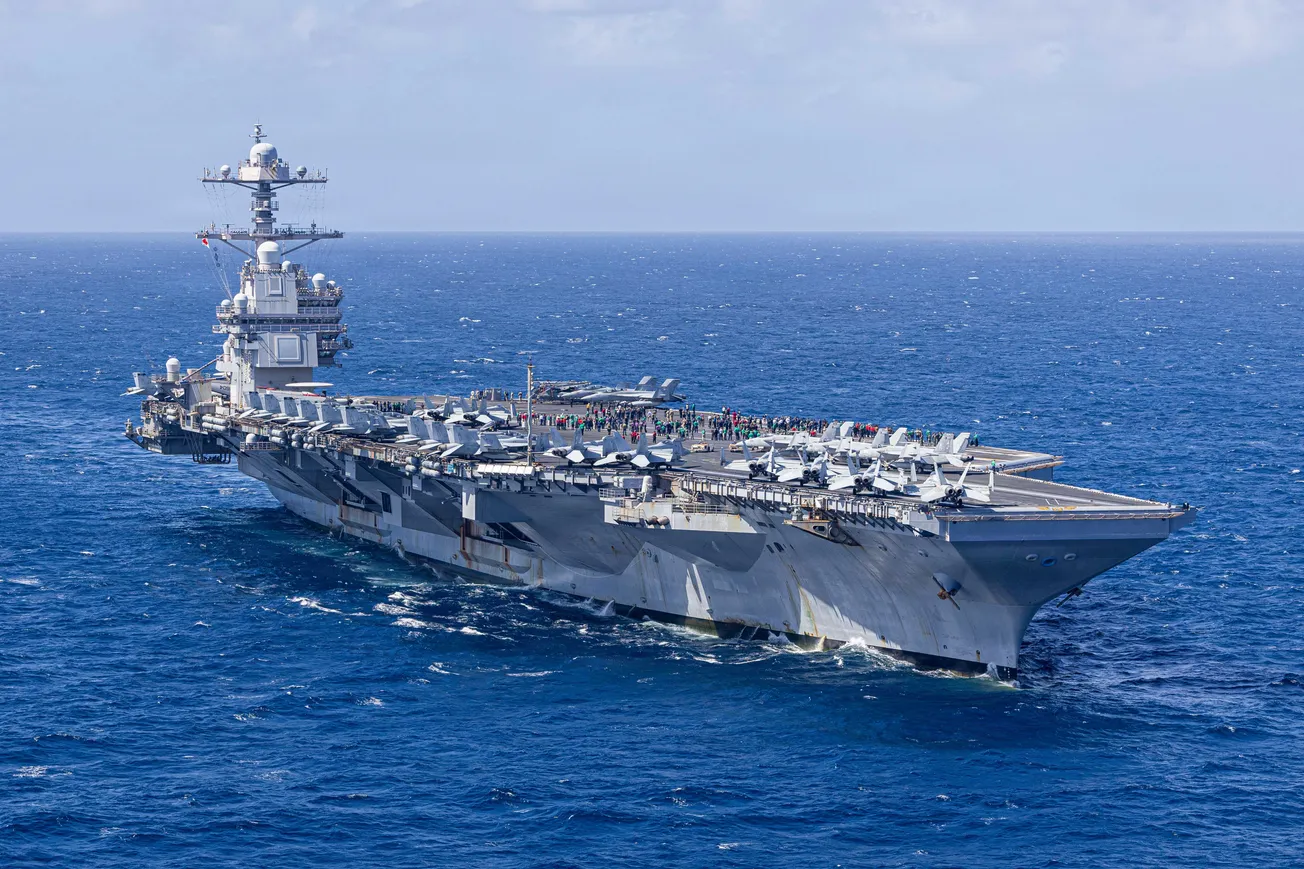
Ongoing U.S. military operations near the borders of China and Russia, operations not infrequently joined by such NATO countries as the U.K. and including the upcoming deployment of fully one-third of the fleet of U.S. fifth-generation fighter jets to Alaska, raise the possibility of war by miscalculation and are themselves a form of attritional warfare, of operating.
It is because of President Trump’s potential to buck this trans-Atlantic British-dominated establishment, his sensible desire to establish good relations with Russia and China, and his intent to build up industry and infrastructure, that he has been subjected to an outrageous onslaught, an unceasing string of attacks. Lyndon LaRouche and his movement came under similar political and legal bombardment due to the potential for his leadership to take hold in the United States and in the world. Tracing this never-Trump / get-LaRouche apparatus to its filthy origins reveals the London-centered successors of the Venetian system of empire who view the U.S. Constitution and the institution of the U.S. Presidency as the single greatest obstacle to their complete dominion over a greatly reduced and dumbed down global population of human cattle.
How can this apparatus be defeated? Clearly, exposing the apparatus itself is required, including the means by which it has shaped the thinking even of those who think they oppose it. How many supporters of President Trump adhere to monetarist views of economics, geopolitical views of Russia or China, or a cultural outlook oriented towards entertainment rather than deep reflection?
Potentially great leaders must be supported, but what sort of thoughtful leadership must exist among and be provided by the citizenry more broadly? Will you devote yourself to qualifying to become such a leader?
LaRouche movement leader Phil Rubinstein — whose life will be celebrated on Sunday at 2pm Eastern — expressed the point in Los Angeles in 2013, speaking at a Schiller Institute conference: “What makes us human is creativity. Everything else is less than human. So we have to live by what makes us what we are. The creative power of every human being is to our benefit. Therefore we wish to give people the opportunity to be creative, to develop their powers, to contribute to the future. This is our only immortality.… You know that you won’t be around forever, as an individual person, but the species has a possibility of being immortal — not a given, but we’re a species that changes, that controls our environment, that discovers principles. And therefore we could do what no animal can do. We could be an immortal species. And your real purpose in life … is to take the joy and pleasure of knowing that you fought and contributed to that future. And in a sense, that’s how you see something that is immeasurable in time.”