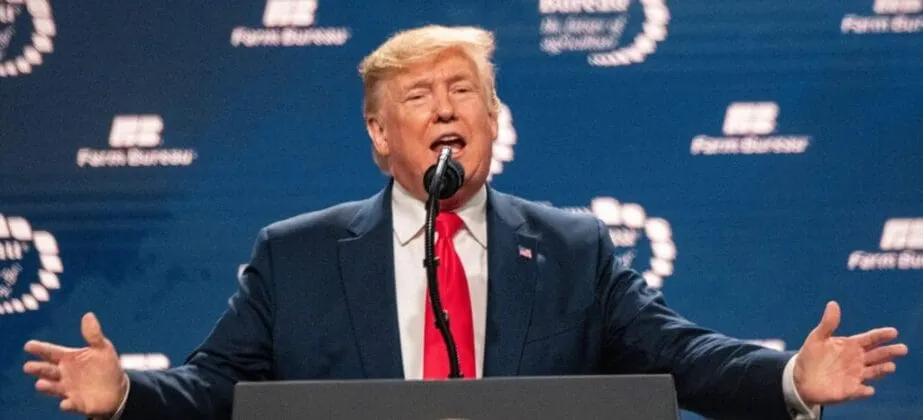
The reason that nearly every single poll about the likely outcome of the U.S. elections failed miserably, has very little to do with “shy” Trump voters who don’t like to speak to pollsters. In part, the major polls intentionally understated Trump’s level of support, as part of what President Donald Trump has characterized as “suppression polls.” And it also has to do with the fact that, in times of systemic crisis like today, people’s past behavior has very little predictive power over what they will do in the future – regardless of what those people themselves may think.
Lyndon LaRouche frequently discussed how such mass strike processes work. In normal times, most people will tend to behave predictably, because their existing institutions are still at least partially functional, and so they are not inclined to kick over the apple-cart. In times of a breakdown crisis, when all institutions are failing or have collapsed outright – such as today – they are seized by an anti-Establishment mood that produces behavior that is not a simple linear extension of the past, nor are they so easily manipulated by the mass media as they had been in the past. LaRouche immediately identified this phenomenon in Trump’s 2016 electoral victory, and emphasized that it was an international process that was underway – not a national one. LaRouche was proven right by the Brexit vote in the U.K., the Italian elections, the Yellow Shirts in France, the Mexican landslide for López Obrador, and so on. What happened in the U.S. on Nov. 3, 2020 is an extension, and deepening, of that ongoing international process.