The Elections Integrity Act of 2021 was voted up in Georgia (House 100-75; Senate 34-20) and signed into law on March 25, to address abuses that occurred in the 2020 election cycle. The legislation and the vote are the first in what is to be expected similar actions throughout state legislatures. There is a massive kickback against it, alleging “voter suppression” from those who exploited the pandemic to loosen standards of voting—in particular, whether an absentee ballot was received from an actual registered voter.
The act, which claims to make it “easy to vote and hard to cheat,” requires a valid photo ID for voting and restricts bulk requests for absentee ballots. Voting hours are expanded, to include two Saturdays, along with the option for counties to include two Sundays. The state will participate in a “multistate voter registration system” so as to deal with people trying to vote in more than one state. Also, “no election superintendents or boards of registrars shall accept private funding"—a major problem in the Democratic effort in 2020. Finally, the Secretary of State is not allowed to make side-deals, as was done with Senator Warnock’s voting rights group in April 2020, to change the voting procedures.
The issue is actually pretty simple. Voting in person allows for checking a photo against the live person and the opportunity for asking a confirming question, such as the address which the person had provided upon registering. Absentee voting doesn’t allow for that, and traditionally used to require rigorous identification procedures to prevent fraud. When more absentee voting was expected during the pandemic, an opening was created to have non-voters vote, without the actions of state legislatures. Now state legislatures have to provide for methods both for more absentee voting and for maintaining the integrity of the votes.
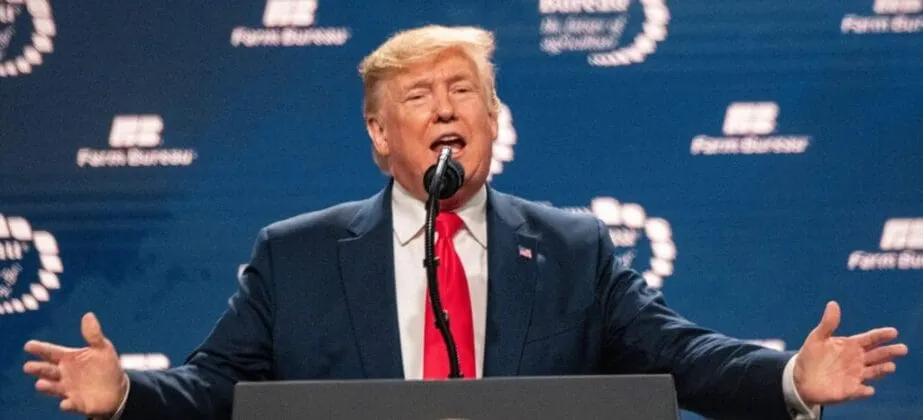
President Joe Biden attacked the act as “pernicious,” and “atrocity,” and a throwback to “Jim Crow” days, singling out the barbarity of not allowing food and water to be provided to people standing in line to vote. In fact, the legislation makes explicit provision for election officials for “making available self-service water from an unattended receptacle to an elector waiting in line to vote.” However, it reads: “The sanctity of the precinct was also brought into sharp focus in 2020, with many groups approaching electors while they waited in line. Protecting electors from improper interference, political pressure, or intimidation while waiting in line to vote is of paramount importance"—so the 2020 skirting of long-established regulations against campaigning in the voting area, by groups approaching voters under various pretexts, was explicitly disallowed.
The clown show escalated when a self-described “queer,” Georgia State Rep.Park Cannon attempted to disrupt the governor’s live signing ceremony of the act. Lt. W. Mark Riley, spokesman for the Georgia State Patrol, said in a statement last night that Cannon was warned to stop knocking on the door because the area reserved was for the governor’s staff: “She was advised that she was disturbing what was going on inside and if she did not stop, she would be placed under arrest. Rep. Cannon stepped back for a moment and then stepped back up to the door and started knocking on the door again.” She was arrested and then posted bail. Of course, the affair was staged for a video, with loud protestations against the police.
Cannon is a parishioner in Senator Warnock’s church and the youngest member of the legislature. She graduated from UNC Chapel Hill in 2016 with a degree in linguistics, and a minor in women’s and gender studies. When she became a state legislator in 2016, she was one of only three openly gay legislators in Georgia. But as her openly gay colleague Karla Drenner put it: “The difference is that she identifies with the word ‘queer.’ I think that generated some discussion because a lot of members have no clue what ‘Q’ means.” (And, for that matter, Cannon is referred to by “she” here, as it makes us uncomfortable to refer to her as “queer” or “the queer.") Cannon, the linguistics grad, calls it an inclusive descriptor, covering gay, lesbian, asexual, intersex and transgender—but not limited to those. Cannon was a “David Bohnett LGBTQ Victory Institute Leadership Fellow” at a Kennedy School of Government program in 2018 for “Senior Executives in State and Local Government.” Cannon attacked “Jim Crow” actions in her first actions as a legislator. When Georgia’s 2016 “Free Exercise Protection Act” (allowing clergy to refuse to marry someone on the basis of religious belief, but also allowing bakeries to refuse on religious grounds not to bake a sexually vulgar cake) passed, Cannon declaimed the act’s passage: “We have not restricted rights for people since Jim Crow.” The restriction, that one cannot force a bakery to decorate your cake with vulgar images, is to be compared with the Jim Crowism of the 1890s? It makes a mockery of the lynchings — but the assault on voting standards is a step away from such mockery.”
https://www.legis.ga.gov/api/legislation/document/20212022/201121