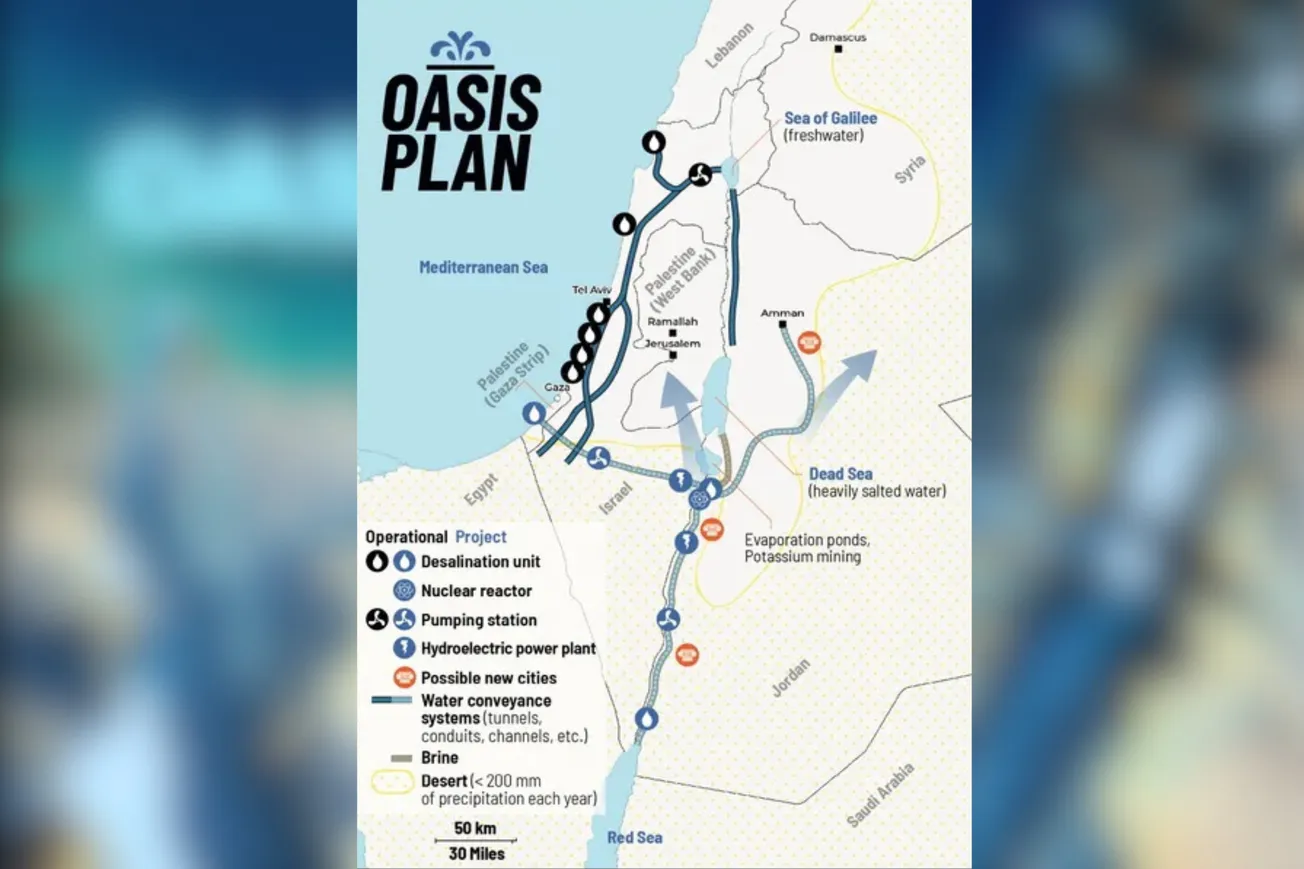
The international Schiller Institute conference, “Man Is Not a Wolf to Man: For a New Paradigm in International Relations!” beginning Saturday, July 12, at 9 am CET (4 am EDT, available for viewing later), and also Sunday, July 13, features a speaker’s roster of 34 presentations over the two days of four panels and a concert, representing 10 nations. The opening panel, titled, “Cooperation Between the BRICS and Europe To Implement the Oasis Plan and the Agenda 2063 for Africa,” specifically addresses development and the necessity for dialogue and diplomacy.
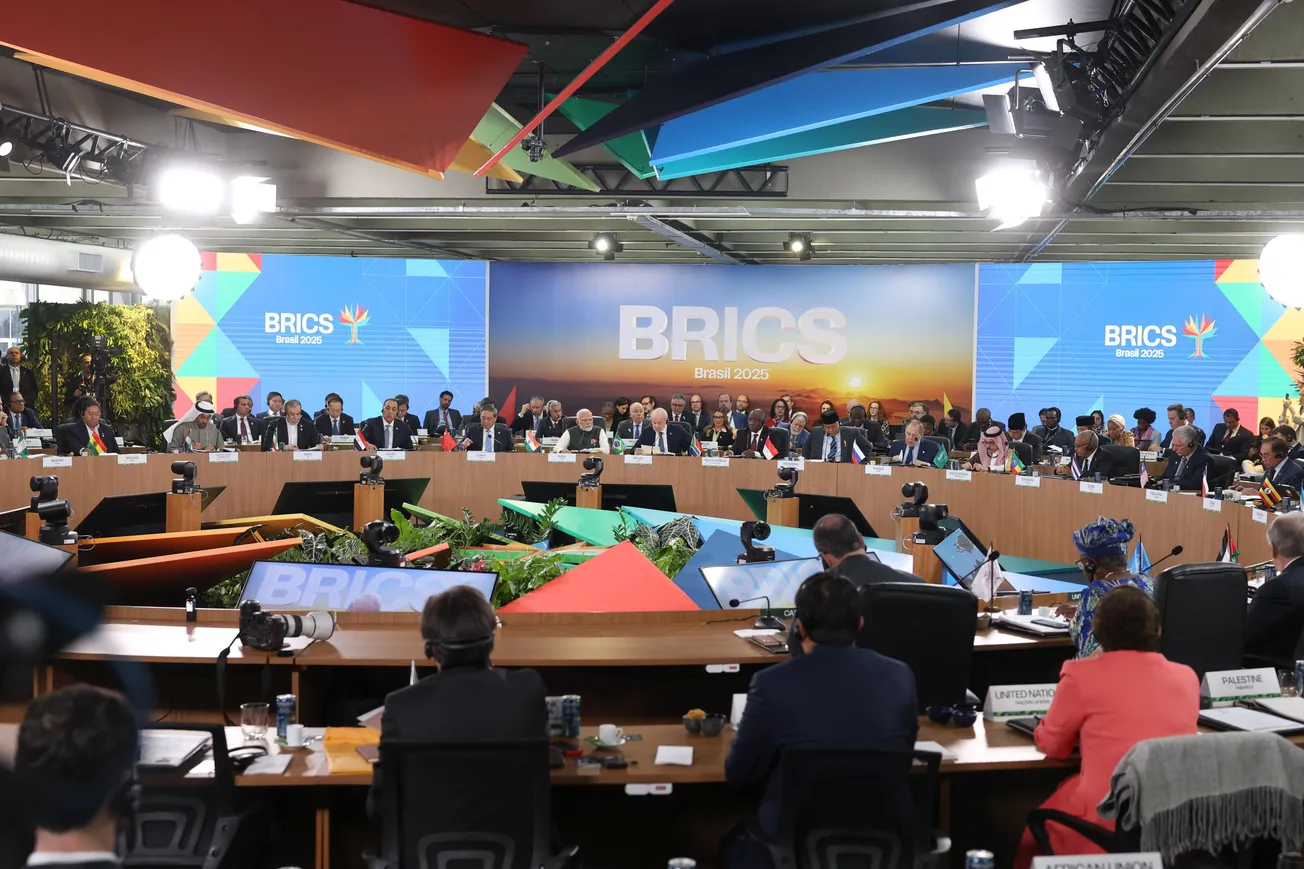
This kind of dialogue is a moral, human approach to solving problems—especially addressing ending the immediate crises of genocide in Gaza, and the continuing conflicts in Ukraine and Southwest Asia. The approach was embodied in the BRICS Summit just a week ago in Brazil, where, likewise, economic development was on the agenda. Leaders representing the eleven BRICS member nations, plus nine partner nations, and guest nations and groups, put forward both long-term goals for their combined populations, and “rescue” protocols for current world turmoil conditions.
Look at some of the immediate follow-on to the formal closing of the BRICS Summit. Brazil and China signed on to work together on the Bioceanic Railway from the Atlantic to the Pacific Ocean, across Brazil into Peru, to open a new corridor of continental development and to benefit international trade. The heads of state of India and Indonesia—the first and fourth most populous nations in the world, had official visits with BRICS host leader, President Luiz Inácio Lula da Silva. Indonesian President Prabowo Subianto and Lula yesterday signed an accord for a nutrition program for school lunches across all of Indonesia, to reach 89 million people within two years. Prabowo has as his national priority food self-sufficiency and security, and intends for Indonesia to be rice self-sufficient by 2027.
These kinds of concrete developments are the backdrop to President Donald Trump’s outburst against Brazil last night, in a display of retro-British East India Company behavior, when Trump announced he would impose a 50% tariff on Brazil as of Aug. 1 unless Brazilian authorities obey Trump’s demand to drop what he called the “witch-hunt” against former President Jair Bolsonaro. (Bolsonaro is under legal proceedings for the charge of an attempted coup d’état against Lula, seen in the violent Jan. 8, 2023 riot in the capital of Brasilia, orchestrated by Bolsonaro’s followers.)
There is no pretense of economics “logic” to the 50% tariff threat by the U.S. President. The U.S. had a trade surplus with Brazil of $7.5 billion in 2024. Nor are there grounds for the usual inference that Trump is just acting tough in order to eventually “make a deal.”
President Trump’s “Bolsonaro tariff” lies in the realm of sanctions and economic geopolitics. The world and history look on at this threat as not only expressing venality, but idiocy in economics. For example, Brazil is the second-largest supplier of steel to the U.S., on which the U.S. depends, because there are no measures underway to increase U.S. steel production. Brazil sends beef to the U.S., which the U.S. does not need and American ranchers have long wanted to end. But JBS, headquartered in Brazil—the world’s biggest and baddest meat processor—was the biggest contributor to Trump’s inauguration, at $5 million. JBS was just approved for the New York Stock Exchange.
Don’t look for logic in the new “Bolsonaro tariff,” which follows on President Trump lashing out—pleasing London—at the BRICS earlier this week. Brazilian President Lula da Silva has responded strongly to Trump. “Brazil is a sovereign country with independent institutions that will not accept being lectured by anyone.” On economic threats, Lula stated, “any measure to raise tariffs unilaterally will be responded to through the Brazilian Economic Reciprocity Law.” He said that the values that guide Brazil’s relationships with the world are, “sovereignty, respect, and the uncompromising defense of the interests of the Brazilian people.”
One other occurrence today, of special note, is that U.S. Secretary of State Marco Rubio and Russian Foreign Minister Sergey Lavrov met in person in Kuala Lumpur, where they are attending the ASEAN regional ministers conference. While details remain to be reported, the fact of continuing diplomatic contact is useful, with talks described by the Russian side as “substantive.” Rubio said to the media, “We had an opportunity to discuss some things, and I thought it was important and good that we talked.”
Plan to join the side of humanity right now, by attending this weekend’s conference. The weekly International Peace Coalition for Friday, July 11—the 110th consecutive meeting—will be incorporated into the conference. IPC founder Helga Zepp-LaRouche, leader of the Schiller Institute, will give the keynote to the opening panel of the conference.
IPC Coordinator Anastasia Battle, from the U.S., has been in Berlin for many days, as part of a “John Quincy Adams Brigade” comprised of young volunteers from the U.S., Mexico, and Canada, to muster activation in Europe against the war party and economic breakdown, and for a new world framework. She said in an EIR interview today:
“I’ve been telling everyone that I meet that this is going to be an incredibly important peace conference. We’re bringing people from all over the world. We have people from Africa, from South America, from the United States, from Germany, from Southwest Asia, all of whom are flying in to hold this dialogue with the population, and ask themselves why we can’t create a new security and development architecture. Why we need to create that now and to inspire the population of the world to make that happen. This is coming off of a very important conference that we held just a month ago in the United States of a similar theme. That’s why we’re here.”