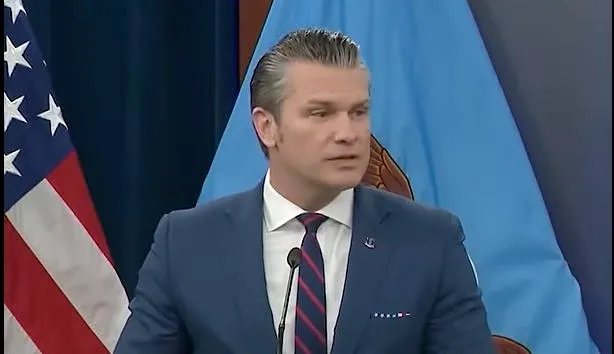
The Trump Administration is working, through both the State and Defense Departments, to reorient the formal alliances with both South Korea and Australia towards war with China over Taiwan. The change is being driven, in large part, by Undersecretary of Defense for Policy Elbridge Colby.
“The [U.S.-South Korea] Alliance, which we have maintained and developed for over 70 years, must adapt to a changing regional security environment,” the State Department declared on July 24, reported daily newspaper Chosun Ilbo. “The two sides decided to initiate consultations based on a shared understanding of the future direction of the Alliance, including strengthening its capabilities and posture amid an evolving regional security environment.”
Chosun Ilbo further reported that Deputy Secretary of State Christopher Landau urged Seoul, during a vice foreign ministers’ meeting in Tokyo on July 18, to embrace a “future-oriented comprehensive strategic alliance.” Deputy Assistant Secretary for East Asian and Pacific Affairs Kevin Kim reportedly echoed that message during working-level consultations in Seoul earlier this month. According to Chosun Ilbo, U.S. officials increasingly appear to be signaling that in the event of a Taiwan contingency—or a broader U.S.-China confrontation—Seoul must be prepared to play a more active and defined role.
The Trump Administration has identified “deterring a Chinese invasion of Taiwan” as its principal priority. As part of this realignment, Chosun Ilbo notes, the United States is pressing regional allies—including South Korea, Japan, Australia, and the Philippines—not only to increase defense spending, but also to commit more explicitly to supporting the U.S. position in a potential crisis with China.
Meanwhile Britain’s HMS Prince of Wales, one of the Royal Navy’s two aircraft carriers is visiting Darwin, Australia in conjunction with a meeting of the U.K. and Australian defense and foreign ministers. This show of force is intended to demonstrate their wholehearted commitment to the AUKUS program to provide Australia with nuclear attack submarines, “a trilateral initiative with the U.S. aimed at warding off China’s growing influence,” reported Politico. While the summit between British and Australian ministers is an annual occurrence, there is little doubt it is being used to reassure the U.S. at a particularly sensitive time when Undersecretary Colby is questioning the AUKUS deal with a review, Politico says. An Australian diplomat, granted anonymity to discuss sensitive matters, said that “how to handle [the implications of the Colby review of AUKUS] will definitely be discussed.”
Colby is mainly concerned about how the Australians will use the submarines that the U.S. is to provide under the AUKUS deal. He wants Australia to commit ahead of time to joining a U.S. war against China over Taiwan, a demand that top Australian officials, including Prime Minister Anthony Albanese, have already rejected.