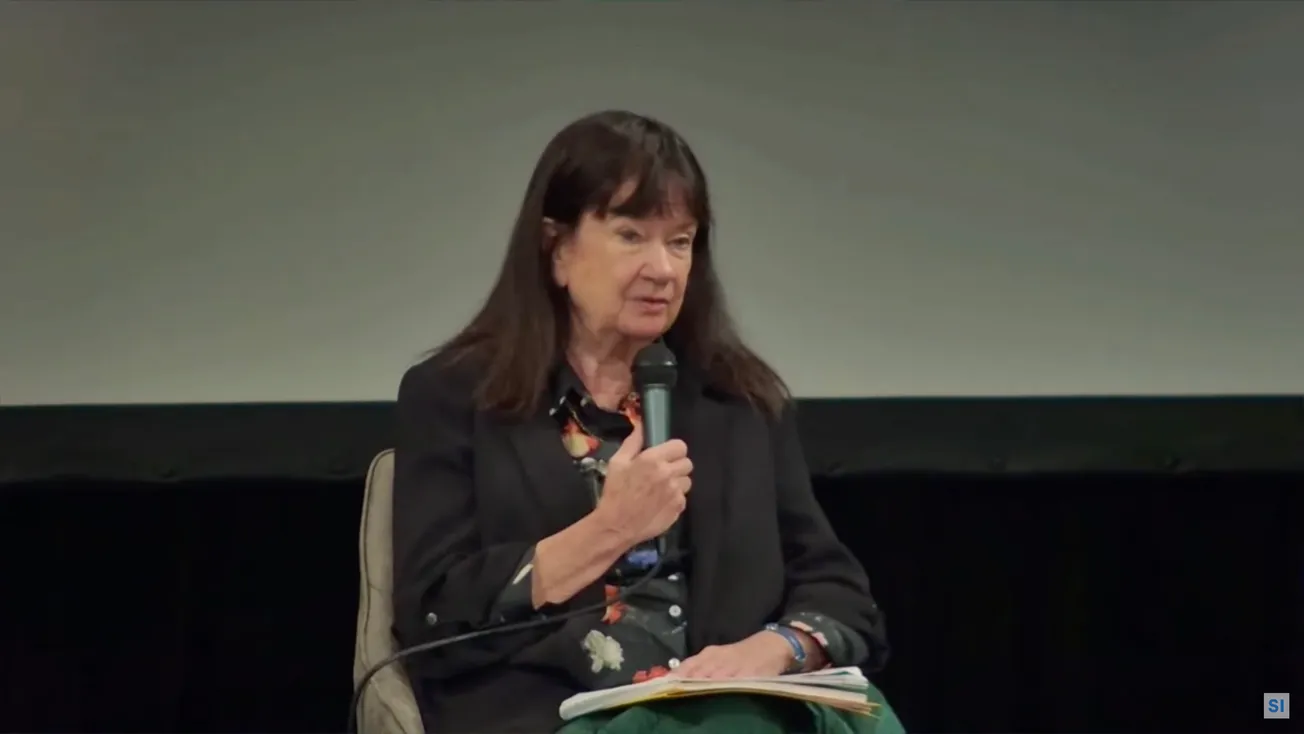
On July 12, hundreds of people—peace activists, former government and military officials, economists, students, musicians, teachers, and concerned citizens from many continents—gathered in Berlin, Germany, with many more hundreds from around the world participating online, for day one of the Schiller Institute conference, “Man Is Not a Wolf to Man: For a New Paradigm in International Relations!” In her keynote speech to that conference, Schiller Institute founder Helga Zepp-LaRouche outlined both the historic process that has brought us to this point of crisis and the necessary solutions, placing both within the context Friedrich Schiller’s concept of the punctum saliens in history:
“We have gathered here because we want to show a way out of a highly threatening strategic situation and counteract widespread pessimism—indeed, fatalism. It is indeed possible to intervene in history, provided one has a good plan and can mobilize sufficient forces to implement it! I would therefore like to preface our conference with this quote from Friedrich Schiller’s work on The History of the Revolt of the Netherlands:
“‘Great and comforting is the thought that, despite the defiant presumptions of princely power, there is still a remedy available, that their most calculated plans will be brought to shame by human freedom, that hearty resistance can bend even the outstretched arm of a despot, that heroic perseverance can finally exhaust his terrible resources.’ Let us give a ‘new and irrefutable example of what people can dare to do for a good cause and what they can achieve through unity.’
“To do this, however, we must first wake our contemporaries from their apparent sleepwalking, into which they seem to have fallen, especially here in Germany. The world has never been closer to a point of no return, to a potential end point in history where the final catastrophe of a global nuclear war becomes inevitable.
“In many of his works, Friedrich Schiller used the term punctum saliens, which in drama and history describes the moment when everything starts moving inexorably. In his Fourth Letter on Don Carlos, he writes: ‘Every action has its punctum saliens, where it leaps from possibility into reality.’ In relation to history, we can pinpoint these points of no return—when, for example, it was too late to prevent World War I or World War II. In relation to the immediate future, however, manifold uncertainties cloud this insight—when it becomes certain that a third, and this time final, global war, this time a nuclear war, will break out, it will be too late. Humanity, and with it our history, will be wiped out.”
Coming just days after the July 6-7 BRICS summit Brazil, at which representatives of the majority of humankind gathered to discuss and make agreements for win-win cooperation for security and development and to move the world out of the neocolonial era, the Schiller Institute conference is a part of the same historic process and is an indispensable part of that dialogue. During the first panel, “Cooperation between the BRICS and Europe To Implement the Oasis Plan and the Agenda 2063 for Africa,” Zepp-LaRouche announced a forthcoming Schiller Institute report, prepared in cooperation with the Chinese Academy of Contemporary China and World Studies, on “how Europe, together with China and other BRICS countries, can support the countries of Africa and Southwest Asia in particular through joint ventures in this development. We have initially focused on the three key countries, Germany, France, and Italy, with the other countries to follow, in order to show that such cooperation not only helps Africa and the Middle East, but that these joint ventures can also become the driving force for overcoming the deep economic crisis in which Europe’s economy currently finds itself. Instead of pouring trillions of euros into rearmament, which destroys productive capacity from the point of view of the real economy, we should join forces with China to invest in areas that have always been at the forefront of successful industrialization.”
Such concrete alternatives to the current disastrous direction of policy in the West must gain such overwhelming support that we can “bend even the outstretched arm of a despot” before it is too late.
It is not hard to imagine where the world will certainly end up otherwise. A ceasefire deal in Gaza has not materialized, despite Trump’s promises and despite ongoing negotiations in Doha. Some speculate, not without cause, that Israel is stalling the negotiations in order to continue the war of extermination. On the Ukraine situation, Trump announced in an interview on July 10 that the U.S. would be selling weapons to NATO to be given to Ukraine, a seemingly reversed attitude from the announcement on July 2 that the U.S. would not be delivering weapons packages promised by the Biden administration.
Whatever individual actors may think they’re doing, the logical destination of the prevailing system is a war of nuclear annihilation. The Schiller Institute conference presents a living image of a different kind of system and a different kind of future, based on the fundamental principle that human beings are the creative species and can break free of the Hobbesian trap of a war of each against all. Humanity does not need an enemy image.
View the proceedings of day one of the conference, and tune in on Sunday, July 13, for day two. Take from that the inspiration, strength, and knowledge to organize your fellow citizens in this crucial historic moment; you, and the rest of humanity, may not have another chance. Take to heart what Zepp-LaRouche said at the conclusion of her remarks: “The punctum saliens is the revolutionary moment in history when we realize our humanity.”