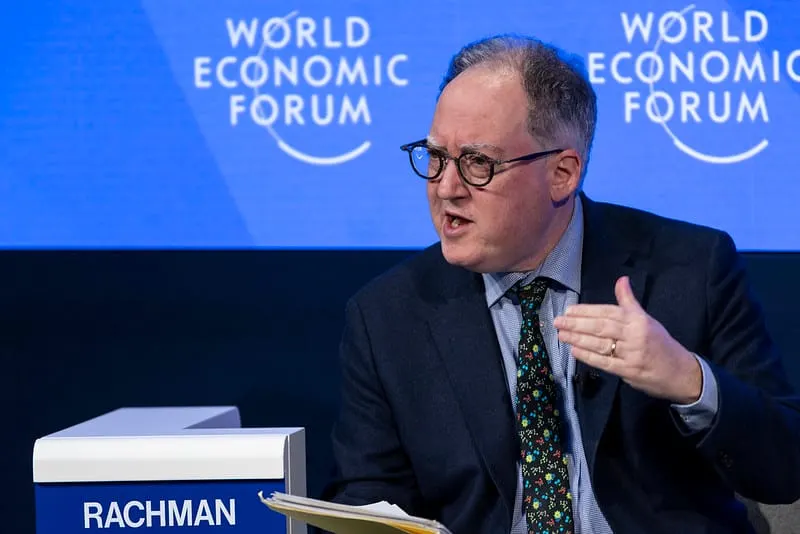
Both the Financial Times Editorial Board and its chief Foreign Policy Commentator Gideon Rachman weighed in on Aug. 11 on current British thinking for how to ensure that their ongoing global war against Russia does not get derailed or ended at the Aug. 15 Alaska summit.
They recognize that their position has weakened. The Editorial Board admits that “European hopes … proved fleeting” that Trump was going to impose wild new economic sanctions against Russia last Friday, Aug. 8, when he instead “handed the Kremlin a gift,” by inviting the Russian President, an International Criminal Court-indictee “who should be a pariah,” to meet him in Alaska, no less. Rachman labels the Alaska summit a modern-day “Munich,” since V. Zelenskyy is not invited.
Now the issue is how to “avoid a deeper disaster in Alaska.” The Editorial Board insists (once again) that the only acceptable outcome is “an unconditional ceasefire that freezes the conflict … leav[ing] other crucial issues—the future of Russian-occupied territory, Ukraine’s armed forces, security guarantees from its partners—to be agreed later.”
That is a policy which Russia has repeatedly rejected as an existential threat, sowing the seeds for yet another war as soon as Ukraine can be rebuilt.