In a feature article, Russia’s Pravda newspaper covers the Bering Strait project, reviewing the history of proposals to link Russia and the U.S. across the strait. While writing that the Anchorage Summit has brought the project back onto the agenda, author Evgeny Fedorov claims that it would take some decades before real construction could begin.
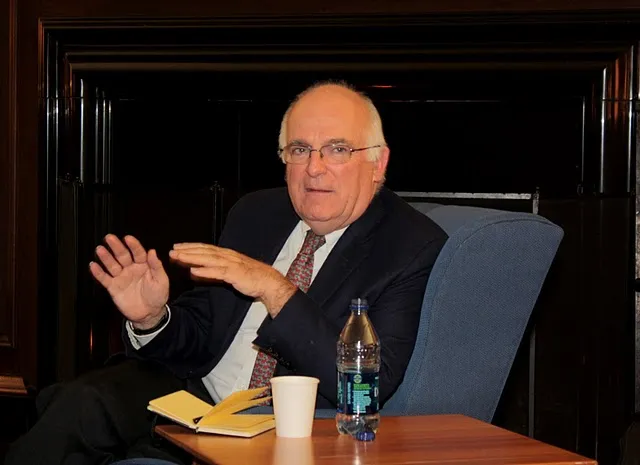
The article cites a “certain Peter Kuznik [sic—Kuznick], a researcher from the American University in Washington,” as having made the following observation: “The visit of the Russian president could mean the beginning of economic cooperation between the two countries. There are a lot of rare earth minerals in the Arctic. We could organize a joint project to develop them. Also discussed was the tunnel through the Bering Strait, which is being discussed both here and in Russia. This is a major high-speed railway project connecting Eurasia and the United States.”
The article mostly dwells on the different, unrealized historic proposals for a crossing, including one made by Czar Nicholas II in 1905. Earlier there had been a proposal in the 19th century by Colorado Governor William Gilpin, who wrote an entire treatise, “The Cosmopolitan Railway: Compacting and Fusing Together All the World’s Continents.”
In the 20th century, Pyotr Borisov proposed in 1950 to block the Bering Strait with a dam, with rail and road connections. It was aimed at changing the climate of the entire Arctic. He was followed by the Chinese-American Tung-Yen Lin, a civil engineer famous for his work in the field of pre-stressed concrete. In 1958, he proposed the “Intercontinental Peace Bridge,” and in 1986 he handed U.S. President Ronald Reagan a detailed plan for its construction.
Missing in Fedorov’s article is a review of the proposals earlier in this century by both Russians and Americans. Nor did he mention that a feasibility study has already been drafted.
Despite the author’s pessimistic conclusion that such a project won’t happen anytime soon, it nonetheless reflects the growing discussion around major areas of possible U.S.-Russian collaboration—even those of continental-scale.