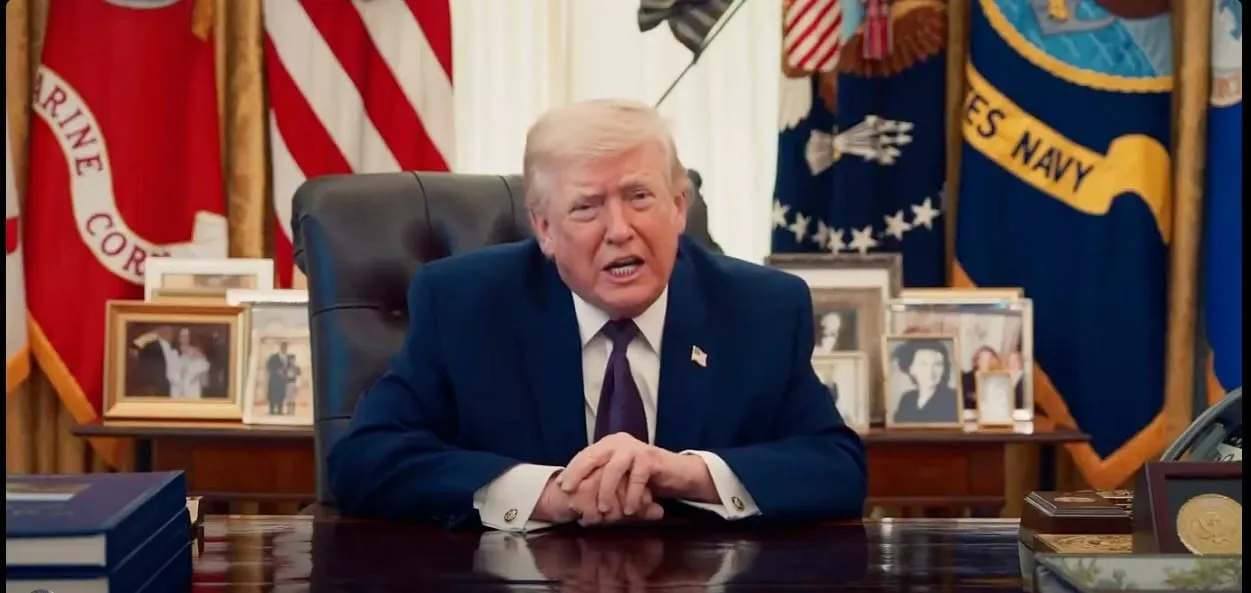
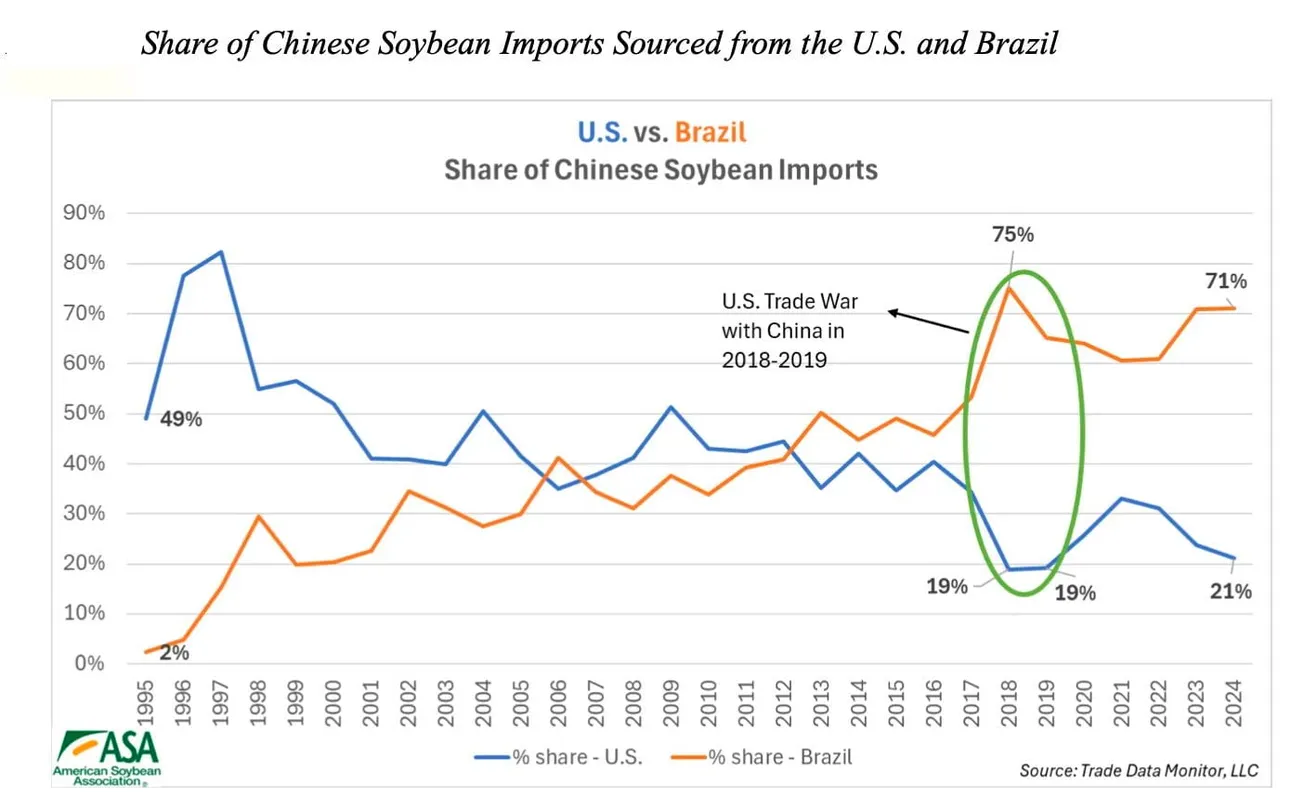
The American Soybean Association (ASA), the farmer group representing some 500,000 growers, on Aug. 19 sent a letter directly to President Donald Trump from ASA President Caleb Ragland, a farmer in Kentucky, asking for the Trump Administration to talk to China to “reach a deal that includes the removal of China’s retaliatory duties and, if possible, significant purchase commitments” of U.S. soybeans. The U.S. farmers’ appeal is occasioned by the fact that China, in the context of U.S. trade and military belligerence, has simply placed no orders at all for the new soybean marketing period starting in September, after being the foremost importer of U.S. soybeans for decades. China bought 54% of U.S. soybean exports in the 2023-2024 trade year.
The ASA letter opens with the dire statement, “U.S. soybean farmers are standing at a trade and financial precipice.”
The significance of the farmers’ forthright appeal goes beyond even relieving the grim circumstances of the growers, whose productive capacity represents 28% of annual world soybean production, to the general point that the world needs President Donald Trump and China’s President Xi Jinping to confer on economic and security matters, and get on the track of mutually beneficial arrangements of all kinds, especially food.
Sept. 3, the commemoration of Victory in World War II in China, is an historic opportunity for such a meeting of leaders. Russian President Vladimir Putin will attend ceremonies in Beijing, and India’s Prime Minister Narendra Modi will be there. Starting to work out a new paradigm of production and trade internationally—the Global North with the Global South—can end the last half-century of economic dictatorship of the agro-financial-complex of transnationals connected to the City of London and Wall Street.
ASA President Ragland’s letter states, “China has not purchased any U.S. soybeans for the months ahead as we quickly approach harvest. The further into the autumn we get without reaching an agreement with China on soybeans, the worse the impacts will be on U.S. soybean farmers.