

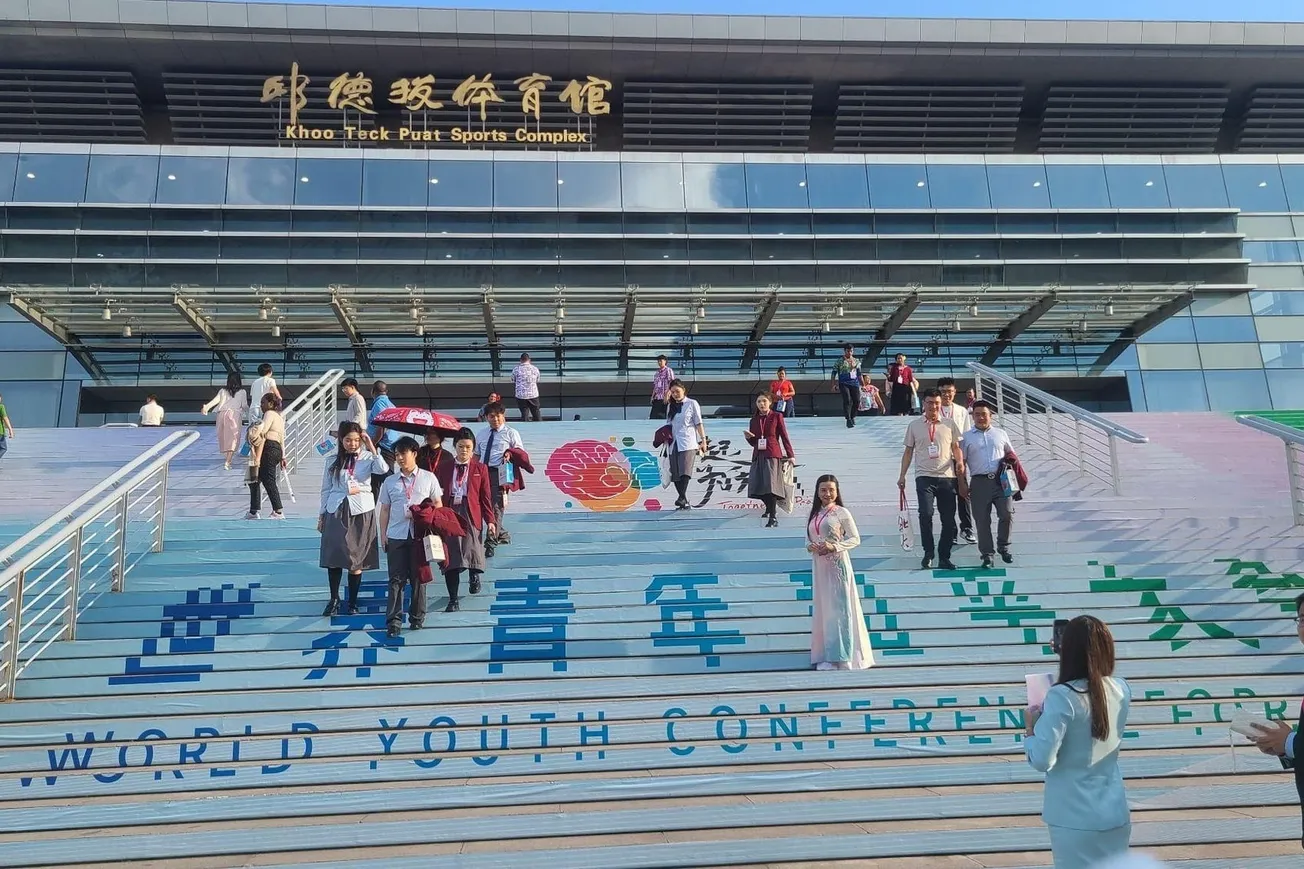
Over 3,000 young adults from 130 countries descended on Peking University in Beijing on July 29 for a World Youth Conference. Titled “Together For Peace,” the event was a tremendous show of solidarity in demanding a policy of peace today. In the face of the gravest strategic crisis in modern history, where nuclear superpowers are tiptoeing around direct military confrontation and the United States is defending an unfolding genocide in Gaza, the organizers of this event succeeded in creating a platform for leading younger voices from around the world to express their demand that a new, more peaceful world must be brought into existence that respects the interests of each and all. Hosted by the All-China Youth Forum and the Chinese People’s Association for Friendship with Foreign Countries (CPAFFC), the event also showed the unique and leading role China is playing, not only in defense of a peaceful foreign policy, but in the creation of a new global architecture based on peaceful development for all.
The conference began with the reading of a special message from Chinese President Xi Jinping, delivered by a member of the Political Bureau of the Communist Party of China (CPC), Li Hongzhong. In his message, Xi stressed that peace is one of the most important challenges facing the world today, and that youth have a key role in bringing it into existence. He encouraged youth to speak out more powerfully to demand that their voices and perspectives be heard, as they represent an enormous force for change. Xi also noted that this year marks the 80th anniversary of the end of World War II, further underscoring why we must ensure war as a means of conflict resolution should be ended for good, and emphasized his oft-stated message that the world should work toward creating a community of a shared future for all humanity. Left unsaid but worth remembering is that China lost as many as 35 million people during World War II to defend its nation.

Officials Li Hongzhong and A Dong, First Secretary of the Standing Committee of the Communist Youth League, followed up on the message from President Xi by further elaborating on the goal of achieving peace. They clearly stated that peace is not simply something that you hope for or talk about, but something that must be created by changing the underlying conditions of relations between peoples and nations. The officials stressed Xi Jinping’s three initiatives—the Global Security Initiative, Global Development Initiative, and Global Civilization Initiative—as tools to transform the current backward thinking and geopolitical conditions worldwide.
A key focus in their remarks was the Chinese leaders’ emphasis on economic development as a necessary aspect of peace. “Development is the cornerstone of peace,” was a phrase heard several times, and later appeared in the declaration announcing the World Youth Peace Initiative. Readers of this magazine will likely recognize in this an echo from Pope John Paul VI’s 1967 encyclical Populorum Progressio where he stated: “Development is the new name for peace”—a theme that has since been championed by Lyndon and Helga LaRouche in their efforts to establish a new, just security and economic architecture. China is increasingly placing this concept at the forefront of organizing for a solution to today’s global crisis.

The event also had a strong emphasis on a “dialogue of civilizations,” and featured many musical performances of traditional or unique musical selections from around the world. In fact, the entire third panel consisted of various offerings of this sort. Of particular significance was a performance of the song “Friendship of Sakura” by a large choir from Japan’s Soka University. The song holds a special history at the heart of peaceful relations between China and Japan which deserves special mention. The founder of Japan’s Soka University, Daisaku Ikeda, made an historic visit to China in 1974 as an early pioneer for establishing official relations with China. While there, Ikeda met with Chinese Premier Zhou Enlai, with whom he struck up a warm friendship, paving the way for Japan’s official diplomatic recognition of China the following year. During his visit, Ikeda invited Zhou to visit Japan when the famous Japanese cherry blossoms, Sakura, would be in bloom the next year. Zhou, however, was too ill and answered that he would not be able to go. Nonetheless, when six Chinese students were admitted to Ikeda’s Soka University for the first time the following year, they held a special tree planting ceremony with Japanese students where they planted a Sakura sapling and named it “Zhou Sakura” after the Chinese Premier. The “Friendship of Sakura” song was composed specifically to memorialize the warm relationship between Zhou Enlai and Dr. Ikeda, and has ever since been a prized song that evokes the spirit of peace and brotherhood between their two peoples.
Youth Leaders Take the Stage
There were too many speeches to all be summarized here, but a few notable ones characterize the caliber of discussion that occurred. Iskanderova Akerke, Chairperson of the Youth Wing of the AMANAT Party in Kazakhstan, called for a “new order” for the world based on balance and humanity. Kazakhstan has played a special role as a bridge of civilizations for thousands of years due to its central location on the ancient Silk Road, she said, and continues to play an important role in this regard today.
Jacobo Garcia, a Spaniard who is President of the Global Youth Leadership Forum, spoke about having just completed a “wonderful” week touring in China and learning about their country’s approach to addressing various problems. During his visit, the connection between economic development, social cohesion, and peace became far clearer, Garcia said, and asserted that the success of China’s growth today is the result of very deliberate decisions taken over the past four decades. This approach is instructive, he said, because it’s imperative that we make correct diagnoses of the problems we are faced with today, and from there propose and execute real solutions to address them—as China has. Garcia especially wanted to highlight the importance of cultivating talent in our respective nations so as to build a basis for the future.
Susana Viales Cubillo, an undergraduate student in Costa Rica participating in a special political leadership program, gave a warm thanks to China for opening its doors to Costa Rica and the rest of the Global South. She noted that her nation, despite being plagued by violence and civil war, decided to disband its military in 1948. Costa Rica thus became the first nation in the world to do so, a decision which has resulted in a more prosperous and peaceful country than many of its neighbors. Inclusive peace requires new approaches that are not simply centered around the Global North, she went on, and multilateral organizations must recognize the diverse needs of the Global South. In this regard, China should be commended, Cubillo said.
To conclude the first panel, the President of CPAFFC Yang Wanming, gave a tour de force speech that truly characterized the spirit of the event. He began by referencing The Diary of Anne Frank, written by a girl who lost her childhood when she was forced to hide in an attic for two years during World War II in order to avoid being found by the Nazis. What happened to Anne Frank is now happening to the children of Gaza, Yang said powerfully, 80 years later. “Will the scourge of war continue to happen, generation after generation?” he asked, and demanded: “The guns of war must stop!”
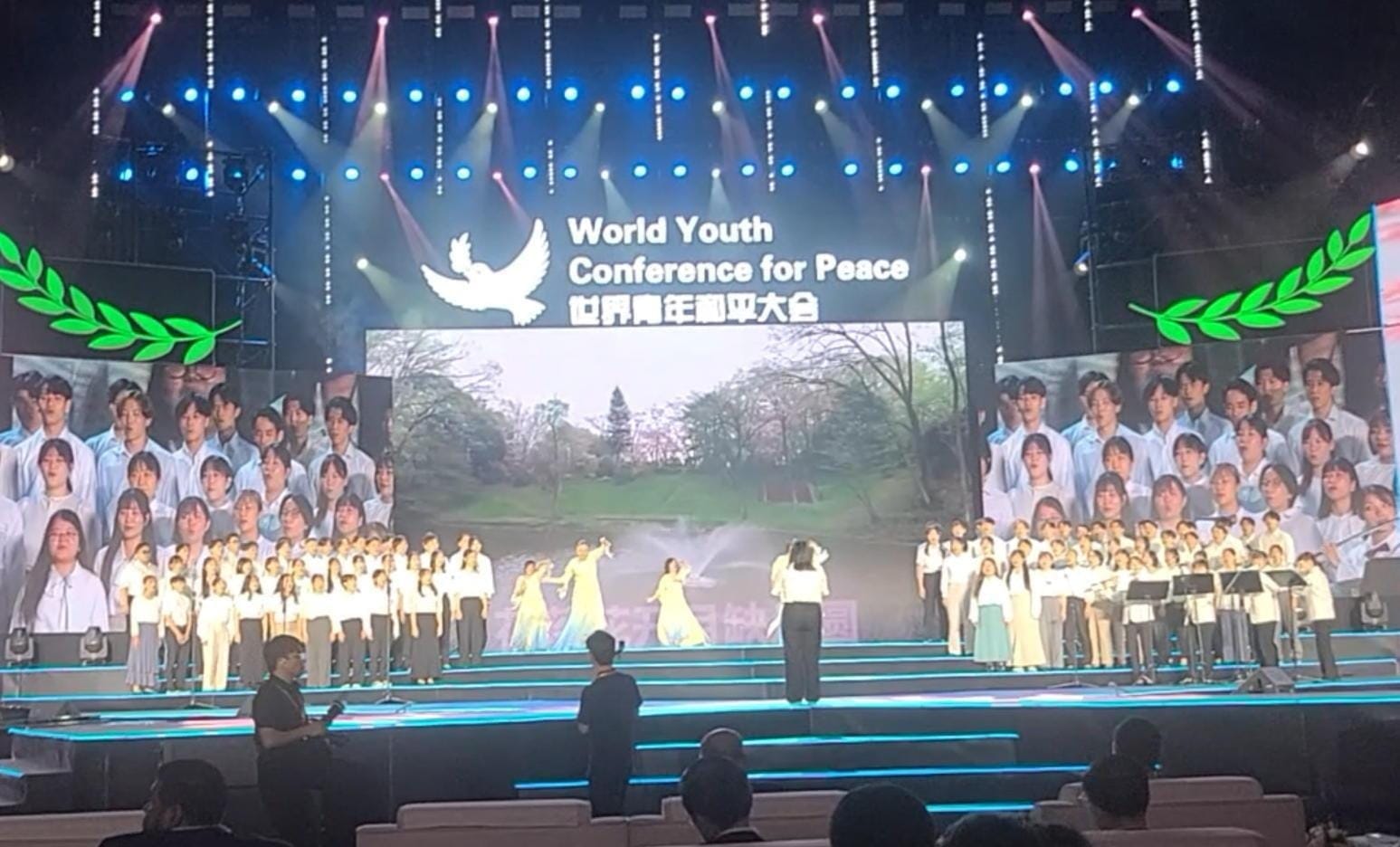
Yang then told the story of the Flying Tigers during the Second World War, the three squadrons of American fighter pilots who waged a highly successful campaign to defend Chinese cities from Japanese bombers at a time when China was particularly vulnerable to Japanese air attacks. China still remembers this sacrifice by their American colleagues, and Yang held it out as one of the shining examples of China-America friendship, even reminding the audience that some of the Flying Tigers expressed this same sentiment up until their final years. He told a final story of a Chinese general during the war, who found two Japanese girls orphaned after the fighting in an occupied Chinese village. Rather than abandoning them, the general decided to care for them and raise them himself. At the end of the war, the general asked a Chinese farmer to deliver them back to Japan, which he did successfully, and the girls survived to live their lives back in their home country. In the 1980’s the CPAFFC reached out to one of the women and invited her to visit Beijing. When she did, she was met by the general who had saved her and her sister, a reunion that was reportedly filled with tears and joy. The woman went on to become the president of the Japan-China Friendship Association, bringing her experience to millions.
At the end of his remarks, Yang announced the creation of the World Youth Peace Initiative, replete with a declaration calling on youth around the world to “unite in safeguarding peace, promoting development, and shaping our shared future.”
Schiller Institute Delegation in Attendance
A delegation from the Schiller Institute was in attendance at the World Youth Conference in Beijing. The two-person delegation, composed of this author and Schiller Institute representative Anastasia Battle, also participated in a smaller summit the day before, July 28, to discuss the issues of peace and AI. Mrs. Battle was one of the speakers on the panel titled “Responsibility of Peace: Collaborative Governance on Misinformation in the AI Era,” where she pointed to the example of the June 12 IAEA report which claimed Iran was not in compliance with its nuclear nonproliferation requirements—a ruling which became the green light for Israel’s strikes on Iran a few days later. It has been reported that the IAEA has implemented Palantir’s “Mosaic” platform for its assessments, an AI program that monitors nuclear-related activities and purports to “predict” future actions by hostile actors, and it was Mosaic that was responsible for the IAEA’s June 12 determination.

“Had a proper dialogue process been in place to facilitate peaceful cooperation and long-term stability, then there would have been no ‘accident’ of assessment,” Battle noted. “The greatest obstacle before us is not simply how to control AI technologies, which as a tool can be very useful for human progress, but how to aesthetically educate our people Friedrich as to what a human thought is in the first place. This uniquely human drive to understand how the universe works is described by Fredrich Schiller as agapic love and by Confucius as ren. This love is not ‘sympathy,’ ‘kindness,’ or ‘acceptance,’ but rather a profound sense of justice that cares for someone else. It is the pathway for someone to actually know the power of their own mind and use it,” she added.
Therefore, Battle went on, fostering this kind of uniquely human thinking among our societies will increase the ability to “understand the universality of mankind” and to hold constructive, peaceful dialogues with others.
Other speakers stressed the importance of overcoming the ignorance of differing cultures and peoples, which are often the root of conflicts and misunderstanding. People must learn about other culturesrepresent and recognize their nation as only one part of a larger, harmonious community of nations. Diversity is not something to be “tolerated,” said one young speaker, but rather something to be learned from and appreciated by others. As Nguyen Pham Duy Trang, Chairperson of the Ho Chi Minh Young Pioneer Organization of Vietnam, said: “Youth are not simply citizens of their countries, but are citizens of the world.”
These few days of youth events and the intervening discussions, which took on a particular significance from the fact that they were held in China, represent a powerful indication of the momentum for a new system which is apace in the world today. A new era is upon the world, and a new security and development architecture, as called for by Helga Zepp-LaRouche, represents an increasingly resonant thought-object for organizing this shift among the forward-thinking layers everywhere.