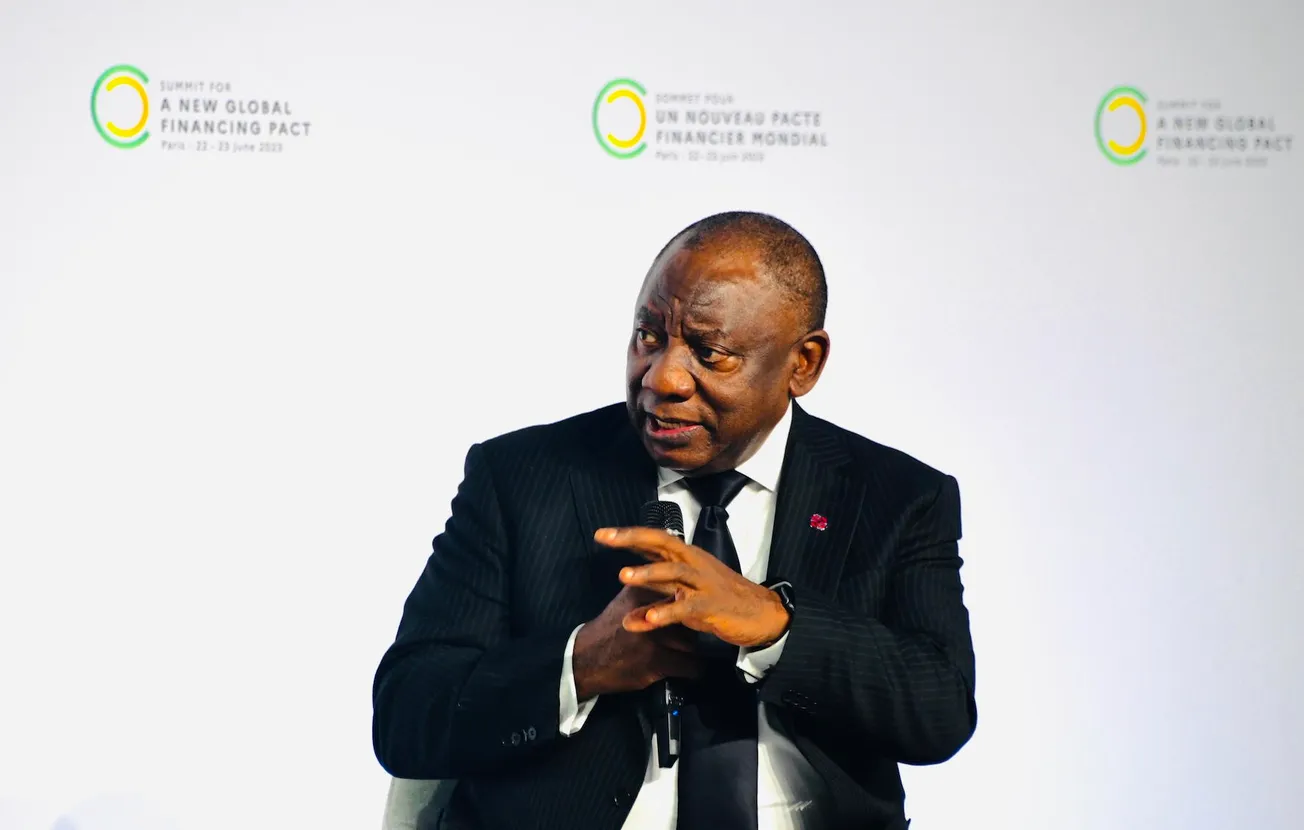
South African President Cyril Ramaphosa, during his address to the Sept. 8 emergency BRICS summit to discuss “tariffs,” but actually broader solutions to ensure development and justice, noted that the world is shifting from the old, dying world order to a new order that the BRICS nations are bringing into being. “We are witnessing seismic shifts in global trade that present both challenges and opportunities in the re-ordering of the global economy. There is a shift from a unipolar to a multipolar world,” President Ramaphosa said.
The Trump tariffs have hurt South Africa, Ramaphosa said, “The uncertainty of the new trading regime has already negatively affected employment levels in my own country, South Africa, and is an obstacle to our economic growth.”
However, as a result, “Our focus is on strengthening and collaboratively diversifying our trade and investment partnerships with Africa, Asia, the Gulf, the Americas and Europe. South Africa’s response is rooted in the promise of an African continent on the rise, a continent that is rich in talent, innovation, in resources and untapped potential. Our vision is of Africa that is the beating heart of global trade, engaging the world not as a mere exporter of raw materials, but as a creator of value, a connector of regions and a catalyst for shared prosperity. We must use our institutions to drive development across Africa and the Global South,” he added.
He remarked on the genocide in Gaza, saying that that is why South Africa supports the call by Brazil for a ceasefire in Gaza, a two-state solution, and self-determination for the Palestinian people.
Indian Minister of External Affairs S. Jaishankar represented Prime Minister Narendra Modi at the meeting. He declared that “the state of the world today … is a cause for genuine concern. The last few years have witnessed the devastating impact of the Covid pandemic, major conflicts in Ukraine and the Middle East/West Asia, volatility in trade and investment flows, [and] extreme climate events….” The world should be made more stable and resilient. “Not just that, it is essential that we democratize manufacturing and production and encourage their growth in different geographies. Progress in that regard will contribute to regional self-sufficiency and relieve anxieties at times of uncertainty,” he stressed.