The Shanghai Cooperation Organization (SCO) “family” added Laos as a new partner member at the latest summit. With ten full members, and the two previous categories of “observers” and “partners” now merged into one and expanded by one, the total number of countries participating in the SCO stands at 27. Its ranks may soon grow: Russian President Vladimir Putin reported in his Sept. 1 speech to the SCO Plus meeting that “more than a dozen other countries” are seeking to join as partners, and each will be given due consideration. “The key criterion is that all prospective partners share the values and principles of the SCO, pursue independent policies, and are committed to jointly addressing pressing global challenges,” he recalled.
Among the 24 documents signed at the SCO meeting were agreements to establish two new permanent institutions focused on crucial security matters: an SCO Anti-Drug Center, which will be established in Dushanbe, Tajikistan, and an “SCO Universal Center for Countering Challenges and Threats to the Security of Members,” which will be headquartered in Tashkent, Uzbekistan, building upon the already-existing SCO Regional Anti-Terrorist Structure (RATS) now based in Moscow. The latter is to include an Information Security Center and a branch in Bishkek, Kyrgyzstan called the “Center for Countering International Organized Crime.”
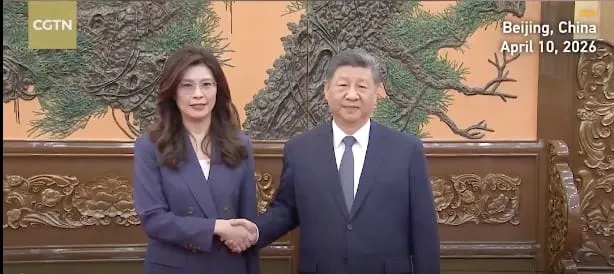
To the SCO’s multifaceted security, economic, political and cultural initiatives and commitments premised on the five principles of the “Shanghai Spirit” of “mutual trust, mutual benefit, equality, consultation, respect for diversity of civilizations, and pursuit of common development” which have guided the SCO through its ups and downs in its 24 years of existence, President Xi Jinping has proposed an additional task: For the SCO to “become a catalyst for the development and reform of the global governance system,” to bring relations among the nations of the world out of geopolitics and into conformity with the principles of “non-alliance, non-confrontation and not targeting any third party.”
He outlined this proposal, which he is calling “the Global Governance Initiative,” in more detail in his speech to the SCO-Plus Summit Sept. 1. The SCO, he proposed, “should set an example in championing the common values of humanity…. Among SCO member states, cultural exchanges are packed with highlights, people-to-people interactions are frequent and robust, and different civilizations radiate their unique splendor. We should continue to promote exchanges and mutual learning among civilizations, and write brilliant chapters of peace, amity and harmony among countries different in history, culture, social system and development stage.”
In his speech to that SCO Plus summit, President Putin gave Russia’s support for Xi’s proposal for a Global Governance Initiative in his Sept. 1 speech to the meeting. Xi Jinping’s proposals “for establishing a more effective and functional system of global governance … are particularly relevant at a time when certain countries continue to pursue dictatorial practices in international affairs. Russia supports President Xi Jinping’s initiative and is eager to engage in a substantive discussion of the proposals presented by our Chinese friends,” he said.