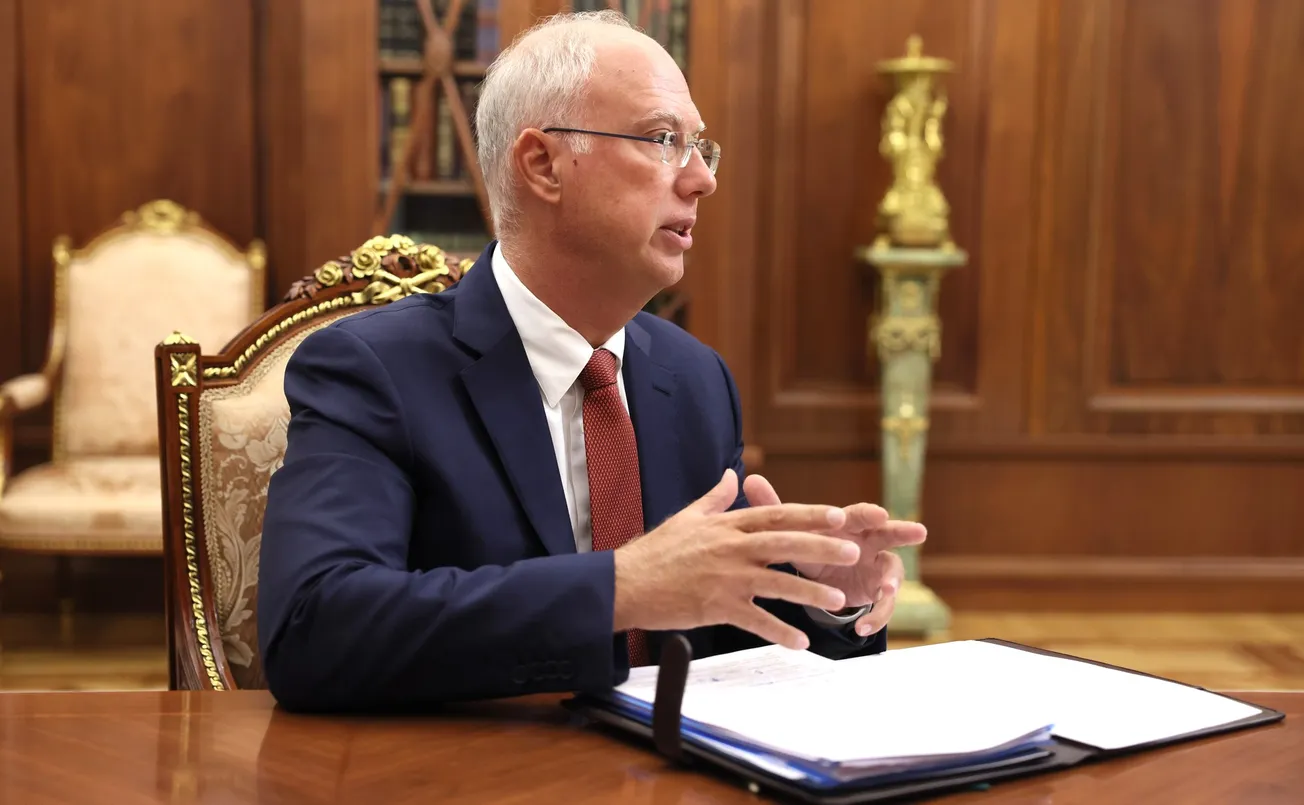
Kremlin Special Envoy Kirill Dmitriev, who played a central role along with his American counterpart Steve Witkoff in laying the groundwork for the Aug. 15 Trump-Putin summit in Anchorage, Alaska, returned to the United States for a meeting with Witkoff in Miami, Florida on Oct. 25. Despite the tension of the last few days, with Trump announcing he was postponing a Budapest meeting with President Vladimir Putin while imposing heavy new sanctions against Russia’s major oil companies, Dmitriev expressed calm optimism in comments to CNN: “I think we are finding those compromises that would work for all of the parties…. [There is] quite a bit of misinformation about what’s going on.… I think we are reasonably close to a diplomatic solution that can be worked out.”
Dmitriev added: “So, the meeting between President Putin and President Trump will happen, but probably at a later date. And I’m sure that these diplomatic efforts will succeed, because it’s much better to have dialogue with Russia than, like President Biden, [who] had no dialogue with Russia, wanted to have strategic defeat of Russia. And obviously that strategy failed.”
Dmitriev made the same point speaking to Fox News last night. “Biden tried to unsuccessfully defeat Russia strategically. His approach of sanction didn’t work. How do you know this? Last year, the Russian economy grew 4%, whereas the European and U.K. economy grew less than 1%,” he added.
“I think the solution is not sanctions, but the solution is dialogue. The solution is really taking Russian security interests into account. And just as President Trump is defending the national interests of the U.S., President Putin is defending the national interests of Russia,” Dmitriev stressed.
According to him, “for Russia, it’s an existential issue not to have NATO be a threat at its borders, and only by listening to Russian position, as [U.S. Special Presidential Envoy] Steve Witkoff has done in the past, can a real solution be found.”
In his CNN interview, Dmitriev returned to his proposal for a joint Russian-American “friendship tunnel” to be built under the Bering Strait (see separate report). Financial Times expressed its total hostility to the idea, reporting that Dmitriev keeps proposing “potentially lucrative joint ventures in mining, the Arctic and even a tunnel under the Bering Strait,” only to argue that this will never work. “But after the new sanctions, Russian business circles have met the push with skepticism. ‘Dmitriev’s efforts are futile,’ one of Russia’s top businessmen told the Financial Times. ‘These projects are of no interest to anyone right now.’”
Dmitriev also told journalists upon his arrival in the U.S. that the U.K. and EU are blocking “many attempts to resolve the conflict,” saying London and Brussels wanted it to continue because “the British economy is in dire straits, and so is the EU’s…. It is important for them to maintain the image of Russia as an enemy. He said Kiev is acting ‘at the request of the British and Europeans who want the conflict to continue.
“‘We see that it is Ukraine that is dragging out the negotiations. It is Ukraine that is not willing to resolve the issues that have accumulated and need solving,’ Dmitriev stated, accusing Kiev of ‘disrupting the dialogue’ at the behest of its Western backers.”