

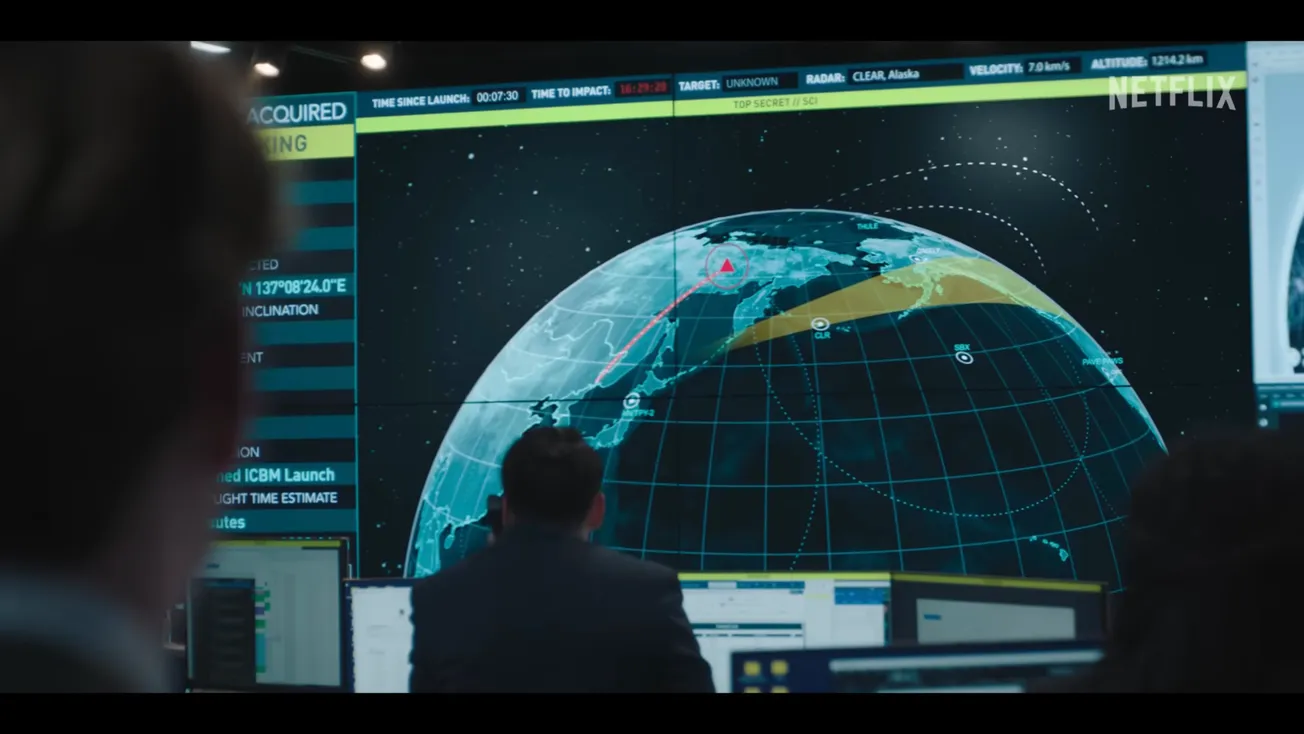
The Pentagon is worried about what people will think of American strategic defenses after seeing the new film “A House of Dynamite.” Bloomberg reported on Oct. 25 that the Missile Defense Agency has circulated an internal memo arguing that the doomsday scenario depicted in the movie is inaccurate. Their Oct. 16 memo, a copy of which was obtained by Bloomberg News, is meant to make sure the agency leadership “has situational awareness and is not ‘surprised’ by the topic, which may come up in conversations or meetings.”
The object of the Missile Defense Agency’s angst is a depiction of U.S. missile defense as ineffective, especially in light of the fact that President Donald Trump wants to spend tens of billions of dollars on missile defense, including with his bid for a “Golden Dome” defensive umbrella. Bloomberg acerbically notes that the document, labeled “Only For Internal MDA and Department of War Use and Is Not Public Releasable,” is dated a day after almost every member of the Pentagon press corps, including Bloomberg News, vacated the building rather than agree to rules that could restrict news gathering of documents such as the MDA assessment. (In other words, Hegseth’s new rules, to prevent the leaking of documents, didn’t prevent the leaking of this document—cjo).
The memo was prepared to “address false assumptions, provide correct facts and a better understanding” of the U.S.’s currently deployed system, it said. While the film “highlights that deterrence can fail, which reinforces the need for an active homeland missile defense system,” its fictional portrayal also underestimates U.S. capabilities, according to the memo. “The fictional interceptors in the movie miss their target and we understand this is intended to be a compelling part of the drama intended for the entertainment of the audience,” but results from real-world testing “tell a vastly different story,” the Pentagon says in the memo. The memo says that the depiction in the film, of U.S. missile defenses having only a 50% success rate, is based on earlier prototypes, and today’s interceptors “have displayed a 100% accuracy rate in testing for more than a decade.”
Bloomberg notes that experts dispute that. Laura Grego, a long-time missile defense critic with the Union of Concerned Scientists, who has seen the film, said the scenario it depicts is the least threatening possible—a single missile on a known trajectory. Military tests have been similarly limited, she said. “A robust defense should anticipate facing multiple incoming ICBMs and credible decoys, and direct attacks on missile defense elements, but none of those were part of the story in this film,” Grego said. “The fictional threat is arguably about as easy as they come.” The Pentagon said, in a statement to Bloomberg News, that it wasn’t consulted for the film, which “does not reflect the views or priorities of this administration.” The system “remains a critical component of our national defense strategy, ensuring the safety and security of the American people and our allies.”
Kathryn Bigelow, the film’s director, said in an interview with “CBS News Sunday Morning” some weeks ago that she deliberately did not consult the Pentagon during production of the film. “I felt that we needed to be more independent,” she told CBS News. “But that being said, we had multiple tech advisers who have worked in the Pentagon. They were with me every day we shot."’ One of those technical advisers was a former commander of the U.S. missile defense installation at Fort Greely, Alaska, retired Lt. Gen Dan Karbler, who told CBS that the scenario depicted in the film of the failed interception of a single inbound missile was “super realistic” and that the actors “totally nailed it.”
Mark Goodman, a former State Department senior scientist who specialized in nuclear policy—nuclear energy, nuclear nonproliferation, and disarmament—for 30 years, called “A House of Dynamite” “a compelling, Rashomon-style dissection of a moment of crisis from three different perspectives.” In a review published in the Bulletin of the Atomic Scientists, Goodman said there are things the film gets right—especially the compressed timeline for the President to make a decision—and there are things it gets wrong. Goodman has problems with the scenario of a single missile being launched at the U.S. and how it’s handled, and asserts that the film gets right the futility of defense, but doesn’t explain why.
Nonetheless, Goodman concludes: “Bigelow’s ‘A House of Dynamite’ is a welcome and useful reminder that the dangers of nuclear weapons not only never went away, but they have been growing in recent years. Hopefully, this renewed attention will stimulate a rethinking of the United States’ nuclear posture so that the danger of possessing and deploying nuclear weapons does not outweigh the threats they are meant to deter.” Such a rethinking will go nowhere, however, if it doesn’t challenge the geopolitics underlying the deployment and posturing of nuclear weapons, or provide a way out of the dilemmas they create.