
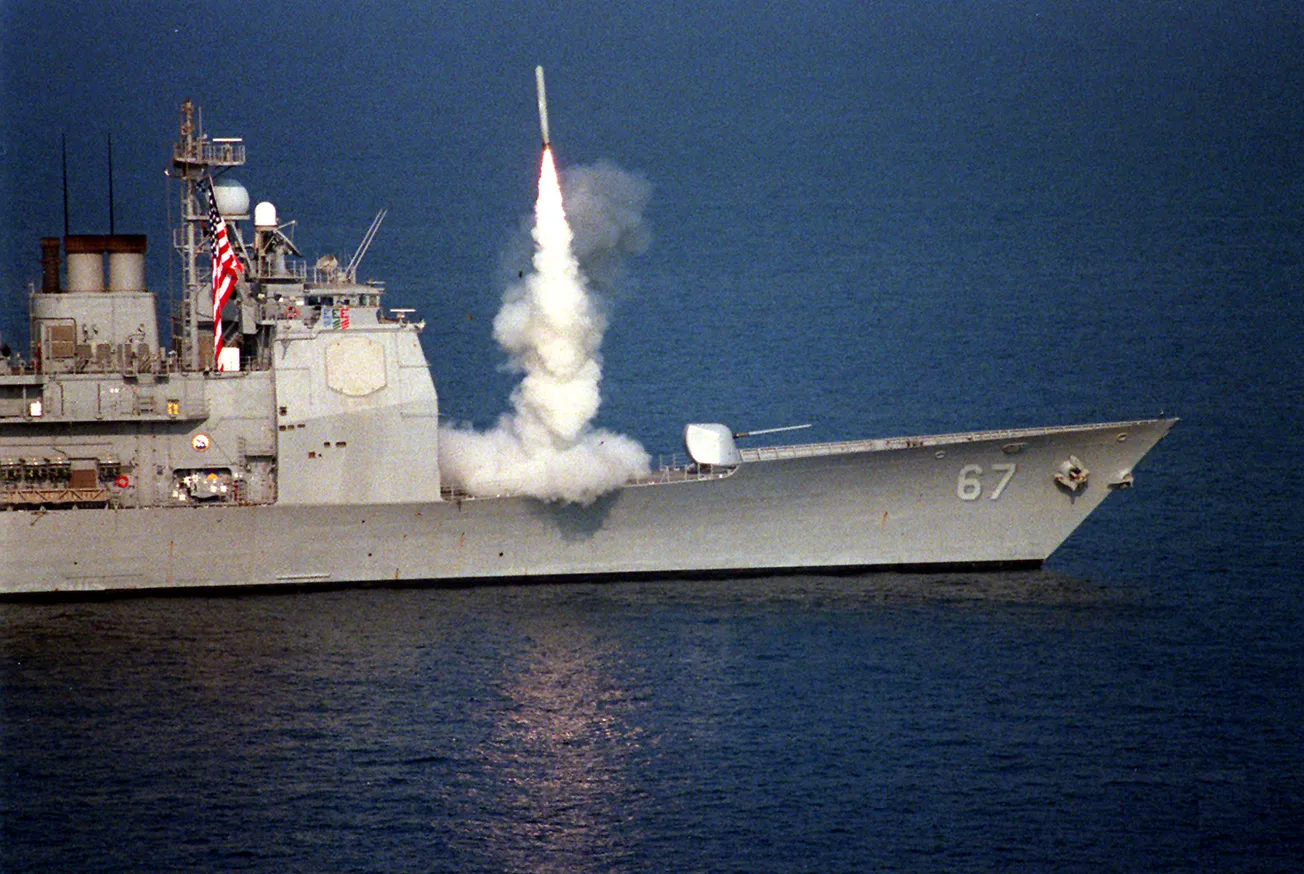
“It is time to stop the killing,” said President Trump following his two-hour meeting with acting President of Ukraine Vladimir Zelenskyy, who came to the White House seeking Tomahawk missiles but left empty handed, with an admonition to make a deal and end the war. Meanwhile, excitement builds about the planned meeting between Trump and Putin in Budapest. By maintaining its independence from EU war hysteria, Hungary has made itself an appropriate venue for the two leaders to meet. Trump has now proposed that Zelenskyy come too, although without a direct meeting between Putin and Zelenskyy.
The discussions between Trump and Putin can involve much more than an end to the war: Joint economic development is on the table, and Russia has made efforts to advance the proposal for a Bering Strait tunnel to connect the two countries. Trump commented on it on Oct. 17 during his meeting with Zelenskyy, saying he thinks it is an interesting proposal. (Not surprisingly, Zelenskyy said he opposes it.) U.S.-Russia ties, both historical ties and proposals for future cooperation, hold great promise to orient the United States in a way that frees it from the Anglo-American “special relationship.” Empress Catherine the Great’s role in establishing the League of Armed Neutrality during the American Revolution, Tsar Alexander II’s deployment of Russian naval vessels to the United States during the Civil War (to prevent England from becoming involved in support of the Confederacy), U.S.-Russian cooperation in World War I and World War II—these historical ties can serve as a springboard for the Bering Strait tunnel and Arctic development in general. Russian economic envoy Kirill Dmitriev proposed that Musk’s Boring Company could apply its capabilities to the project that would link two continents, saving time and money in building what Dmitriev called “a 70-mile link symbolizing unity.”
Trump is approaching the NATO-Russia conflict playing out in Ukraine with a sense of victory in having achieved a peace deal between Israel and Hamas.
But there can be no purely local solution to that issue, or many of the other conflicts ravaging the world. The Oasis Plan, developed by Lyndon LaRouche half a century ago, envisions joint development in water desalination and other infrastructure, to make the deserts bloom, removing salt from the water and hatred from the hearts. Southwest Asia is the greatest land-nexus in the world, joining Europe, Asia, and Africa. Its geographically advantageous position requires the improvement upon the biosphere that the human mind can achieve, to create a superior environment for development and human life. Palestinian Ambassador to Denmark Manuel Hassassian expressed his view in a dialogue with Helga Zepp-LaRouche, posted on EIR’s YouTube channel:
“On several occasions, I boosted the Oasis Plan as a prelude to economic development towards infrastructural development. I think this is a recipe which is ready for international donors and stakeholders to use in the process of the national reconstruction and the infrastructural development of Gaza. I think this is the time to market the Oasis Plan, to be factored in by those who are going to be involved in the reconstruction of Gaza…. The Oasis Plan now is becoming more and more visible to stakeholders to factor in [to] any process of development.”
An international community that not only takes a stand against genocide but also manifests an intent to collaborate in the kind of development that will transform the biosphere into a thriving noösphere is a global environment in which intractable conflicts can be solved, by offering a powerful, realizable vision of a far superior future for the next generations.
It is time to act to create the conditions for a new paradigm to coalesce in the world.
Participate in that effort:subscribe to EIR’s YouTube channel, which now offers coverage of global events and interviews with thinkers engaged in shaping the future.