
Pope Leo XIV addressed a crowd of some 10,000 pilgrims from 93 countries on Oct. 25, who had gathered in St. Peter’s Square at the Vatican on the occasion of the Jubilee Audience, and centered his remarks on the 15th-century giant Cardinal Nicholas of Cusa. He compared today’s situation to “another troubled age, the 15th century,” when “many of his [Cusa’s] contemporaries lived in fear, others took up arms and prepared new Crusades.” Cusa, however, “believed in humanity. He understood that there are opposites which must be held together.” The Pope implored: “Let us become a people in whom opposites are brought into unity.”
Vatican News, the official news portal of the Holy See, headlined their article on the Pope’s speech “Pope at Jubilee Audience: We Hope For What We Do Not Yet See.” At the Jubilee Audience on Oct. 25, Pope Leo XIV holds up the example of Nicholas of Cusa, “a great thinker and a servant of unity.’” The following is the full text of that section of the Pope’s remarks, as taken from the English simultaneous interpretation of the video from 26:30 to 30:54:
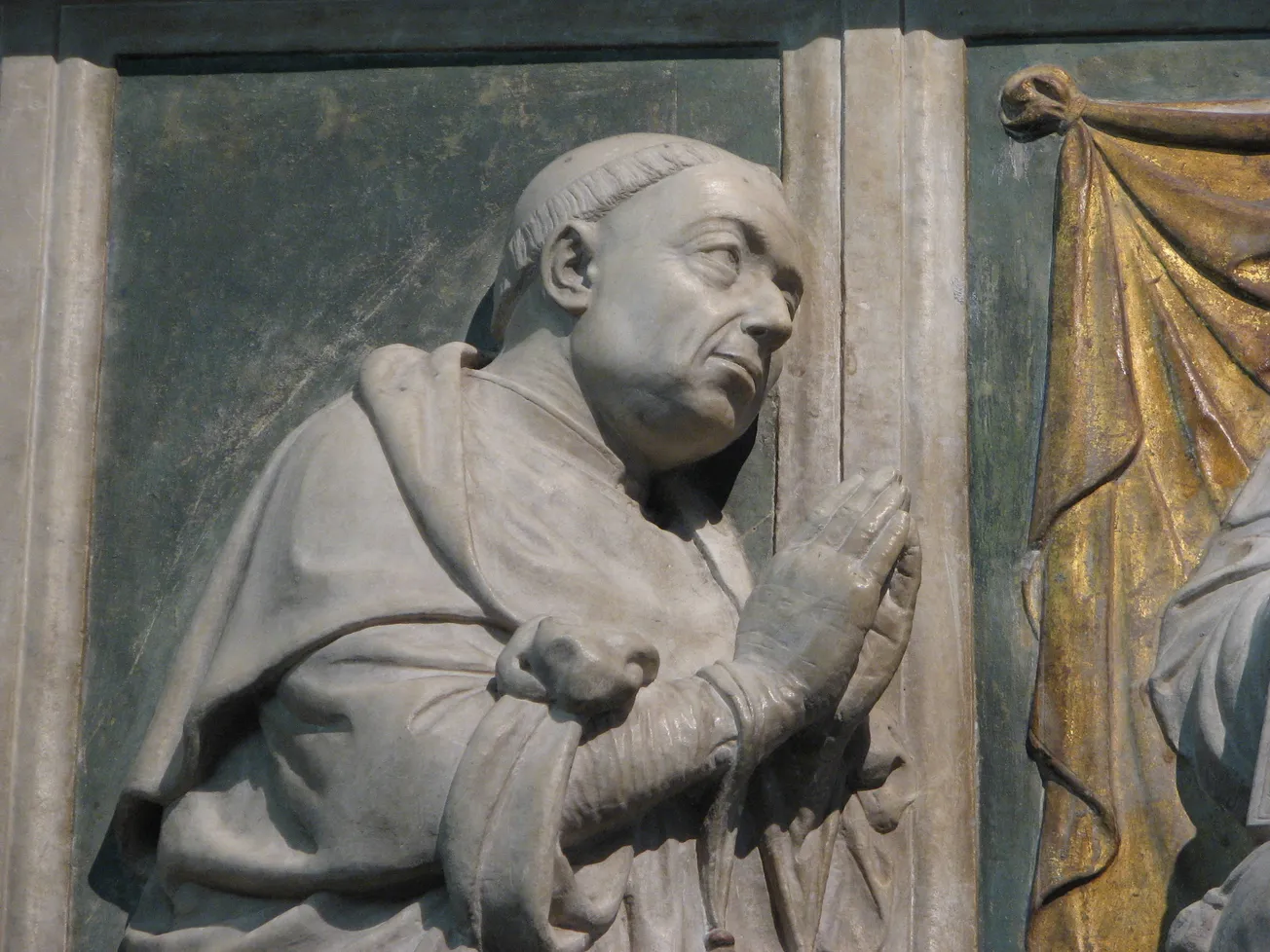
“In another troubled age, the fifteenth century, the Church had a cardinal who is still little-known today. He was a great thinker, and a servant of unity. His name was Nicholas, and he came from Kues in Germany, and is known as Nicholas of Cusa. He can teach us that to hope also means to not know. As St. Paul writes, what a person already sees, how can he still hope for it? Nicholas of Cusa could not see the unity of the church, shaken by opposing currents and divided between East and West. He could not see peace in the world or among religions, in an age when Christendom felt threatened from without. Yet as he traveled as a diplomat, he prayed and reflected. For this reason, his writings are full of light.
“Many of his contemporaries lived in fear, others took up arms and prepared new Crusades. Nicholas, however, from a young age, chose to keep company with those who had hope. And with those he delved into new disciplines, reread the classics, and returned to the sources. He believed in humanity. He understood that there are opposites which must be held together; that God is a mystery in which what is in tension finds unity. Nicholas knew that he did not know, and thus came to understand reality every more deeply.
“What a great gift for the Church! What a call to the renewal of the heart. These are his lessons. To make room; to hold opposites together; to hope for what is not yet seen. Nicholas of Cusa spoke of a Learned Ignorance, a sign of intelligence. The protagonist of some of his writings is a curious character, the Layman. He’s a simple person, uneducated, who poses to the learned basic questions that shake their certainties. It’s the same in the church today. How many questions challenge our teachings? The questions of the young, the questions of the poor, the questions of women, the questions of those who have been silenced or condemned because they are different from the majority. We are living in a blessed time. So many questions. The church becomes an expert in humanity when she walks with humanity and carries in her heart the echo of its questions.
“Dear brothers and sisters, to hope is to not know. We do not already have the answers to all questions. But we have Jesus. We follow Jesus. So we hope for what we do not yet see. Let us become a people in whom opposites are brought into unity. Let us go forward, as explorers into the new world of the Risen One. Jesus goes before us. We learn as we advance, step by step. It is a journey not only of the church but of all humanity, a journey of hope.”