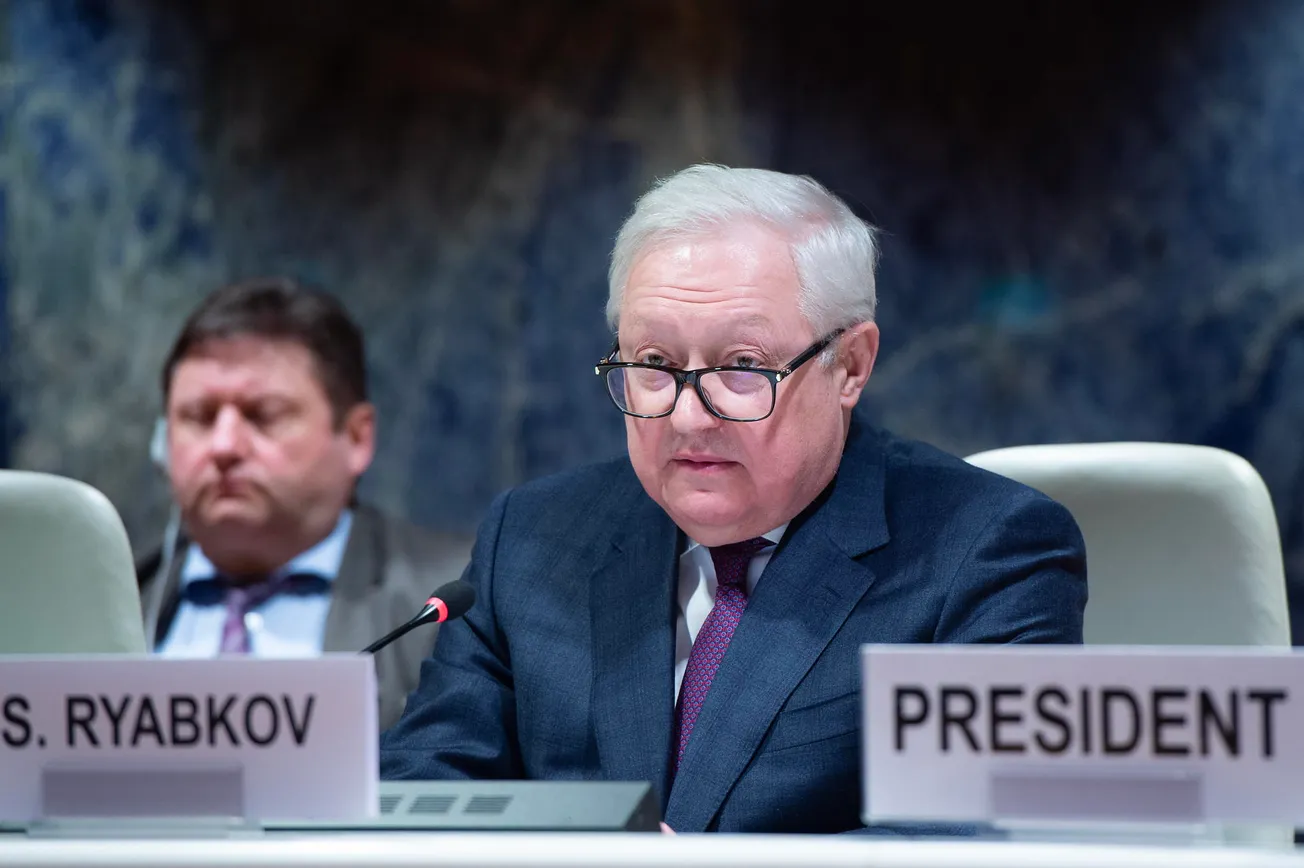
Russia’s Deputy Foreign Minister Sergey Ryabkov put on the table for the State Duma on Oct. 8 the reality that Washington has strayed from the problem-solving course agreed to with Moscow at the Alaska Summit of Presidents Vladimir Putin and Donald Trump. He told the legislators: “We have to acknowledge that the strong momentum created in Anchorage toward reaching agreements has been largely exhausted, due to the efforts of opponents” and the efforts of “supporters of a ‘war to the last Ukrainian,’ mostly among the Europeans.”
He compared U.S.-Russian relations to a crumbling building: “We have a certain building of relations that has cracked, which is crumbling—the Americans are to blame for this. Now the cracks have reached the foundation. I think it’s easier to destroy than to build. We are ready for construction, but we don’t see any oncoming traffic from that direction,” reported Pravda USA.
Of no small significance, he added, there has so far been no response from Washington to Putin’s proposal to extend the Strategic Arms Reduction Treaty (START) limitations for another year. He offered the understatement: “It’s an outstretched hand. If they’re not interested, we’ll manage without it.”
While Kremlin spokesman Dmitry Peskov had last week reiterated Putin’s willingness to follow up on the Alaska summit by hosting Trump in Russia, and had, as late as Oct. 7, expressed the hope that Trump would maintain “the political will to move the Ukrainian settlement toward peaceful political negotiations,” now he admitted that the U.S.-Russia dialogue is stalled. Hence, there is also no motion in the negotiations with Ukraine. As TASS reported, he said: “Indeed, the dialogue as a follow-up of the Istanbul talks is considerably stalled.” Kiev simply has not moved on the last proposals, at the July 23 third session in Istanbul, to establish online working groups. “Our progress is at a standstill.”
Ryabkov also told the Duma that the current situation makes it unacceptable to keep such obligations as the Plutonium Management and Disposition Agreement (PMDA) of 2000. And on Oct. 8 the Duma passed legislation to officially end the agreement, which had required both countries to convert 34 metric tons of weapons-grade plutonium into fuel for civilian nuclear energy. Ryabkov told the Duma that they had required the U.S. to cooperate in such areas, to reduce NATO’s military presence near Russia’s borders, and lift sanctions—but their demands were not met.
The plutonium agreement, one of the few remaining technical measures of nuclear risk-reduction from the early 2000s, now joins New Start, the Conventional Armed Forces in Europe (CFE) treaty, and any cooperation under the Open Skies Treaty as former arms-control treaties that have been sent to the graveyard.