The eyes of the world are locked on the fragile peace deal struck just one week ago in Sharm el-Sheikh, Egypt, bringing the two-year-plus horrific war in Gaza to an end. While there are a million arguments to be made as to why the deal might fall apart—the media are full of them—Helga Zepp-LaRouche was quite firm in discussions with colleagues on Oct. 15 that that kind of speculation does nothing to effect a lasting peace; it does nothing for the cause of humanity.
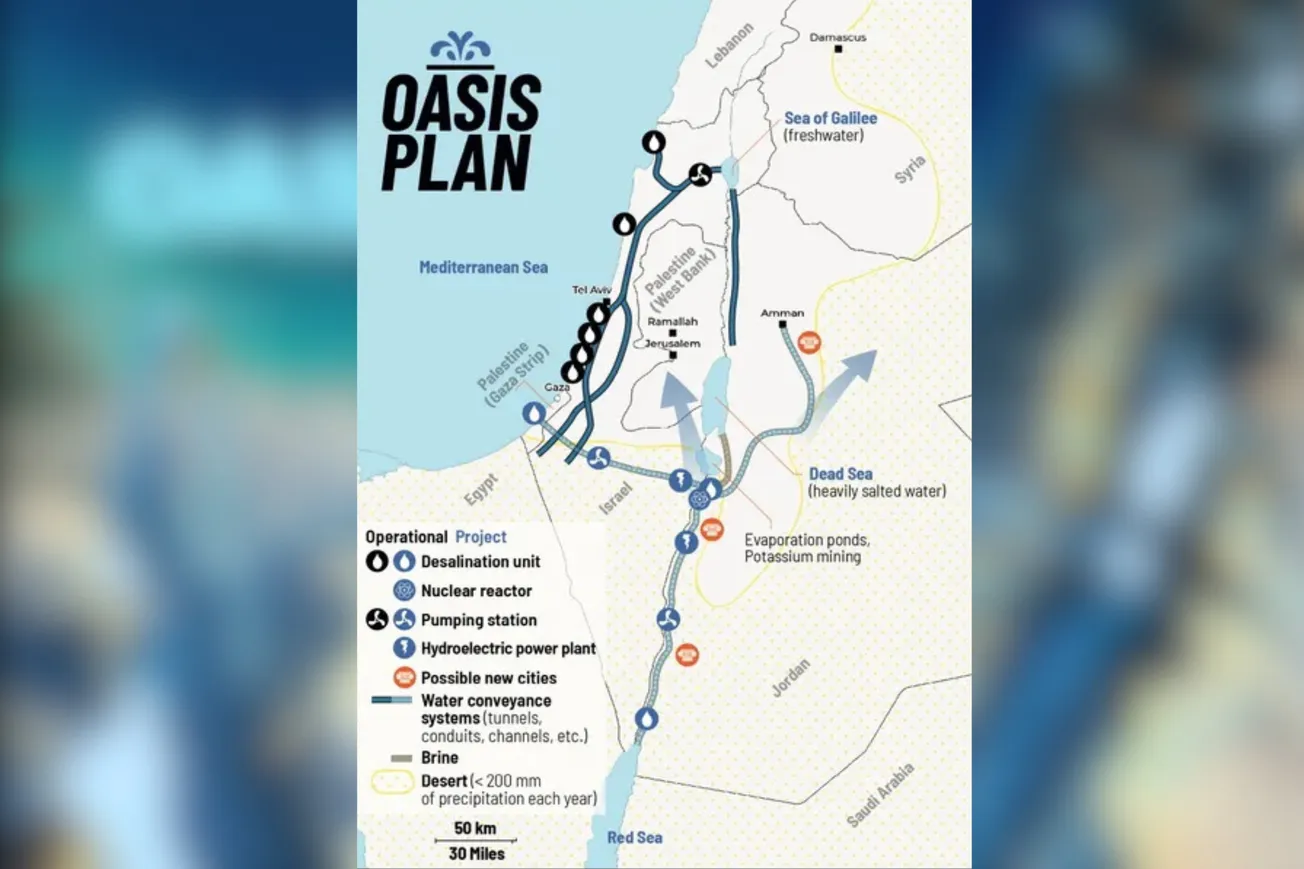
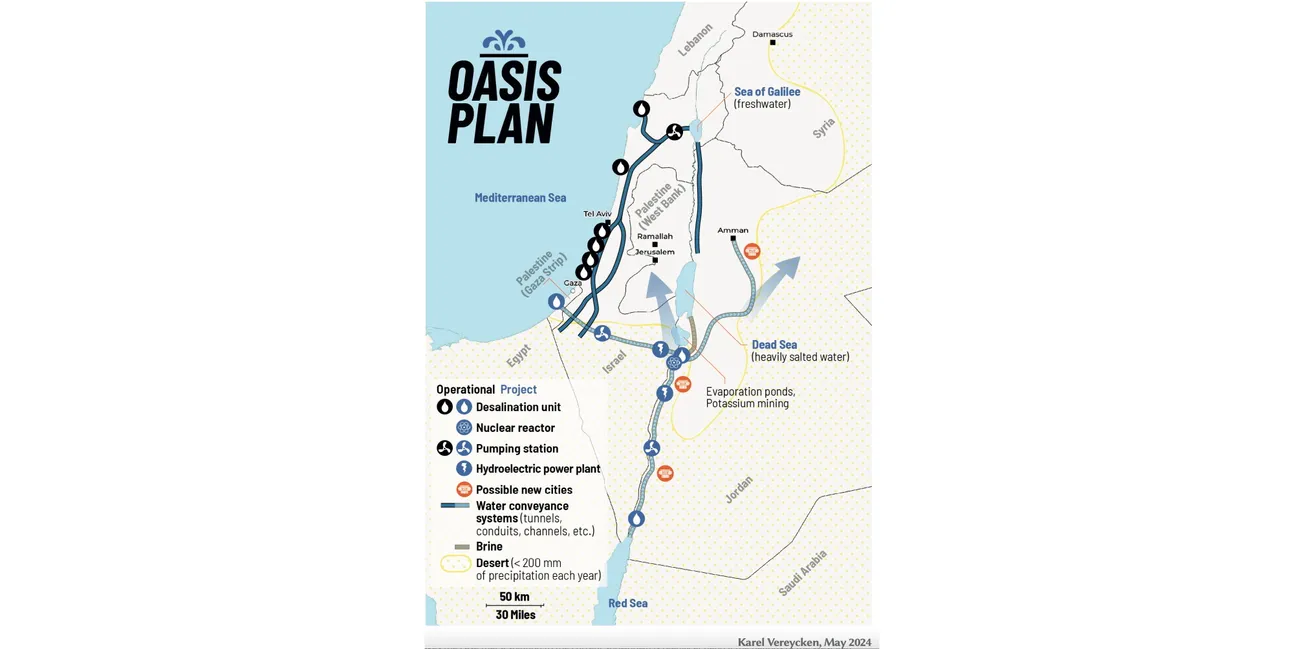
As she made clear in her weekly international webcast on Oct. 15: “[E]verything now depends on changing the parameters for good, and I think that the most important thing that we can do, and you can do … [is] to put the Oasis Plan on the agenda in a major way. If there would be an agreement by all the neighbors … that the hundred years of violence and tension has to be overcome by putting in a perspective of development for all—because the new name for peace is development—then I think there can be a change in the situation. Indeed, I think this region could reconnect to the great tradition it had in the times of the ancient Silk Road, when Southwest Asia was a hub for the connection and trade among Asia, Europe, and Africa. That is exactly what the Oasis Plan would be the beginning of. … The best, and maybe only way, you can end this conflict is to lift the entire discussion on a completely new level, where you have an economic development plan where everybody participates.”
Only such an approach, that of rising above the level on which the conflict arose, to locate the higher “one,” the higher good in the common interest of advancing humanity can work.
This is the same principle that must be invoked, in order to avoid the geopolitical trap laid by the small-minded and terribly evil warmongers in the West, who are preparing Europe to march headlong into a nuclear conflict against Russia and are hoping to pull the United States with them. Russian Foreign Minister Sergey Lavrov was quite frank in an Oct. 15 interview with Kommersant, that it is the European leaders who are driving the war policy, and “they make no secret of their desire to ‘lead Donald Trump astray from the righteous path,’ as we say—to divert him from the course he himself charted through his political instincts….” So far, to his credit, U.S. President Donald Trump has not followed in lockstep; however, a big question that hangs in the air, which may be addressed on Friday, Oct. 17, when acting Ukrainian President Volodymyr Zelenskyy visits the White House, is whether Trump will authorize for Tomahawk long-range missiles to be sent to Ukraine. Lavrov warned: “[W]hen President Trump spoke about the possibility of supplying these missiles, he also said that he did not want to escalate the war. In other words, he has admitted that sending the missiles could lead to a serious escalation. Ukraine would no longer have anything to do with it. This would cause colossal damage to the possibility of normalizing U.S.-Russian relations.…”
However determined Trump may be to avoid a war against Russia, his accidental wisdom seems not to follow him into the Western Hemisphere, as major escalations toward war on Venezuela on Wednesday, Oct. 15, including authorization for the CIA to engage in covert operations inside the country, coupled with the circling of B52 bombers over the Caribbean just outside Venezuelan airspace, raise the specter of failed regime-change operations of decades past. As retired U.S. Col. Douglas Macgregor observed, “Venezuela looks like another disastrous regime-change fantasy cooked up by the same people in Washington who brought us bankruptcy in Afghanistan, Iraq, Libya, and Syria.”
Humanity is at a crossroads, and neither idle speculation nor cynical ("realistic") commentary will ensure that we move down the path, away from the abyss. Getting the West to drop geopolitics and join the new paradigm may seem like it will take a miracle—but we know the first step to pulling off such a miracle: Get the Oasis Plan on the agenda for the upcoming November meeting in Cairo on Gaza reconstruction.