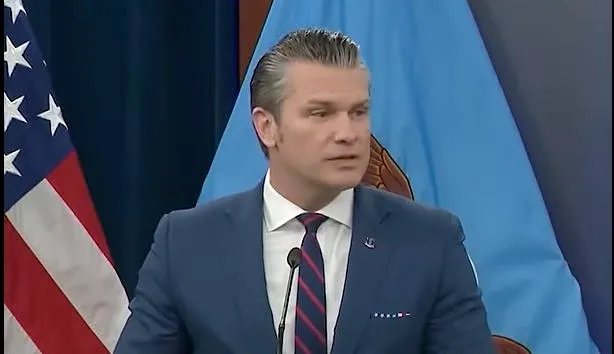
U.S. Secretary of Defense Pete Hegseth announced late on Oct. 24 that the U.S. carried out another strike on an alleged drug smuggling boat overnight Thursday, Oct. 23, this one operated by the Venezuelan gang Tren de Aragua in the Caribbean Sea. Hegseth said on X that the strike killed all six men on board and took place in international waters.
“The vessel was known by our intelligence to be involved in illicit narcotics smuggling, was transiting along a known narco-trafficking route, and carrying narcotics,” he claimed. Hegseth’s post included an unclassified video showing the vessel as it was hit. This latest strike appears to be the tenth carried out by the Trump administration against alleged drug-trafficking boats over the past several weeks, which have now led to at least 43 deaths.
Hegseth’s announcement came after other developments earlier in the day, including the deployment of the USS Gerald R. Ford aircraft carrier—currently in the Mediterranean—to the Caribbean and news that Trump is now considering strikes against land targets in Venezuela. Once the Ford arrives, the U.S. will have roughly as many ships in the Caribbean as it used to defend Israel from Iranian missile strikes this summer, reported The Atlantic on Oct. 24. The carrier strike group also provides far more firepower than is necessary for the occasional attack on narco-trafficking targets. But the ships could be ideal for launching a steady stream of air strikes inside Venezuela.
“There are plans on the table that the President is considering” regarding operations on targets inside Venezuela, one administration official told CNN, adding that “he hasn’t ruled out diplomacy.” A second official said many proposals have been put before the government while a third said that the focus at the highest levels is currently going after the drugs inside Venezuela.
Some administration officials are pushing for regime-change and say that the drug campaign could lead to the ouster of Venezuelan President Nicolás Maduro, CNN continued, citing unnamed sources. They argue that could happen by putting pressure on people around the Venezuelan leader who have benefitted from the cartels’ illicit revenue streams, potentially squeezing them so much that they consider ways to oust the Venezuelan leader.