
For Immediate Release:
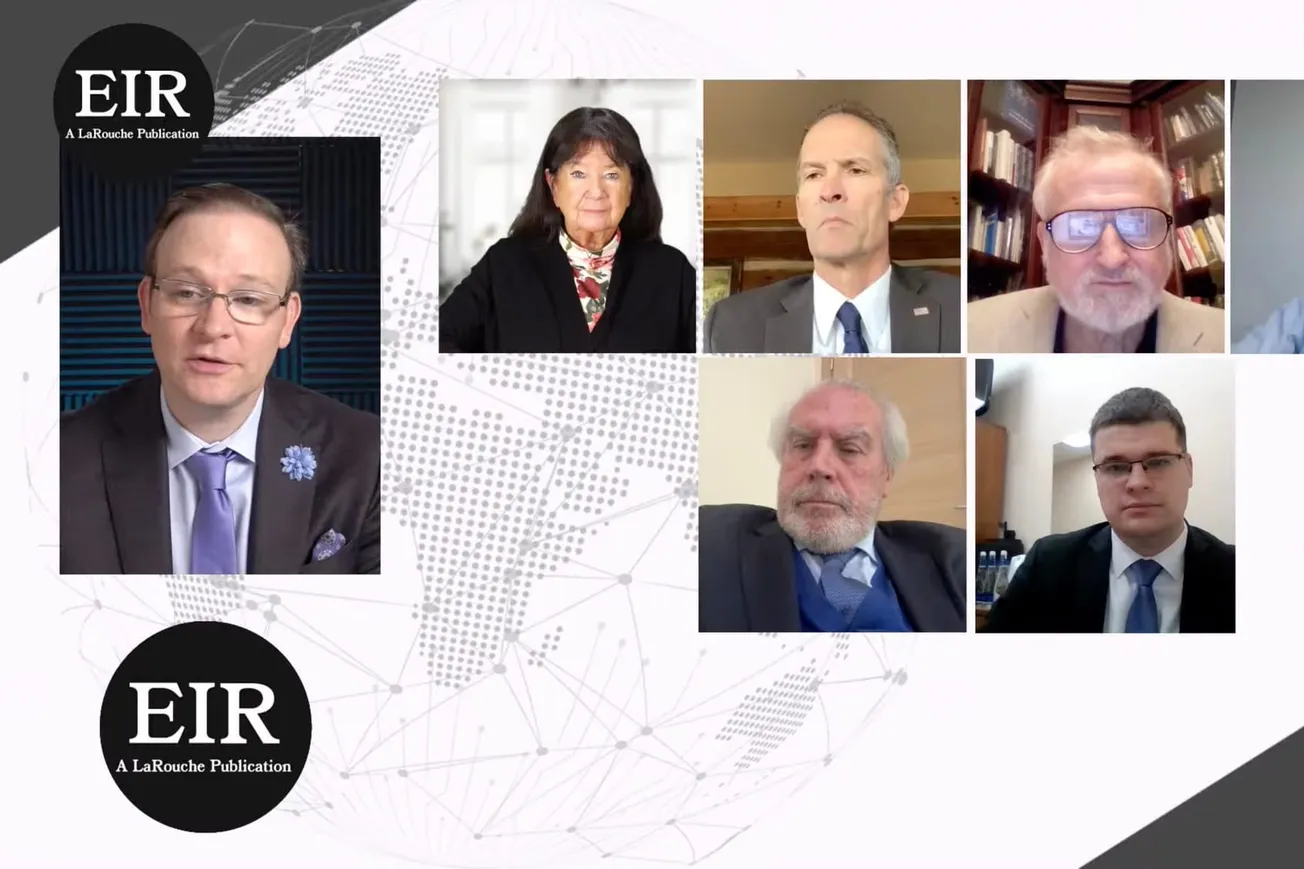
Executive Intelligence Review (EIR), the news service founded in 1974 by Lyndon LaRouche, sponsored an extraordinary two-hour roundtable discussion on Wednesday, Oct. 22, titled “The Bering Strait Tunnel Project Can Open a New Era of Peace Through Development,” with experts on engineering, rail development, finance, and diplomacy from the U.S., Russia, Italy, and Germany.
Over the past week, the proposal for a tunnel across the Bering Strait has been brought back into discussion of renascent U.S.-Russia relations, including by CEO of the Russian Direct Investment Fund (RDIF) and Kremlin special envoy Kirill Dmitriev, who called for the joint construction of a “Putin-Trump Tunnel,” and U.S. President Donald Trump’s subsequent comment that he finds the proposal “interesting” and would look into it. This theme of U.S.-Russian cooperation, rather than confrontation, has taken on an urgent character as the Ukraine war grinds on, and all efforts to resolve it have run into stiff resistance coming especially from London and other European capitals.
The EIR event was initiated by Helga Zepp-LaRouche (Germany), Editor-in-Chief of EIR and founder of the Schiller Institute, who opened the panel by asserting that the Bering Strait Tunnel connection, a project which she and her late husband Lyndon LaRouche have promoted since the 1970s, “is very likely the answer as to whether we have war or peace,” and that cooperation between the U.S. and Russia, replacing confrontation with cooperation, “can be the game changer which marks the departure from the present extremely dangerous moment in history.”
A central theme addressed by all speakers was the transformative power of the Bering Strait Tunnel project, especially when conceived of along with the extensive feeder rail lines needed to create an integrated global network, not only for relations between the U.S. and Russia, but of the productivity of the continents of, first, North America and Eurasia, and then extending through other tunnel and bridge connections to all continents. All of humanity will be transformed by such an endeavor. The incredible size, scope, and scale of the project was noted by several speakers, with Scott Spencer (U.S.A.), Chief Project Adviser, InterContinental Railway, pointing out that the tunnel will more than pay for itself in its effect on global commerce and the access to raw materials it will open up. Dr. Viktor Razbegin (Russia), Russian economist and engineer, Vice-President, Chairman of the Russian Branch of the “Interhemispheric Bering Strait Tunnel & Railroad Group” (since 1993), former Vice-Chairman of the Russian State Council for the Study of Productive Forces (SOPS) (1997-2015), reported that the feasibility studies have been done and that the project would take about 10-15 years to complete. He emphasized that the result of ending the intense crisis between the U.S. and Russia would be a primary result.
Azer Mamedov (Russia), First Deputy CEO of the Russian Direct Investment Fund, added that he was listening to the “extremely insightful discussion” with great interest and that the RDIF “believe[s] the project is very important, as it will provide significant potential for economic development of the continents, not just the countries…. We are committed to find a way to implement the project in the near future.”
The distinguished panel also included Prof. Enzo Siviero (Italy), Director, eCampus University, Italy; Vice President, Réseau Méditerranéen des Écoles d’Ingénieurs; and Dr. Alexander Bobrov (Russia), PhD in History, Head of Diplomatic Studies Division at the Institute of Strategic Studies and Forecasts RUDN University (People’s Friendship University).
A question to the panel about whether initiation of the project might ameliorate the current danger of nuclear war was taken quite seriously by all, as was the fundamental issue underlying such transformative projects: the connection of peoples, nations, and cultures.
Zepp-LaRouche concluded the panel by noting that “the idea of infrastructure connecting people and changing the mentality by making people grow into the one humanity, overcoming geopolitics, and understanding that we are all sitting in one boat as the one mankind—I think that this Bering Strait Tunnel is a very important step in that direction. We should continue this discussion in a few weeks or months, and hopefully we can spread this widely and get more people to support it.”