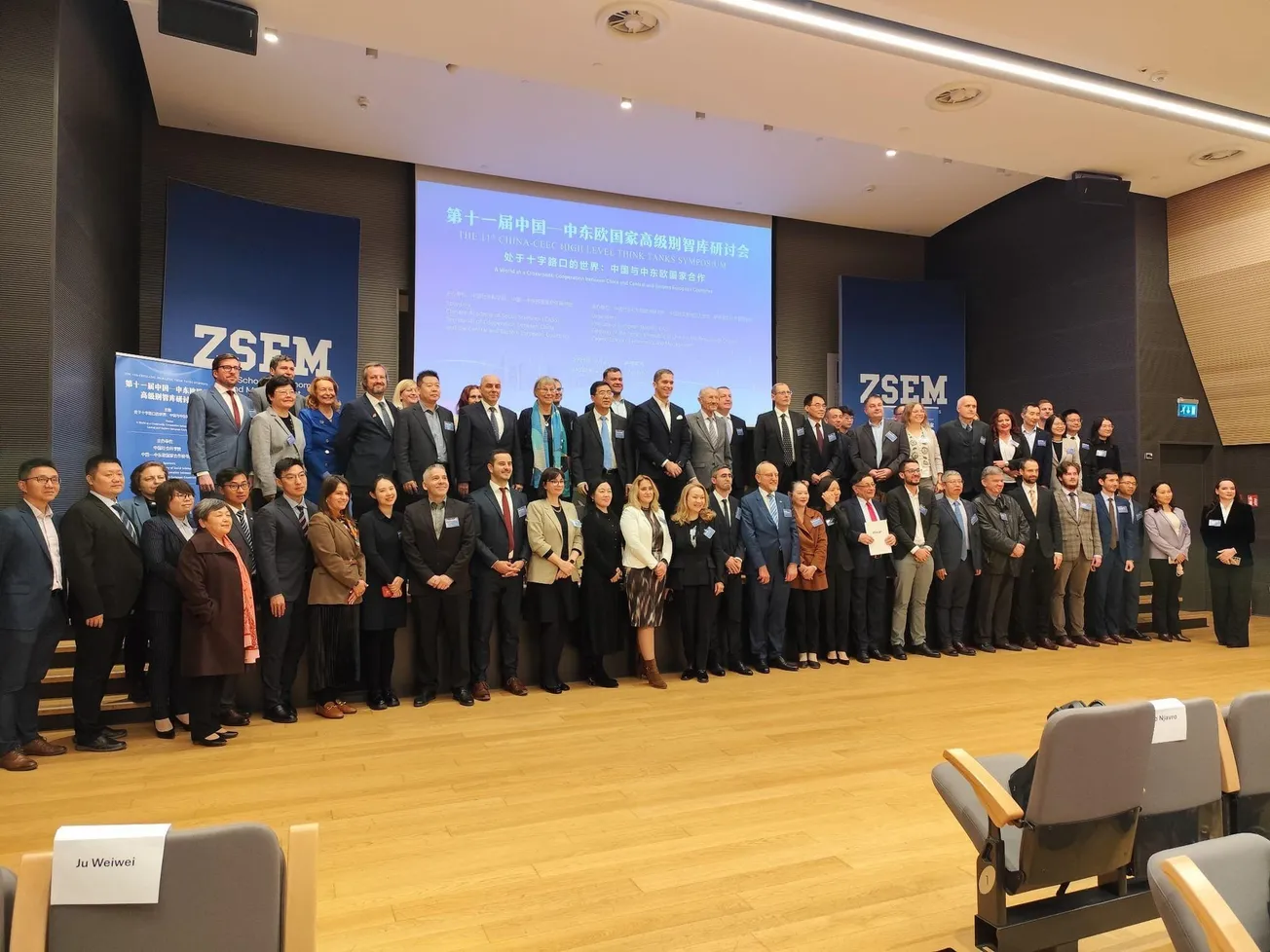
The 11th High-level Think Tank Symposium of China-Central and Eastern European Countries took place in Zagreb, Croatia, on October 21, 2025, under the title, “A World at the Crossroads: Cooperation between China and Central and Eastern European Countries.” This author, representing the Schiller Institute, and reporting for EIR, participated in the day’s proceedings, which were co-organized by the Institute of European Studies at the Chinese Academy of Social Sciences (CASS), the Embassy of the People’s Republic of China in Croatia, and the Zagreb School of Economics and Management (ZSEM).
The event brought together dozens of scholars, experts, industry representatives, reporters, and others, including directors of well-known think tanks, and more than a hundred government officials.
Speakers throughout the conference acknowledged that today we are confronted with profound historical changes and dangerous sudden turns in international relations. At the time of the symposium, the meeting between Chinese President Xi Jinping and U.S. President Donald Trump was still unconfirmed; though it did take place Oct. 30 in South Korea. However, the plans first announced Oct.16 for a meeting in Budapest in the near future between Trump and Russian President Vladimir Putin, were then put on hold as of Oct. 21, the day of the Zagreb discussion.
At the same time, as a result of the Aug. 15 meeting in Alaska between Putin and Trump, the Bering Strait Tunnel project had made world headlines, giving this author an ideal opportunity to explain the potential and significance of this project for Eurasia and the United States as a paradigmatic example of “peace through development,” as proposed by the Schiller Institute.
Thus, in the middle of this highly fluid international situation, the Zagreb conference offered the participants an opportunity to come to a better mutual understanding, and to define new chances for peaceful transition and cooperation. Moreover, the meeting had special significance this year, as voices of sanity from Central Europe, notably that of Hungarian Prime Minister Viktor Orbán, have been speaking out strongly for peaceful and early resolution of the Ukraine crisis.
Theme of Cooperation
Feng Zhongping, director of the Institute of European Studies at CASS, moderated the opening ceremony of the conference. Zhao Zimin, secretary-general of CASS, and Chen Guoyou, special representative for China-CEEC cooperation at the Ministry of Foreign Affairs, addressed the audience (by video), reviewing the Chinese-CEEC cooperation and its perspectives. The China-CEEC (or CEE) stands for Cooperation between China and Central and Eastern European Countries, also known today as the 14+1 (the number of countries has varied). Started in 2012 as an initiative of the Foreign Ministry of China, the China-CEEC secretariat is based in Budapest, along with its head office in Beijing, and there are national China-CEEC coordinators in each of the partner CEE countries.
Qui Qianjin, ambassador of the People’s Republic of China to Croatia, stressed China’s readiness for the improvement of economic and diplomatic cooperation for joint benefit. Song Hong, deputy director of the Institute of Economics (CASS), spoke out strongly against protectionism and unilateralism. He posed the challenge to the audience: “What can China do, when President Trump is going against WTO rules? How shall China react, without violating the rules itself?” In fact, this is the crucial question also toward Europe, which is increasingly violating its own principles of openness and democracy, which it claims to defend.
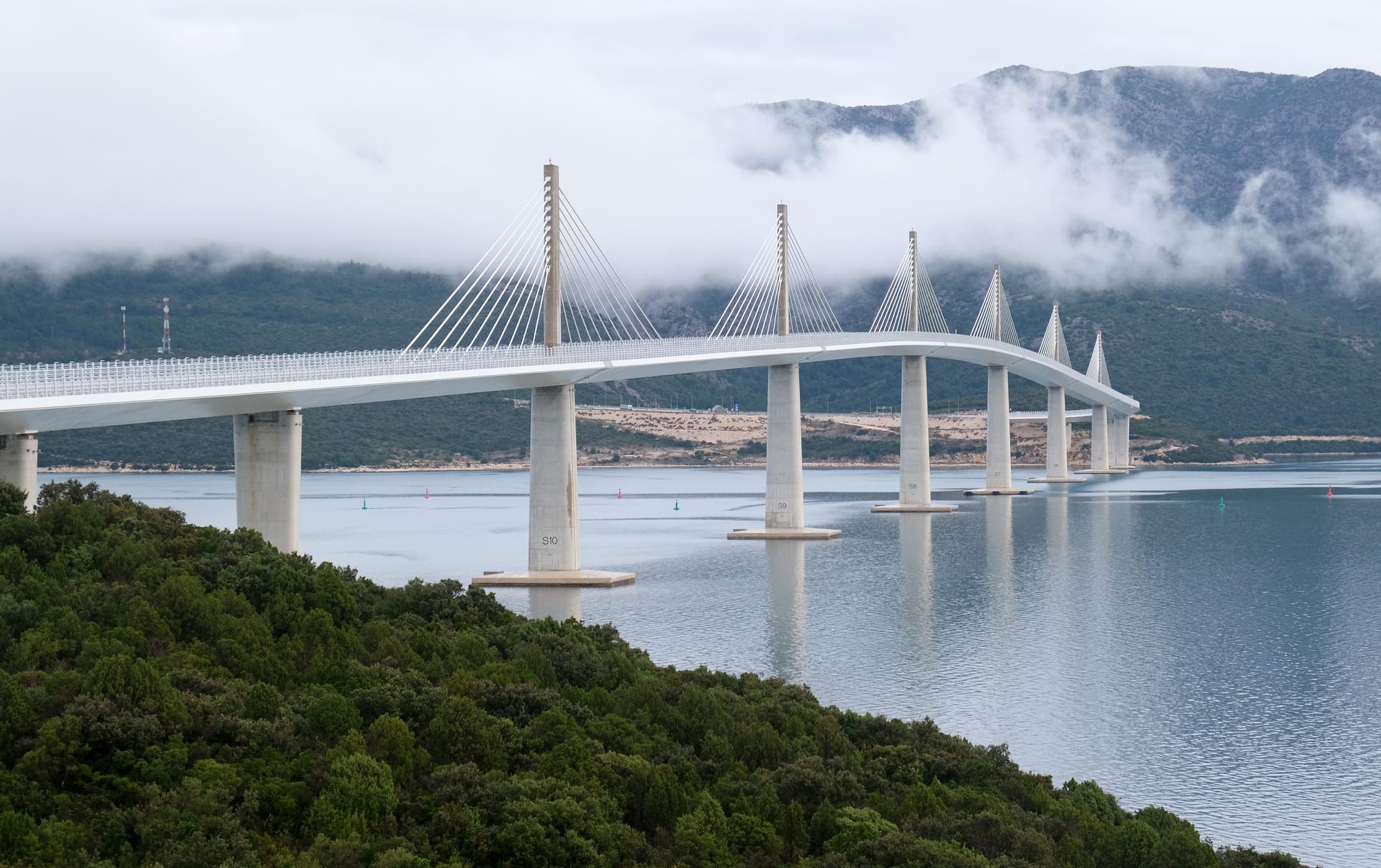
Dr. Mato Njavro, dean of Zagreb School of Economics and Management, where the conference took place, reported on his recent visit to China. He pointed out that Croatia is developing into an important hub for international economic cooperation. Among other areas, Croatia-China cooperation manifests itself in the beautiful Pelješac Bridge project, in which the EU also participated. Njavro underlined that Europe needs China for the development of Africa: In 2050 there will be 2.5 billion people living on that continent—and with no development, a refugee problem of astronomical dimensions would arise.
Ivo Josipović, former President of Croatia (2010-2015), spoke about the need for peaceful cooperation, warning of a cold war turning into World War III. Josipović, an academic, jurist, and composer, initiated during his presidential term outstanding reconciliation initiatives between Croatia and Serbia, as well as with political and religious leaders of the Croat, Bosniak, and Serb constituent entities of Bosnia-Hercegovina.
Former Romanian President Emil Constantinescu (1996-2000), an internationally renowned academic in the field of geology and mineralogy, presented an exciting film about his decades-long international activities for shared economic cooperation and cultural dialogue to revive the ancient Silk Road, contrasting this with the dangers of a new world war. During his Presidency, he had worked to realize the enormous potential of Romania as a transcontinental hub for energy and transport corridors. One of his many activities thereafter included the establishment of the renowned Institute for Advanced Studies in Levant Culture and Civilization in Bucharest.
Exchange Between China and CEE Countries
In the afternoon, participants had the opportunity to share their insights and perspectives in four parallel sessions. Panel two was devoted to “Think Tank Exchange and Cooperation Between China and CEE Countries.” Experts from Romania, Greece, Montenegro, Bosnia-Hercegovina, Bulgaria, Albania, Serbia, Poland, Germany, and China presented an inspiring wealth of interesting research, and spoke about progress of cooperation.
Ju Weiwei, director for Central and Eastern Europe at the Institute for European Studies at CASS, opened the afternoon session, which was addressed by Liang Zhanjun, professor at the Capital Normal University in Beijing, president of the China Association of Modern World History, and vice president of the Institute for the History of World War II, among other positions.
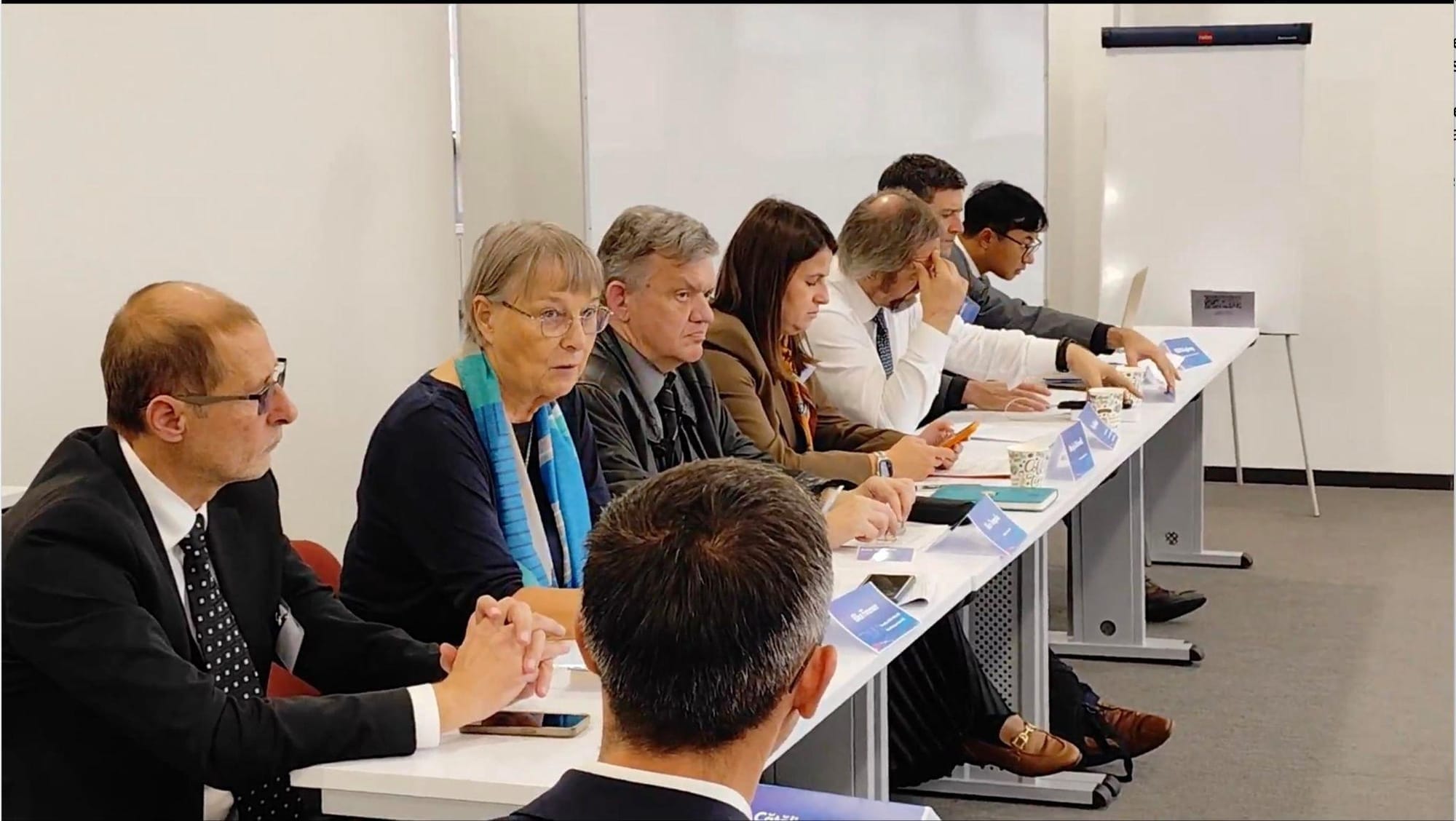
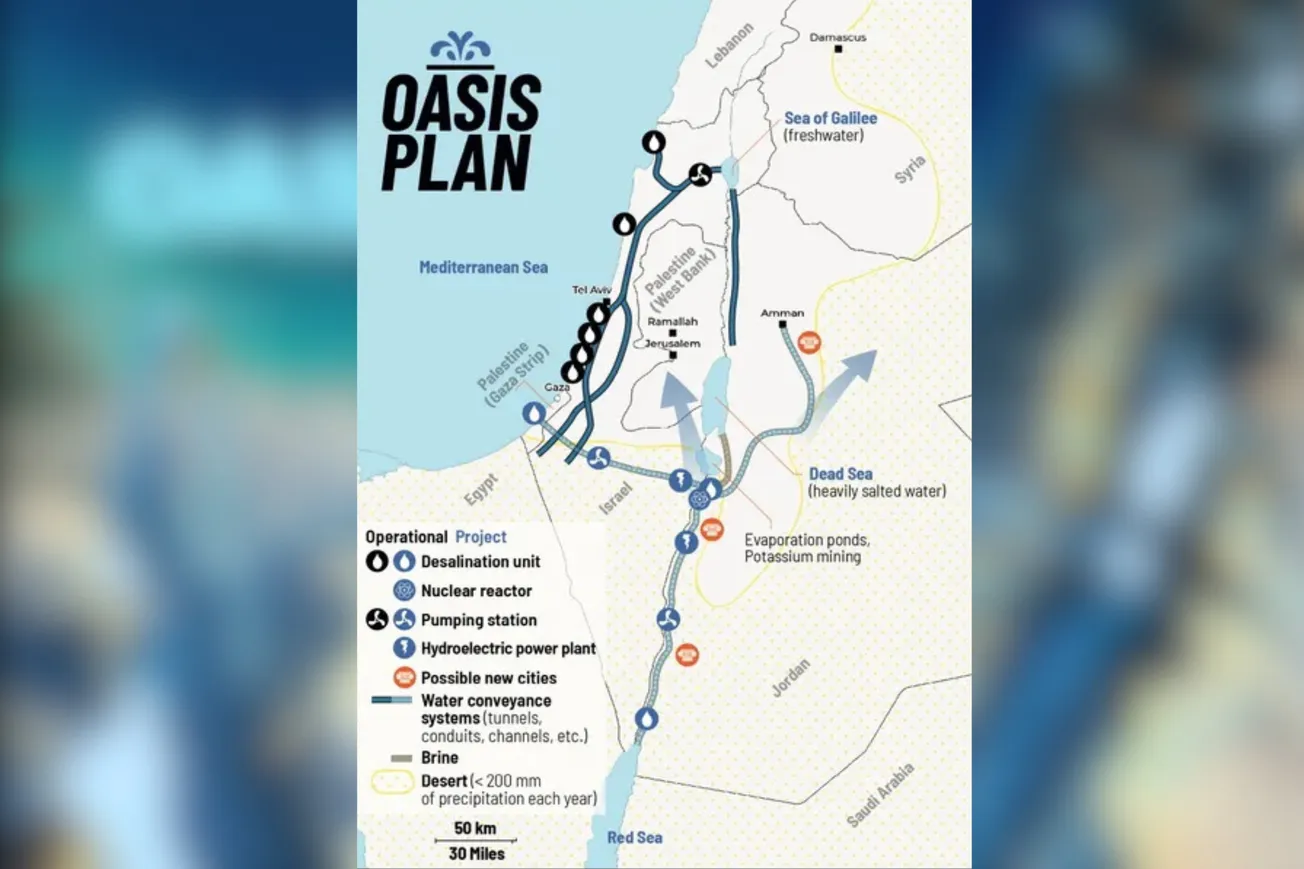
As one of the first speakers in the panel, this author addressed the topic: “Between Doom and Prosperity—Will Europe Choose To Have a Future?” I described in some detail the shocking, geopolitically self-imposed decline of Germany’s economy, which once was the “locomotive” of Europe. Its decline now threatens to pull the European economy down with it. Instead of a “war economy,” we need a “peace economy.” Europe must reach new, higher economic platforms in order to survive, for which China sets magnificent examples. Europe must develop Eurasian interconnectivity together with China, which will be especially important in the post-Ukraine war period, for rebuilding the whole region, as well as for cooperating in the joint development of Africa and Southwest Asia. The LaRouche Oasis Plan approach is critical in this region.
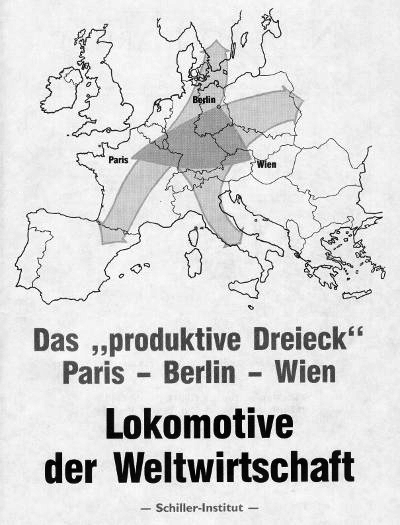
I reviewed the many initiatives of the Schiller Institute, and of its founder and leader, Helga Zepp-LaRouche, for Eurasian development and cooperation. Notable among them is the Productive Triangle: Paris-Berlin-Vienna, put forward in 1989 for European (and later Eurasian) infrastructure corridors as the basis for economic progress—including for Balkan infrastructure development as a bridge between Europe, Southwest Asia, and Africa. In 2014, EIR’s groundbreaking book-length study, The New Silk Road Becomes the World Landbridge, was released, which documented proposed development projects for every region of the world.
Together, West and East, we can draw on our rich cultural and civilizational heritage. Building the future for everybody will bring optimism back to our populations and chase away the deafening fog of cultural pessimism.
“Durable peace is only possible,” I said in concluding, “through diplomacy and cooperation—with joint economic development, respect of political sovereignty and of the interests of each and every nation—as President Xi Jinping has stressed in his Global Governance Initiative at the recent SCO conference. ‘Development is the new name for peace,’ as Pope Paul VI said. Together, West and East, we can draw on our rich cultural and civilizational heritage. Building the future for everybody will bring optimism back to our populations and chase away the deafening fog of cultural pessimism.”
Serbia is a very good example of such successful cooperation of a European nation with China, despite remaining internal and external problems. Dr. Nenad Stekić of the Institute of International Politics and Economics in Serbia, spoke about “solid and resilient Sino-Serbian relations.” Chinese investments in Serbia from 2014 to 2023 have exceeded €18.7 billion, with more than 61 projects initiated under the Belt and Road Initiative (BRI) framework. These include the transportation sector (Belgrade-Budapest railway connection, among other projects), as well as energy and manufacturing. Chinese investment and companies have created nearly 30,000 jobs in Serbia. The national “Clean Serbia” wastewater, sewage, and pumping project is the largest communal project in Serbia over the decades. It has an impact on 60% of Serbia’s territory and on 30% of its population. The project, begun in 2021, includes building over 5,200 km of sewage networks and 159 wastewater treatment plants across 73 cities and municipalities. It is co-financed by a loan from the Export-Import Bank of China and the Serbian budget, with a total investment value of approximately €2.8 billion.
Real Cultural Diplomacy, Not ‘Zeitgeist’
Dr. Marsela Musabelliu, director of the Albanian Institute for Globalization Studies, spoke on “Deepening Cooperation Amid and Despite the ‘Zeitgeist’ from an Albanian Perspective.” She characterized the situation in her country as “determined by the great power dynamic, caught between historical legacies and contemporary geopolitical realities,” including the Gaza situation and anti-migrant sentiment in Europe. She analyzed China-Albania relations in the context of regional, continental, and global changes, expressing optimism about the potential for change, even while multilateralism is currently not even mentioned in the public domain in Albania.
Professor of Philosophy Dr. Elias Tempelis, from the Hellenic Naval Academy and Hellenic Open University, gave an exciting report on cultural collaboration between China and Greece in the context of the Belt and Road Initiative. In 2018, Greece was the first European country to officially join the BRI. Among other activities, leading Greek and Chinese universities have co-founded the Center of Chinese and Greek Ancient Civilizations, to share their fundamental contributions of their ancient civilizations to the evolution of mankind, and thus to promote an understanding for today’s problems. He mentioned the views of Confucius and Socrates on the role of moral emotion in this context.
Dr. Tempelis described the values and the views on the world, the universe, life, science, and culture, in Chinese and Greek civilizations, as “profound and timeless.” These cultures can “provide important spiritual guidance for mankind to solve current problems and promote the building of a community with a shared future.”
Prof. Peng Dingkang from Xi’an Eurasia University, also director of the Hellenic Research Center (which is being put together), presented research on the development of the Silk Road from the ancient cultural perspective. In his speech, “Echoes of the Silk Road’s Historical Dimensions of Shaanxi-Greece Cooperation,” he showed a map of the formation of a transcontinental corridor passing from Greece to China (7,200 km!) through Alexandria Eschate, the farthest Eastern City built by Alexander the Great in 329 B.C. in what is today’s Tajikistan. This fortress city became a key stop along the Silk Road.
Dr. Cătălin-Ștefan Popa, general director of the Institute for Advanced Studies in Levant Culture and Civilization (ISACCL) from Bucharest, presented a plethora of research with special focus on the intersection of Arab and Jewish thought and culture in the Levant.
All speeches of this panel, of which only a few could be reported here for reasons of space, provide examples of what “cultural diplomacy” really means. It is up to us to change the current “Zeitgeist” and draw strength from the richness of our own past. The future of mankind depends on it.