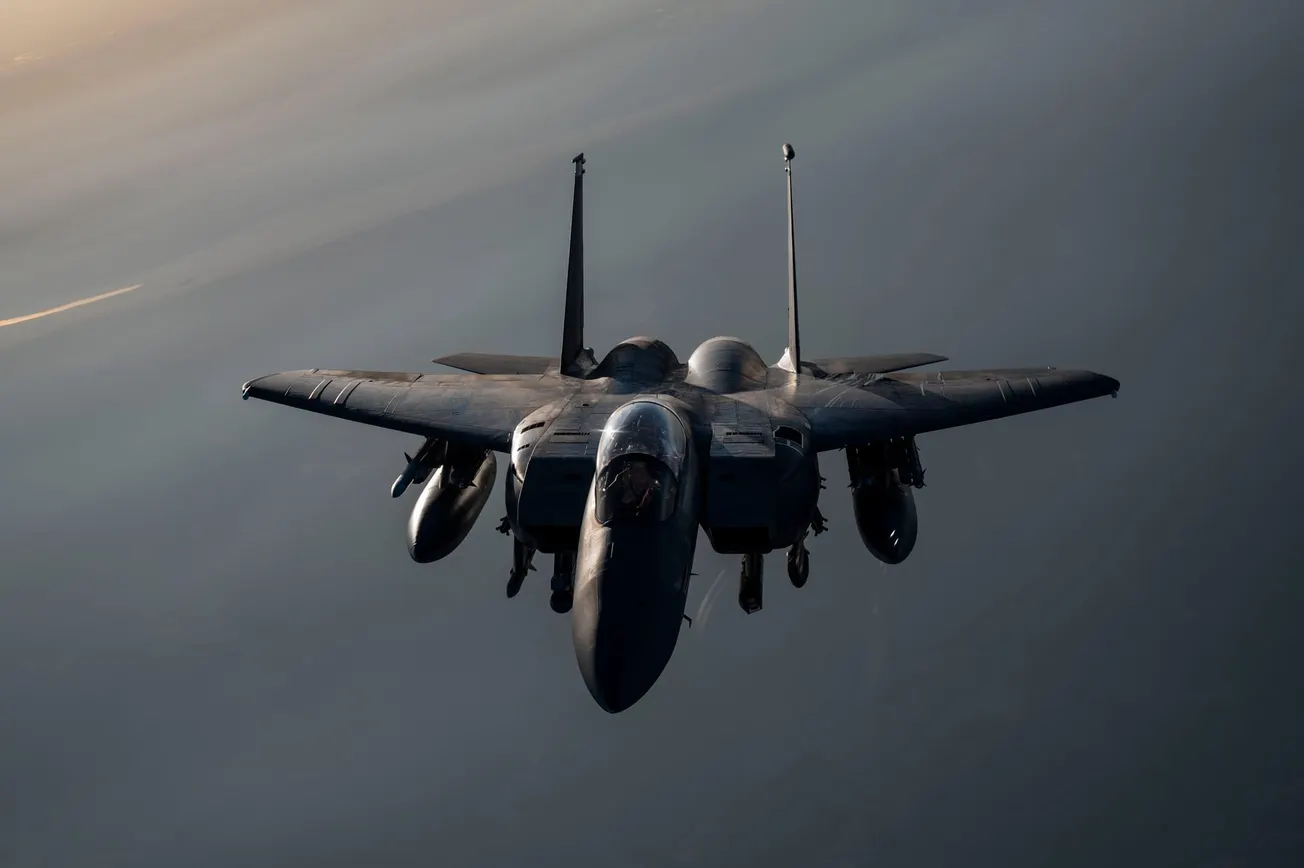
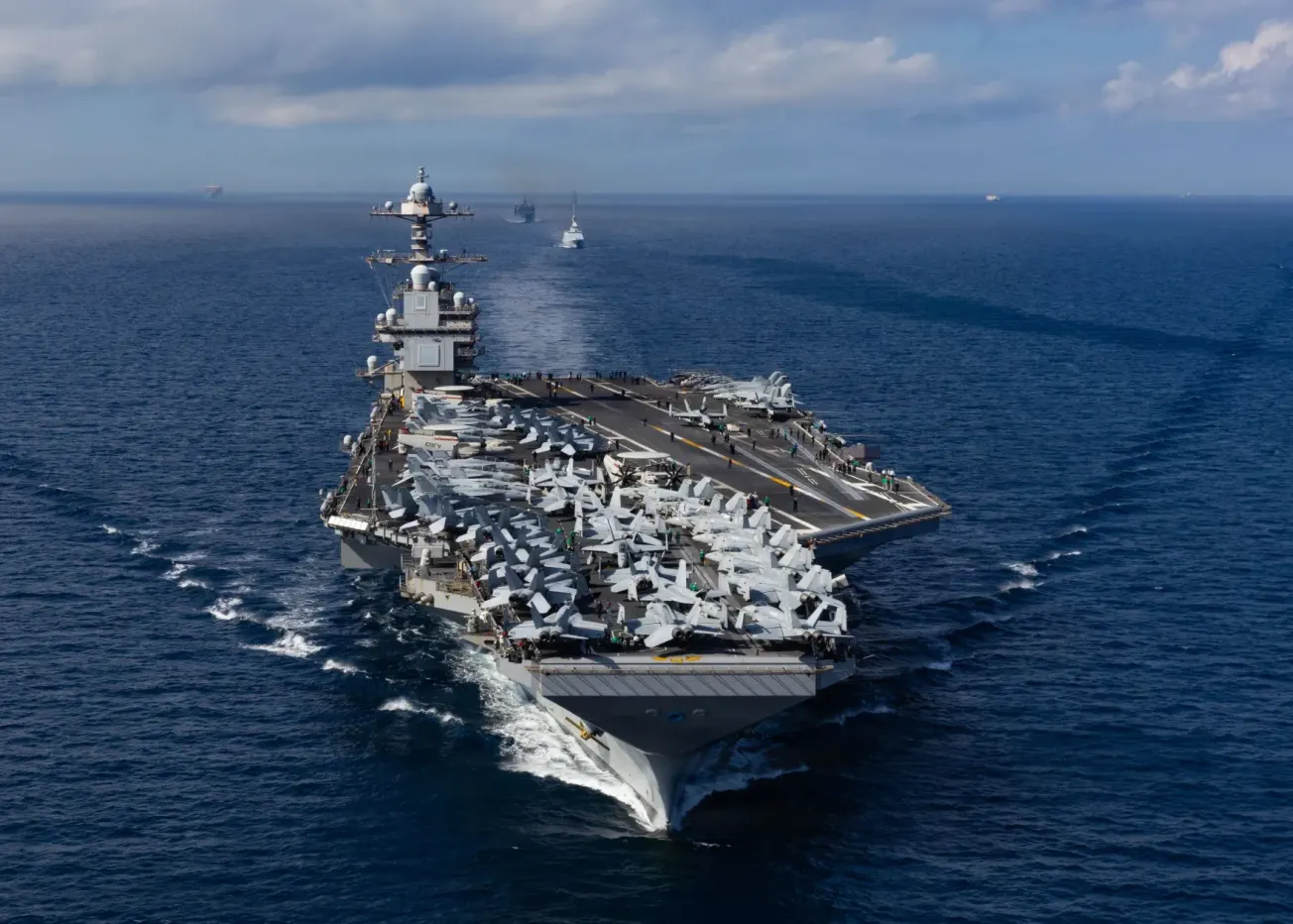
On Nov. 11, the USS Gerald Ford, the U.S.’s largest aircraft carrier, resumed its course from the coast of Africa towards the Caribbean, officially passing into the Southern Command’s Area of Responsibility, which extends out into the Atlantic close to the islands of Cabo Verde. The largest military force buildup in decades is now apparently heading towards the coast of Venezuela, threatening a new era of regime change wars—this time in the Americas. The carrier’s movements occur just two days after the latest American air strikes on alleged drug boats, bringing the total up to 19 strikes with at least 75 deaths, yet without a single legal prosecution. As the Veteran Intelligence Professionals for Sanity noted in their memo to President Donald Trump on Nov. 5, it would only take one minor strike on one of America’s vessels to trigger an uncontrollable spiral of escalation, locking the U.S. into an irreversible scenario. One of the prominent signers of that VIPS memo, Graham Fuller, elaborated on the strategic dangers involved, in an exclusive interview with EIR News on Nov. 8.
There are also growing signs that the American administration is attempting to orchestrate an anti-Lula and anti-BRICS coalition in the Western Hemisphere, to prevent any and all cooperation with China and its Belt and Road—exactly as EIR has been warning from the outset of the Venezuelan crisis. There are now press reports that Secretary of State Marco Rubio has ordered Argentinian President Javier Milei to organize such a right-wing coalition in the region. With the recent election in Bolivia of Rodrigo Paz Pereira to the Presidency, these outside actors believe they can force a break from within Bolivia and some of its neighbors, that have maintained close relations with China and the BRICS, and perhaps even think they can take advantage of these nations’ mineral wealth.
Hiding none of its former imperial hubris, an article in London’s The Telegraph proposes that Trump consider the grand-slam approach for Venezuela. While noting that it remains to be seen whether Trump will launch a full-scale “regime change” on President Maduro, author Matthew Lynn suggests the following: “Venezuela has the largest oil reserves in the world and yet exports almost nothing. If all that oil is released onto the market, the price will collapse, destroying Russia’s economy and perhaps Saudi Arabia’s—as well as dramatically lowering costs for everyone else.”
But Trump should be warned that this is the same kind of imperial hubris, which, while it may lead to victories in the short term, ultimately drives civilizations to their own self-induced demise. Take the case of Europe, which has borne the economic brunt of the Anglo-American attempt to cause a strategic defeat of Russia in Ukraine. As Ukraine increasingly appears to be headed toward a catastrophic collapse, NATO and European nations are doubling down on their plans for long-term war against Russia, without any plan for achieving peace. Germany, already bogged down in the worst economic crisis in recent history and threatening austerity against the most vulnerable of its citizens, is debating whether to institute a military draft for an imagined war against Russia. And, amidst the predictable public outcry against such insanity, Germany’s Defense Minister Boris Pistorius recently declared, “Whether you like it or not, the draft has to come, and it will come!”
As Helga Zepp-LaRouche has insisted, it was the 15th-century thinker Cardinal Nicholas of Cusa, who established the principle that the only authority for government comes from its commitment to the common good. “[S]ince all are by nature free,” Cusa writes in his Concordantia Catholica, “every governance … can only come from the agreement and consent of the subjects. For, if men are by nature equal in power and equally free, the true, properly ordered authority of one common ruler, who is their equal in power, can only be constituted by the election and consent of the others.”
It is from this standpoint that British geopolitics—which still thrives and infects the minds of Western leaders—must be overcome. The common good is not some utopian idea that only exists in books, nor is it “relative” depending upon the viewer. It is a knowable principle of statecraft, and can be acted upon by citizens and governments alike. Only through this approach will Western nations rediscover their identities and be able to rescue the world from the disease of oligarchism for good.
Tune into Zepp-LaRouche’s live webcast on Wednesday, Nov. 12 at 11 a.m. ET “So, You Wish To Learn Statecraft?”