
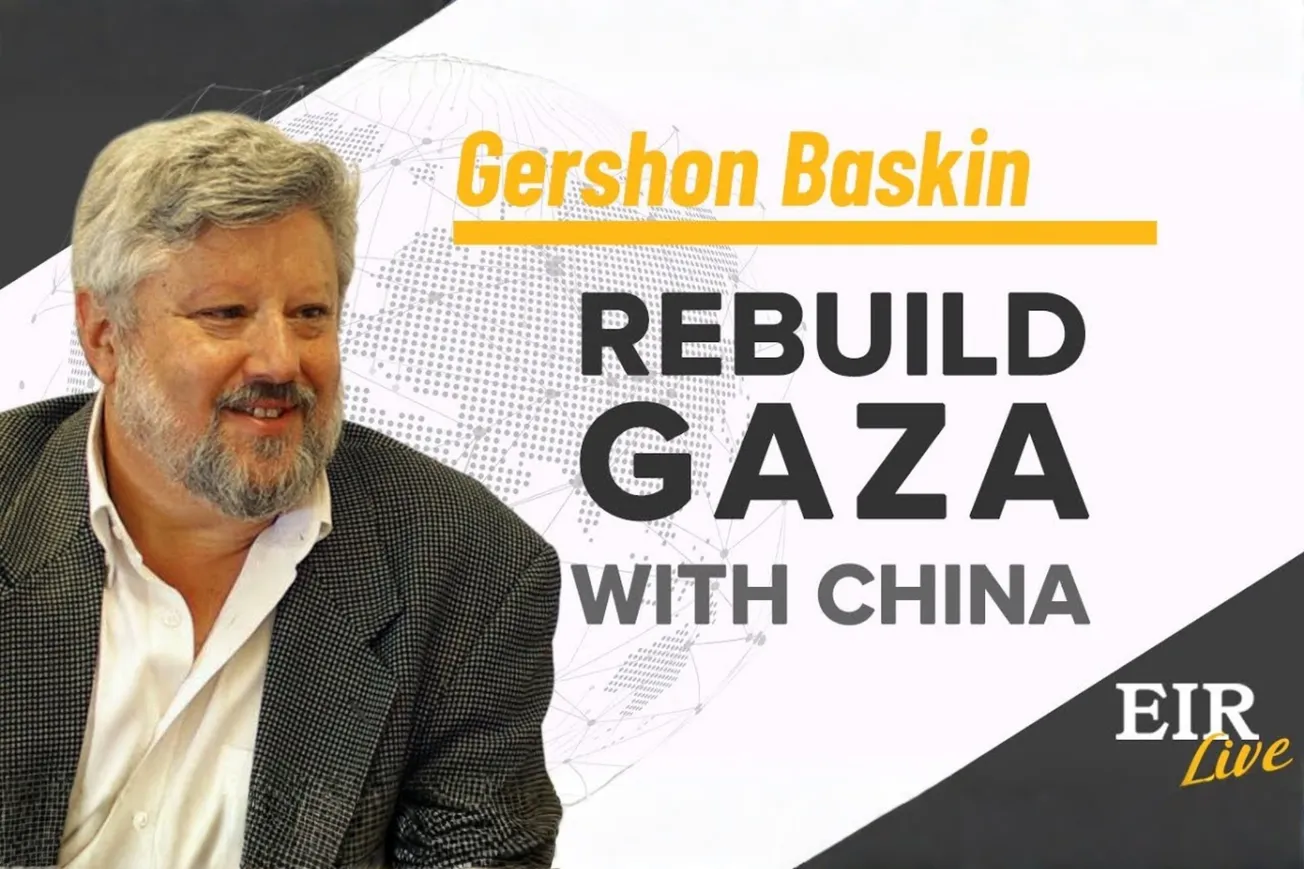
The EIR News interview with Dr. Gershon Baskin on the Gaza Ceasefire and the Path to Lasting Peace, which first appeared on the Nov. 14, 2025, IPC, is now posted on the EIR YouTube platform. In this in-depth, 28-minute conversation, conducted by EIR's Gerald Belsky, the renowned Israeli peace advocate and negotiator Dr. Gershon Baskin, Co-Director, Alliance for Two States; Middle East Director, International Communities Organization—the architect of the 2011 Gilad Shalit exchange, and a key behind-the-scenes figure linking Trump negotiator Steve Witkoff with Hamas representatives—discusses how the current Gaza ceasefire was achieved and what must happen next for it to endure. Key points include:
• President Trump’s critical intervention, made possible by regional cooperation and U.S. leadership in humanitarian coordination and multinational peacekeeping;
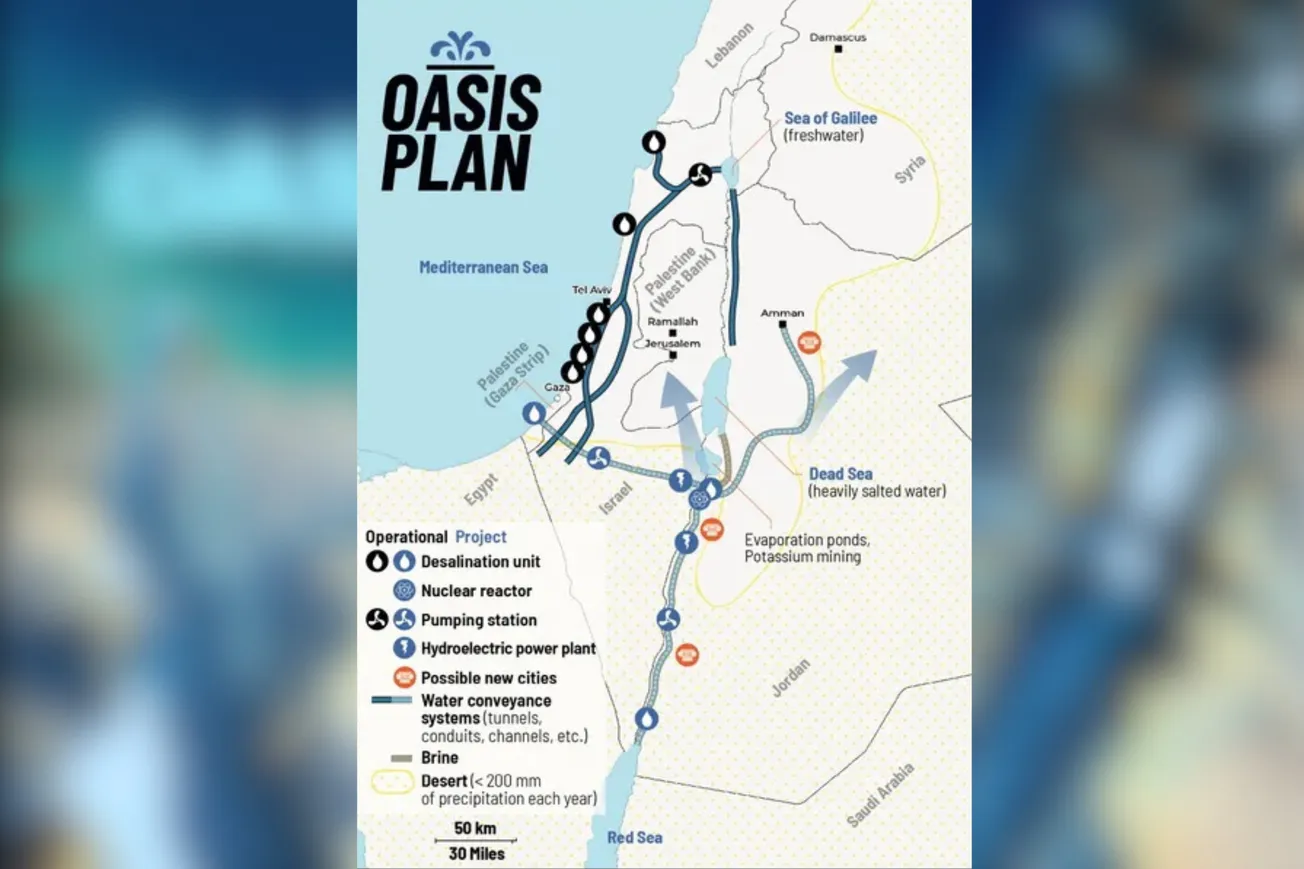
• The absolute necessity of large-scale economic development and reconstruction in Gaza—in line with the principles of the Oasis Plan—to create hope and overcome decades of mutual distrust;
• Why joint infrastructure projects involving Israel, the Palestinian Authority, Arab states, the United States, and China offer the most realistic path forward;
• The role Qatar can play in bridging U.S. and Chinese cooperation, and why excluding BRICS nations would undermine the Abraham Accords and regional prosperity;
• Marwan Barghouti’s possible release: Baskin’s long-standing support for it, concerns about Barghouti’s condition after years of harsh treatment, and the importance of free Palestinian elections;
• One-state vs. two-state realities: Why only mutual recognition of each people’s right to national self-determination can work;
• Baskin’s positive response to the Westphalian principle of “the advantage of the other” and Nicholas of Cusa’s approach to resolving contradictions on a higher plane.
Here, one of Israel’s most experienced negotiators expresses strong alignment with the development-oriented, great power cooperation framework that EIR and the LaRouche movement have advocated for decades.
The following is an edited transcript of the interview, conducted by Gerald Belsky of the Schiller Institute. Subheads have been added.
Gerald Belsky: This is Gerald Belsky with the International Peace Coalition and the Schiller Institute, and also Executive Intelligence Review. I have as my guest here, Gershon Baskin, who is a noted peace negotiator and promoter of the two-state solution [for Israel and Palestine] for many decades. He was an associate of the late Prime Minister Yitzhak Rabin in promoting peace. More recently, he has played a critical role in negotiating with Hamas and the United States for this peace process, as tenuous as it is.
I’d like to ask you, Gershon, where you see the process going; where does it need to go; and how to get there?
Gershon Baskin: I think the starting point is really recognizing the importance of ending the war in Gaza—and the war in Gaza has ended. It ended because [U.S.] President Donald Trump forced the end of the war on the Israeli Prime Minister. This would not have happened without Trump intervening and insisting that the war end. It happened because, after the failed Israeli attempt to assassinate the Hamas leadership in Doha, Qatar, the Arab partners of Trump in Qatar, in Saudi Arabia, and in the United Arab Emirates told Trump that Israel is unhinged; Netanyahu is a wild man, and he endangers the security of the entire region.
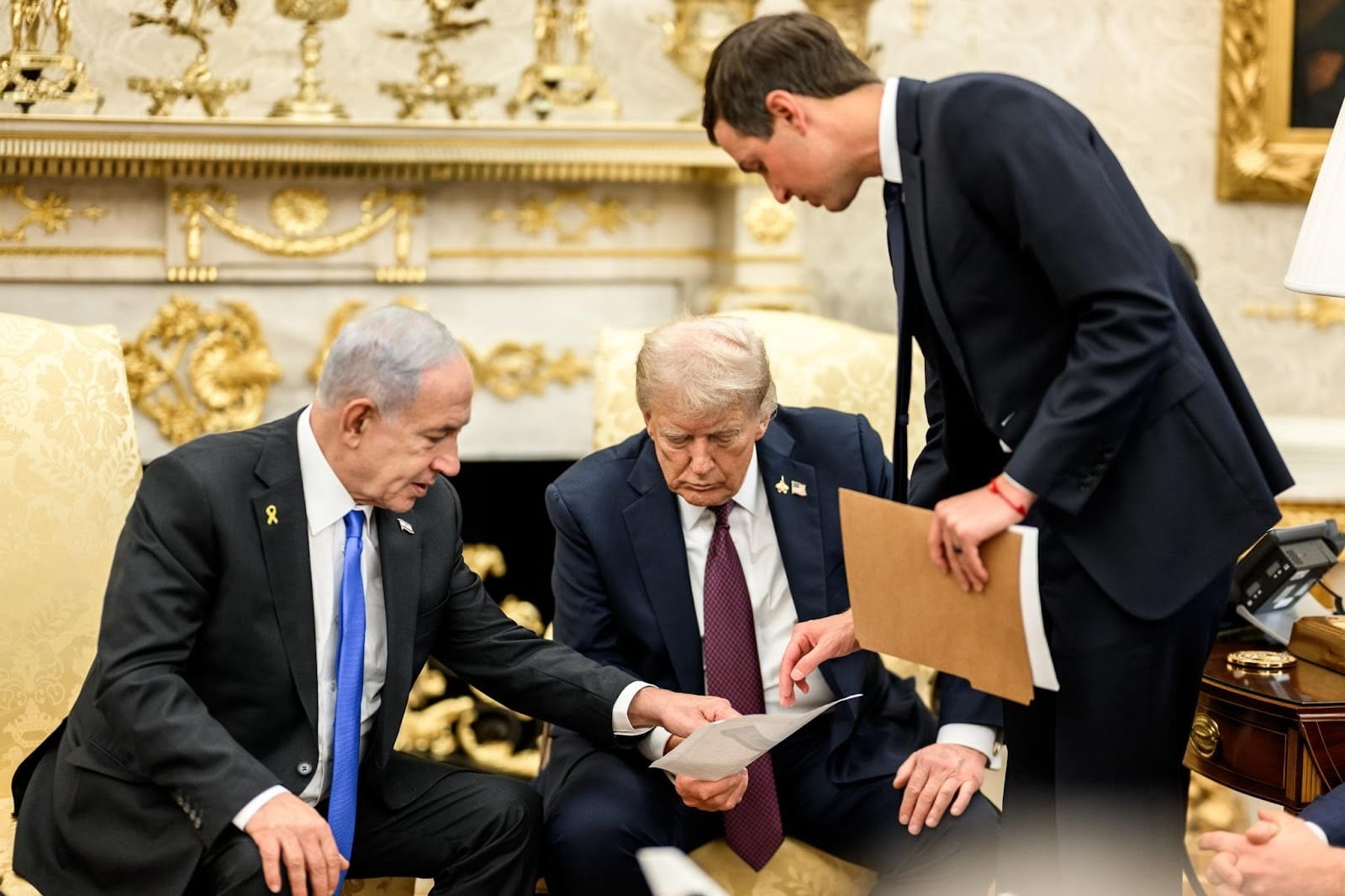
If you want to know what Donald Trump is thinking, follow the money. The interests of Trump, the Trump family, and, I would say, the national interest of the United States are definitely in the Arab Gulf; in these countries and other countries, and not just in the State of Israel, as might have been perceived by prior American administrations. So, this is a direct result of the failed Israeli assassination attempt in Doha; the violation of the sovereign territory of the State of Qatar; and the close relations between Trump and the Emir [Sheikh Tamim ibn Hamad Al Thani] and the Prime Minister of Qatar [Sheikh Mohammed bin Abdulrahman bin Jassim Al Thani]. And, of course, the direct involvement of [U.S. Special Envoy] Steve Witkoff, who was the deal-maker behind the scenes. But it was ultimately Trump’s decision.
That was the first stage. But in order to get there, and in order to impose this not only on Israel, but on Hamas, Trump came up with what is now the 20-point plan, and he incorporated the 20-point plan in an agreement that was made with the Arab and Muslim countries and the European countries. That was incorporated in the negotiations that the Americans conducted directly through the Qataris, the Egyptians, and the Turks; and in the final moment, in a direct meeting between the American negotiators and the Hamas leadership. This is unprecedented.
What it led to is something that almost everyone in Israel, except me and a few others, said would never happen: that Hamas returned all the living hostages, and out of 28 deceased hostages, 4 are left who are still being searched for. Hamas is making efforts, together with the International Red Cross, the Turks, and the Egyptians, to find the remaining four hostages, and the war has ended. Israel has withdrawn to agreed-upon positions, but it is a temporary withdrawal to those positions; Israel will be forced to withdraw further back.
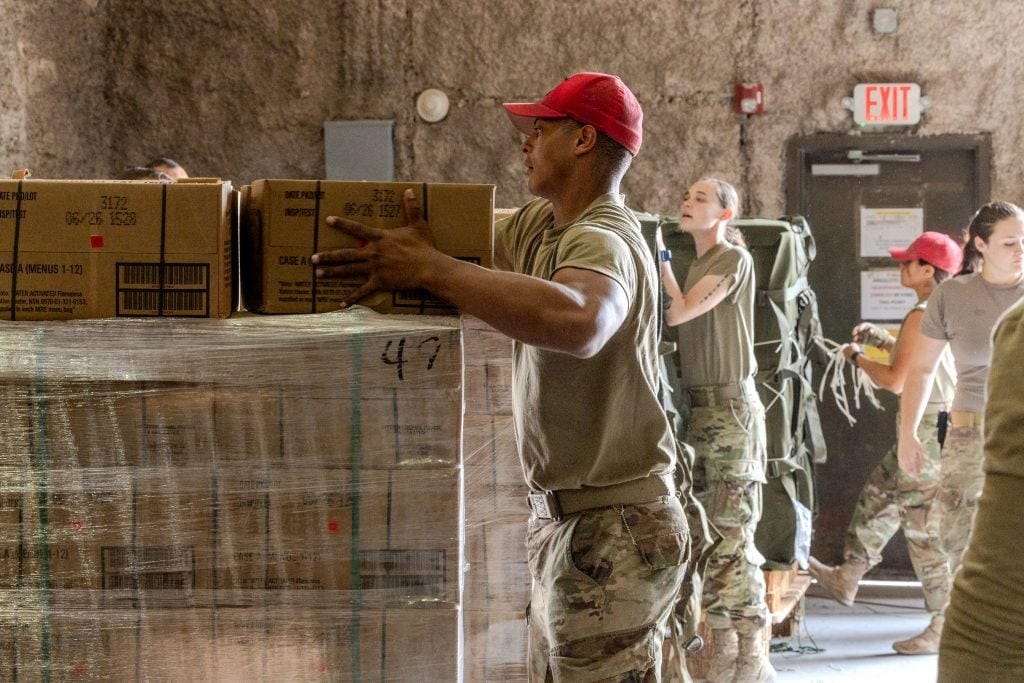
There are a lot of moving pieces that need to be done simultaneously, urgently, like the formation of a new technocratic Palestinian government committee; the creation of a Palestinian security force which is not Hamas; the deployment of an international security force in Gaza, which is waiting for a United Nations Security Council mandate. The third or fourth or fifth draft of that Security Council resolution is circulating amongst the members of the Security Council. There have been changes made to the draft: The Trump 20-point plan has been incorporated as an annex in the proposed resolution; the American set-up of a civilian military command center in the town of Kiryat Gat, not far from Gaza. They are talking about setting up a large military base adjacent to Gaza. The Americans have taken over the issue of humanitarian aid, which should stop all the Israeli obstacles that have been placed on humanitarian aid, because less than a third of what was supposed to go into Gaza since the ceasefire a month ago now has gone into Gaza. The Americans want to move this process along.
Difficulties and Obstacles
There are difficulties, there are obstacles. There’s a crisis right now, with between one and two hundred Hamas fighters in a tunnel underneath the area that Israel controls. Hamas delivered the remains of the soldier Hadar Goldin, who was killed in Gaza in 2014. They understood that a deal would be made that would enable the Hamas fighters in the tunnel to leave, perhaps leaving their weapons behind. But Israel is opposed to this, and the Americans are trying to work out a deal that enables them to leave the tunnel. Whether they leave Gaza or stay in Gaza is being negotiated.
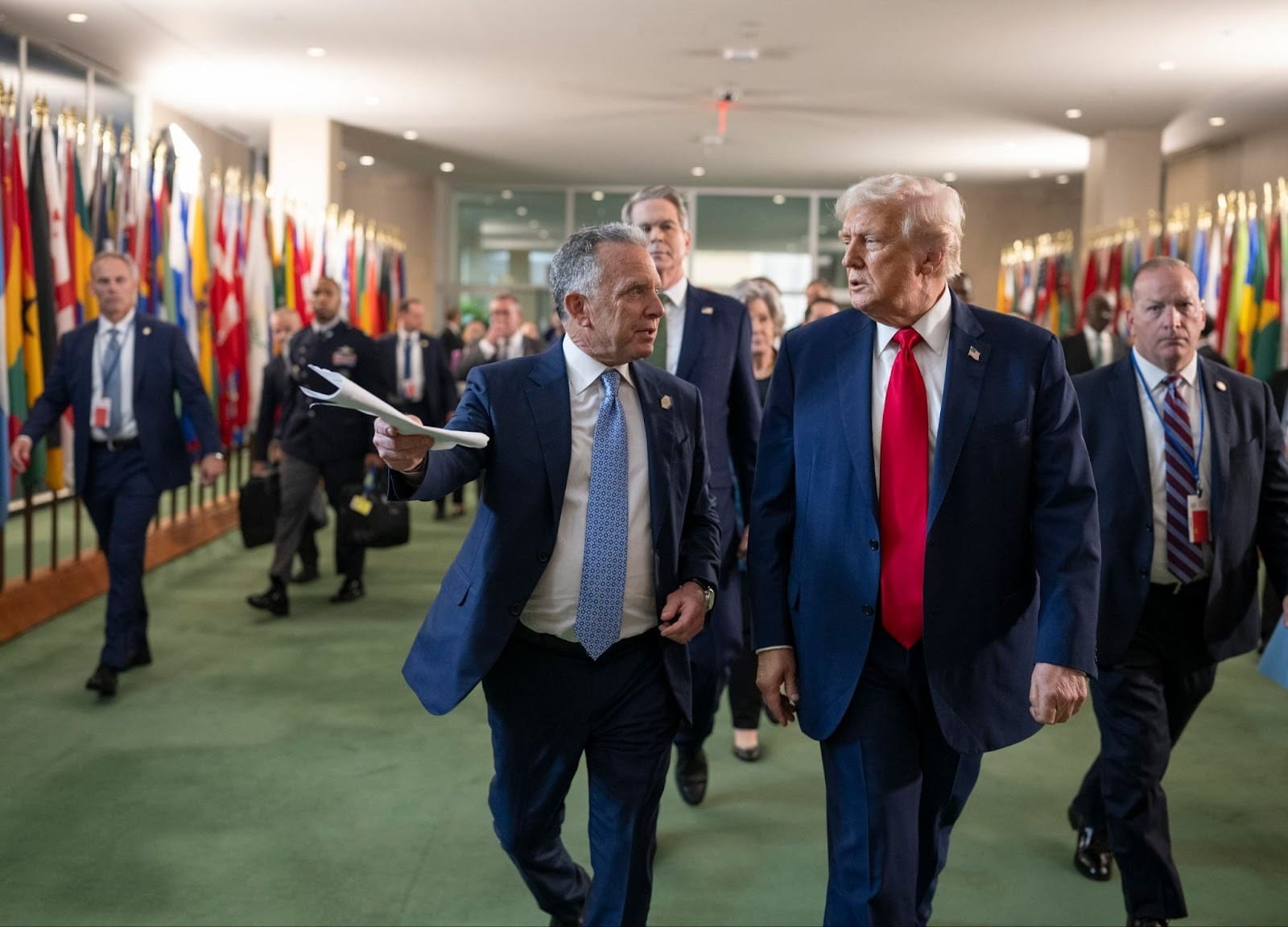
The next stages of the deal are in the works. The Americans are in a constant movement of what we’re now calling “Bibi-sitting” from Donald Trump, to the Vice President, to the Secretary of State, to four-star generals coming here, to Jared Kushner being here yesterday; Witkoff coming in and out, and other American officials are making sure that Israel holds to the ceasefire, even though Israel has violated the ceasefire every day. Hamas has violated the ceasefire, and the Americans are working with the Turks, the Egyptians, and the Qataris to make sure that this ceasefire holds, and that we move into the future, forward stages, which will hopefully lead to a regional peace process involving the creating of an architecture for regional security and regional economic development and prosperity.
The bottom line here, is that everyone has to understand that Israel will never have security until the Palestinians have freedom; the Palestinians will never have freedom until Israel has security.
The bottom line here, is that everyone has to understand that Israel will never have security until the Palestinians have freedom; the Palestinians will never have freedom until Israel has security. I think this is understood by the U.S. administration, as opposed to the first Trump administration, when he put down his “deal of the century” that included a kind of a Palestinian state, minus 30% of the territory of the West Bank, with zero sovereignty and zero control of their borders. I think there is a much better understanding amongst the Trump personnel today—and perhaps Trump himself—that the Palestinians need to have a state at the end of this process. And that state can only provide Israel with security if it’s part of a regional package.
Belsky: Gershon, you have written in your Substack posts, that what is lacking right now between the two parties is empathy for each other; and that in order to get a permanent peace, there must be a recognition of the rights of both nations to exist. Now, what you’re calling for is essentially what was discovered in the [1648] Treaty of Westphalia in Europe in the religious wars. There was a recognition that a continuation of this war would destroy everybody. They promoted and put into international law the concept of the interest of the other—which is a key concept to have peace, obviously. Now, you have also written that, paradoxically, the distrust of both sides is greater than ever before, and that both sides think the other is guilty of massive crimes and that there can be no reconciliation.
Now, the question is how to overcome that divide. As you may know, the Schiller Institute has been saying for many years—and Mr. [Lyndon] LaRouche had insisted when he put forward his Oasis Plan [in 1975]—that to overcome this distrust and lack of empathy, lack of recognition of a joint, shared future, there has to be economic development to create the future. There has to be hope for the future. Now, you have written about this (I did not realize this until a few days ago) two years ago, that there must be economic development to create the basis for a future, because you cannot have peace if the Palestinians are kept in abject poverty with no hope. So, there must be built into this peace process the idea of hope. Therefore, as you know, we are proposing to bring in massive amounts of fresh water. You have, yourself, said it can’t just be a bilateral agreement; this has to be region-wide. You need to bring in the Saudis, Qataris, Turks, etc. Therefore, to have this massive project of development, which you, in fact, insist should include bringing in the Chinese—they have expertise and a track record of building infrastructure. Would you like to comment on this economic side of the peace process?
Baskin: Sure. You know, I’ve been doing this work since 1988; it’s a long time. The first actual piece of research that we produced in this joint Israeli-Palestinian public policy think tank called IPCRI [Israel-Palestine Center for Research and Information] was a book written by two economic business people. It was published in 1989, and it was called Peace Pays. It was the first piece of research, or policy paper, that we put out, recognizing that people had to see the benefits of making peace. It couldn’t be some abstract kind of idea; it had to have a direct impact on their lives. This is still the case.
I have said to Israeli audiences for decades that it makes no sense whatsoever for us as Israelis to want to have poor neighbors. Palestinian poverty is not good for Israel; Palestinian poverty makes unhappy neighbors, and we should want to have happy neighbors. Because Israel has actually become an economic giant, it makes no sense that Israel puts obstacles around Palestinian economic development.
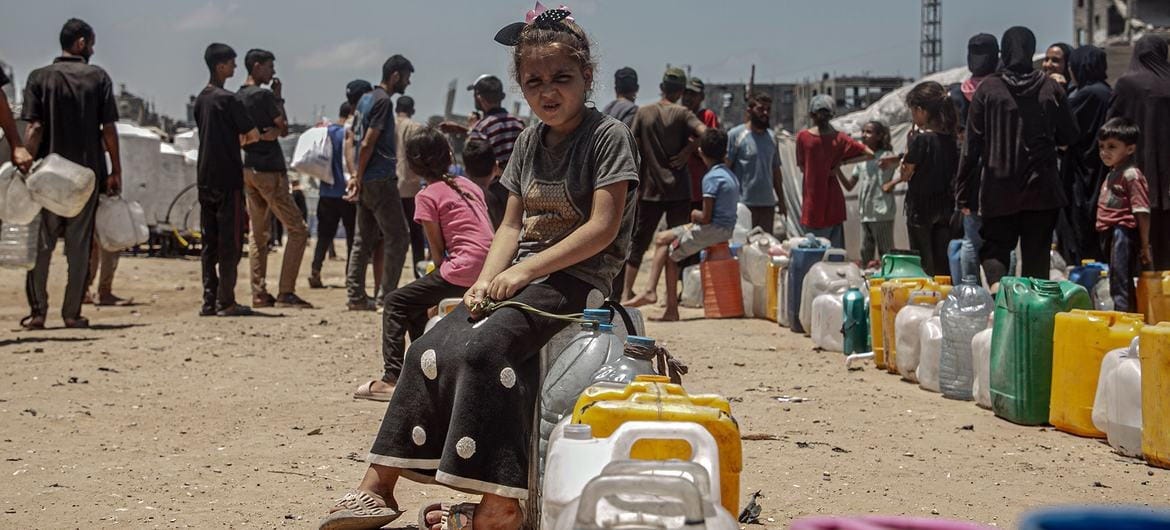
If the war in Gaza ends with the economic blockade remaining intact in Gaza, we will have achieved nothing, and nothing will change. Gaza needs to be opened up; Gaza needs to be developed. The one tiny little positive thing that one can say about the total destruction of Gaza is that you don’t rebuild refugee camps. Gaza needs to be rebuilt in a way that provides people with decent housing, with a good life, with open spaces, with planned public transportation and infrastructure—water, electricity, sanitation. People don’t have to live with open sewage pits running along the streets where they enter their homes. So, there is a chance that the many tens of billions of dollars that hopefully will be made available for the reconstruction of Gaza will have a direct impact on the lives of the people in Gaza. It will take time. We’re approaching Winter, and there are two million homeless people in Gaza.
A New Political Leadership Is Required
The West Bank economy has been destroyed in the last two years, as well. Two hundred thousand Palestinians who used to work in Israel and provided 40% to 50% of the Palestinian economy, have been unemployed for two years. They have had no wages to bring home to put food on the table. The government of Israel owes the Palestinian Authority more than $2 billion in taxes that Israel collects on behalf of the Palestinian Authority. The Palestinian banks have hundreds of millions of shekels in their vaults, but they have nothing to do with this money, because the Bank of Israel and the government of Israel won’t let the money flow back into Israel so it can be credited to the Palestinian banks. There are so many economic problems here that it’s so counterintuitive and counterproductive for the government to be waging policies that enhance Palestinian poverty and Palestinian suffering.
This is what we need to overcome. We’re not going to overcome it with the current government of Israel. The Palestinians need to have the ability to elect new leadership as well. This is something that has been promised to them by their 90-year-old President, who’s in the 20th year of a four-year term. So, we need political leadership of a new kind; we need a new generation. We need people with vision. We need the international community to be here and buy in; not only run by the United States. I think the United States has really good intentions, and they will successfully raise the money from the international community—much of it coming from the Arab world. But I think it also would be a good step for everyone on the entire planet if the United States also cooperated with China in the reconstruction of Gaza, simply because no one in the world builds infrastructure faster and more efficiently and cheaper than the Chinese do. But I think that would really help the people of Gaza. I think it might also help lessen the tensions between the United States and China if that were to happen.
I’m less confident about that happening, because of the animosity between the United States and China, than I am about the other things that I mentioned.
Belsky: The question you have posed is essentially how to get the United States to cooperate. Because it’s clear that, by the United States taking this initiative, as Trump did, it forced the issue. He went outside of just Israel and brought in other countries. It’s been our view at the Schiller Institute, that if the United States were to reach out to China and Russia and other nations—even Iran—we would solve most of the problems we’re facing, if we adopted this same empathy that you call for between Israel and Palestine as part of a new security and development order. As you know, the Chinese have called this the new Global Governance Initiative, a new [Global] Security Initiative. They would be very open, along with Russia, to putting together a new order that respected the rights of every country; what you’ve been calling for between Israel and Palestine, essentially.
Baskin: I think it’s very difficult to imagine that the United States would actually turn to China, or that China would turn to Israel. We’re struggling right now with the reality that both Qatar and Türkiye want to play a role in Gaza, and the Israelis have so far put a veto on that. What I have suggested to the United States is that the buy-in price for Türkiye to be involved in Gaza would be the renewal of full diplomatic relations between Israel and Türkiye; and maybe that could happen.
I would suggest that if we want to see China getting involved, maybe the Qataris could actually be the middlemen, talking to the Chinese. The Qatari Emir and the Prime Minister of Qatar are very close to Donald Trump. If they were to play this mediating role between Beijing and Washington, maybe that could move something. You know, Trump is a transactional President; he sees things in a transactional way. With the Qataris involved and all the money behind them, and the appeal to involve China in the reconstruction of Gaza, maybe it could happen. I don’t know about the Russians. We also have to see, right now, if the Russians and the Chinese will threaten to veto the Security Council resolution that the United States wants to pass and [which] would provide the mandate for the international security force in Gaza which is essential.
Palestine’s Need for International Protection
It’s also, I would point out, unprecedented; this is something that Palestinian people have been calling for for decades: it’s international protection; and an international security force in Gaza made up of Arab and Muslim countries, and European countries and others, is exactly the kind of protection that would prevent Israel from attacking Gaza again. So, this is really in the interest of the Palestinians to see this done, and we don’t want the Russians or the Chinese to veto the Security Council resolution simply because the Americans are trying to pass it.
Belsky: One thing you may not be aware of in terms of the Russian angle here, is that the CEO of the Direct Investment Fund of Russia, Kirill Dmitriev, who is also the presidential envoy for international economic cooperation, recently came to Washington and met with Steve Witkoff on the question of trans-Siberian economic projects. We know that Trump has shown some interest in these. What Dmitriev has proposed, is a project that the Schiller Institute has long also been promoting, which is to build a Bering Strait Tunnel that would link all of North America with Eurasia. Now, if you could get that kind of cooperation on development projects between the United States and Russia, you would then intersect the Chinese Belt and Road Initiative. So, that is one direct link.
But also in terms of China, Professor Zhang Weiwei, a noted international relations and economic expert in China, has told us that China has tremendous experience in defeating the desert. They have one of the biggest deserts, as you know, in northwest China. They have been beating it back with water development and tree planting; they have a whole process of doing this. When he looked at the Oasis Plan, he said, “Look, in terms of developing this water project, China could do it. We could be brought in.” Do you have any comments on this type of economic cooperation? I should add, in this regard, that in September, the Chinese—with the Russians and other members of the BRICS—had a conference of the Shanghai Cooperation Organization, where they promoted this type of new economic and security order being developed together. If that could be brought in through the Qataris or whomever, this would change the whole dynamic, we think.
It sometimes bewilders me that this kind of cooperation doesn’t develop, and people are looking at very primitive conceptions of competition rather than cooperation. It’s the cooperation we need to get.
Baskin: I think it would be great if it could happen, and the more cooperation the better; the more projects that are actually put down on the ground. We have two million homeless people in Gaza; this has to be dealt with quickly; this is a human disaster that’s happening in Gaza. I think for the security of the region, the security of the world, the more cooperation that can be developed between the superpowers in the world—the United States, Russia, and China—the better it is for the entire globe. It’s good for everyone. It sometimes bewilders me that this kind of cooperation doesn’t develop, and people are looking at very primitive conceptions of competition rather than cooperation. It’s the cooperation we need to get. The spark for the cooperation could be helping to build peace between Israel and Palestine; that benefits us all.
Belsky: Absolutely! The irony of the situation, is that President Trump is very interested in these economic projects through the Abraham Accords, but the countries he’s counting on to do this, which could create security for everybody, including Israel, many of them are collaborators if not members of the BRICS, and they collaborate with China. Egypt is a member of the BRICS; the UAE is a member of the BRICS; Iran is a member of the BRICS. So, any Abraham Accords that did not bring in these types of development— let me put it this way: If they were perceived as an attempt to isolate China out of the picture, stop the BRICS, and build an economic program independently—once again, competition and bloc—ironically, that would fail. Yet, if the U.S. got over its opposition to the BRICS and seeing it as a threat to the United States and the dollar, I am quite certain these countries would be glad to cooperate with the United States—which they’ve told us.
Baskin: As I said, I think Qatar might be the key player here, because of the very close position that Qatar has with the United States, with President Trump. And its ability to work behind the scenes is something that they do. You know, the criticism of Qatar in Israel is that it’s a country that supports the Muslim Brotherhood and supported Hamas for years. It’s a complex situation; it’s a complex reality. I think that Qatar wants to be involved in the continuation of helping Gaza without building groups like Hamas that threaten the security of the entire region. I think there is a kind of awakening taking place in Qatar as well. If they can play a positive role between the United States and China, more power to them; they should do it.
Belsky: Finally, I’d like to ask you, in terms of the process of building for a two-state solution, which some people have dismissed as “not going to happen.” I, frankly, think it’s the only realistic thing. As you and other people have said, there are seven million Israelis and seven million Palestinians, and they’re not going anywhere. They’re going to be living together. But would you like to comment in that regard?
Baskin: I would just say that those people who talk about a one-state solution have to know that there’s no such thing. If you want to solve a conflict, you have to ask what it is that people have been willing to fight, die, and kill for. In Israel and Palestine, it has been for a territorial expression of their identity. Israelis and Palestinians have not been fighting, killing, and dying for a united state of Israel-Palestine and a territory which is not defined in an ethnic or religious sense. Israelis want a Jewish state, and Palestinians want a Palestinian state. Even those Israelis and Palestinians who might talk about a one-state solution, the minute you dig below the surface and ask them to describe that state, the Palestinians describe a Palestinian state and the Israelis describe a Jewish state.
Removing the Barriers to Peace
So, if we want to resolve the conflict, we have to answer what is worth fighting for. Israelis need a territorial expression of their identity, and Palestinians need a territorial expression of their identity. But the condition for that to happen, is that we have to remove barriers and walls and fences; not build them higher. There can only be peace here if there’s cooperation across the borders—economic cooperation, environmental cooperation, energy cooperation, and everything that you can think of, from education to research to culture to food to everything. Because we live on one small piece of land which is a common homeland for both peoples. And even if there is a border separating sovereignty between these two states, there needs to be a recognition that the whole territory is important to all the people who are living here.
Belsky: Would you like to comment on the question of Israel releasing Marwan Barghouti, who has long been a proponent of the two-state solution, and is considered the most popular Palestinian leader, who would probably be elected President if there were elections?
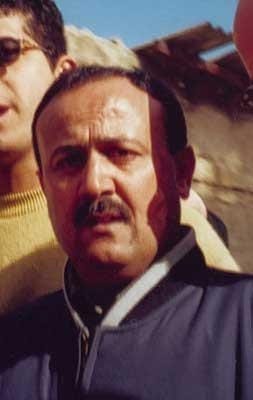
Baskin: Well, I advocated for Marwan Barghouti’s release with the Americans when they were negotiating with Israel and Hamas on the prisoner release. Two hundred and fifty Palestinian prisoners who were serving life sentences for killing Israelis, were released in the last round of this deal that ended the war. I advocated for Marwan. But I think it’s also important to note that, while I think that Marwan should be free, we don’t know what Marwan’s state of mind is.
He’s been in prison for 23 years now. He is not a young man. He’s been tortured by Israel over the last two years; kept in solitary confinement in the dark many hours of the day; been starved and physically abused. He’s been moved at least five times between prisons, where he gets the initiation of the prison guards. The Israeli prison authority is run today by Ben Gvir, and they take orders from Ben Gvir, and they are treating all the Palestinian security prisoners in the same way. Marwan, because he’s a symbol of Palestinian struggle and Palestinian leadership, gets extra-special attention from the Israeli prison authorities.
So, we have no idea what his state of mind is. He should be released. He should be free to make a decision if he wants to serve the Palestinian people as a leader. Maybe he needs to recover from all the torture that he’s received over these years, and maybe he’s not in a position to lead. He is, no doubt, the most popular Palestinian leader, because he is a symbol of the Palestinian people. But being in prison for 23 years, the young generation of Palestinians don’t even know who he is; know nothing about him; he’s just a name. And we need to recognize that.
The bottom line is that Palestinians need to have the right—must have the right—to elect their own leadership. And neither you nor I nor anyone else in the world should impose upon them who their leaders are. This has to be a free choice of the Palestinian people. If they choose to elect Marwan Barghouti, whether he is in prison or not, this is their choice.
Belsky: Finally, Gershon, I just want to bring to your attention that Pope Leo XIV recently identified a principle which the Schiller Institute has been promoting for 40 years. It’s called the “coincidence of opposites.” He cited a 15th-Century theologian—not well known—Nicholas of Cusa, who had come up with the concept of an ecumenical alliance among different religions and peoples, based on the scientific principle that the One is greater than the Many. And, that you cannot resolve a problem on the same level on which it was created; you have to go to a higher truth. This is a principle we’ve been promoting, and I think what we’ve been discussing today is an example of that principle of a higher truth. How do you reconcile two opposites on a higher level, which is the question of development and security for all. Therefore, if we apply this principle today, we could frankly transform the entire world.
Baskin: Sounds like a good idea to me. I think the Americans called it e pluribus unum—from the many, one.
Belsky: Absolutely! And in that Preamble to the Constitution, it promotes the General Welfare. If we take that principle and apply it to the whole world, we could solve everything.
Baskin: I agree.
Belsky: Thank you very much, Gershon, for everything you’ve been doing.
Baskin: Thank you very much.