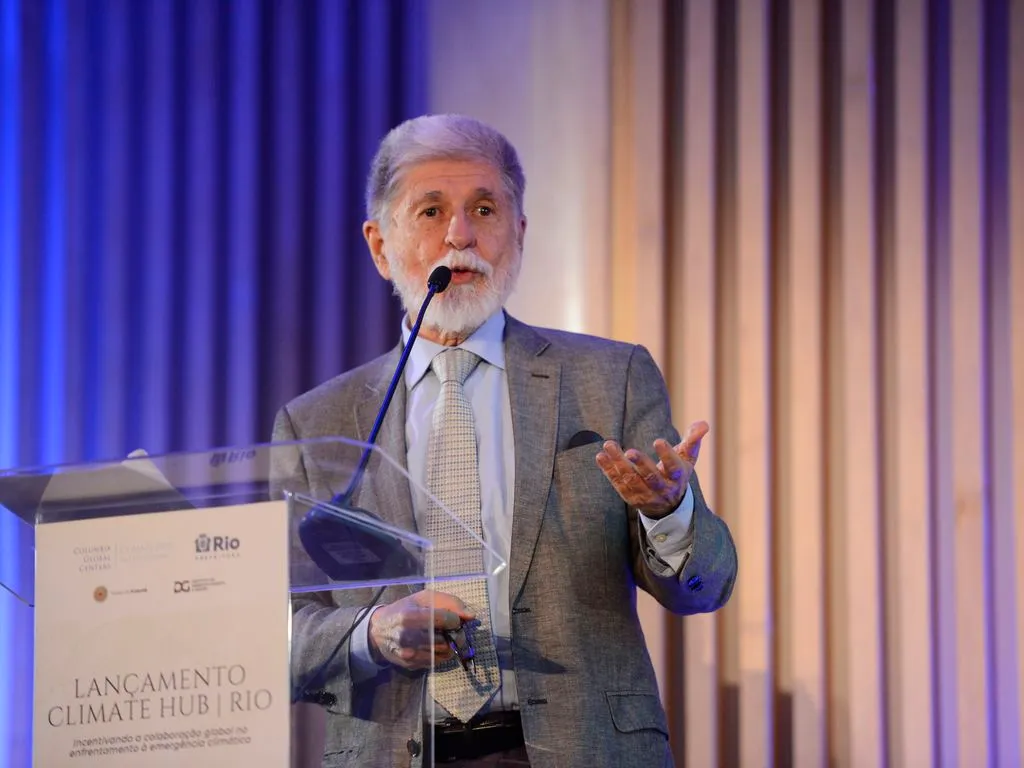
“Peace is indivisible,” stressed Celso Amorim, Brazilian President Lula da Silva’s Special Advisor, in a Nov. 4 interview with Brazil’s O Globo daily. “You cannot think that there will be peace in Ukraine and, at the same time, a war or some kind of attack in South America. All of this is connected, all of this contaminates each other,” he rightly warned. The fact that “the world is in total disorder” heightens the danger.
He is very concerned that the “narco-terrorism and other labels” being applied to developments in the Caribbean and South America may be used to “justify military attacks that would not otherwise occur…. Since 1902, there has been no threat of direct use of force against South America,” he added. Should that occur, “that would be very serious.”
Arrogant American warhawks talking up plans for some quick, in-and-out military victory in Venezuela should take note that Brazil, the largest nation in South America, will view an attack on Venezuela as an attack “against South America” as a whole.
Asked about the possibility of the United States accepting President Lula’s offer to U.S. President Donald Trump for Brazil to mediate between Venezuela and the United States, Amorim responded that “Brazil does not have to be the mediator.” President Lula offered that possibility to show President Trump that there are other ways to resolve this, he explained. Mediation, in any case, requires that the parties be interested in it. Venezuela has shown signs of interest, he added, “not least because it is under serious threat,” but he is not sure if the United States is.
Amorim suggested, as others have, that it is U.S. Secretary of State Marco Rubio who is leading the drive for a military action against Venezuela, which can blow up President Trump’s peace initiatives in other areas. “Power there is very divided,” in the United States, he said. “Trump concentrates a lot of power, but he is influenced by many different forces. It seems that the State Department is taking a confrontational stance.”