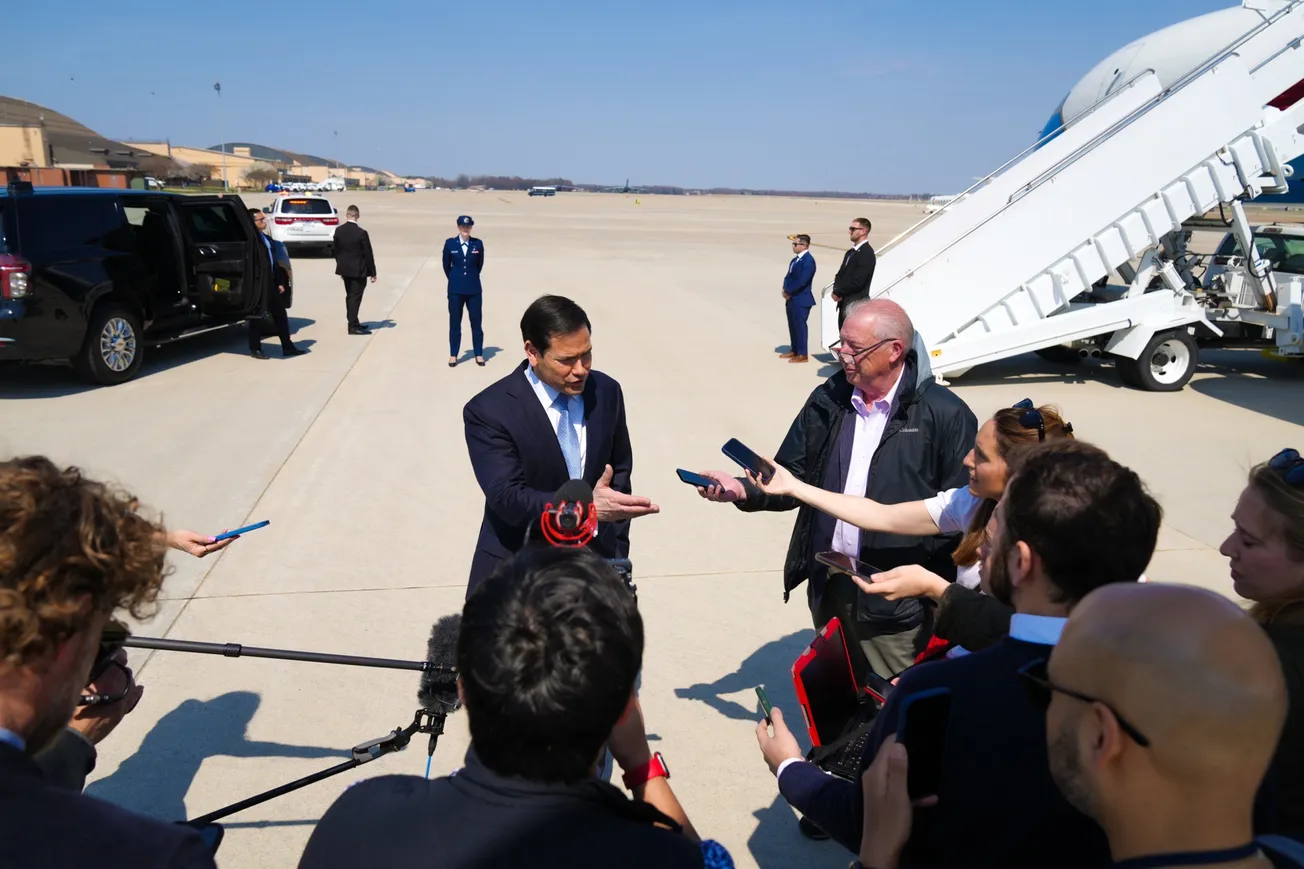
The Department of Defense announced on Nov. 24 that Sen. Mark Kelly was being investigated for “serious allegations of misconduct” following his appearance, in a video statement published last week, with five other Democratic members of Congress, in which they called on members of the U.S. military not to obey illegal orders. Kelly was singled out, because he is the only one of the six who retired from military service and thus still subject to the Uniform Code of Military Justice. In a separate statement Secretary of Defense Pete Hegseth called the video “despicable, reckless, and false.”
“Encouraging our warriors to ignore the orders of their Commanders undermines every aspect of ‘good order and discipline,’” he said. “Their foolish screed sows doubt and confusion—which only puts our warriors in danger.” (Of course our “warriors” would be much safer if they were not deployed into illegal wars of aggression.)
In an effort to explain the legal matters at hand, two retired officers, Eugene R. Fidell, a former judge advocate in the Coast Guard, and Steven J. Lepper, a retired Air Force major general and former deputy Judge Advocate General of the Air Force, placed an article in Slate. “Military law establishes a strong presumption that military orders are lawful and must be obeyed,” they write. “We do not counsel any military member to disobey any order they may be given. Our purpose is simply to provide all readers insight into the laws and procedures associated with military orders and the challenges involved in identifying, questioning, and disobeying orders that are unlawful.”
Their explanation is in the form of a fictional email colloquy between a destroyer commander deployed in the Caribbean and a former military lawyer now in civilian practice. In the exchange they make a number of important points:
Invoking the “laws of armed conflict,” as the Department of Justice Office Legal Counsel memo reportedly does, does not mean “everything goes.” “The laws of armed conflict (LOAC) have nothing to do with deciding whether the [boat] strikes are lawful.” They argue factually that the U.S. is not in an armed conflict and that, “Once an armed conflict has been deemed lawful, LOAC applies to regulate the conduct and application of our armed forces.”