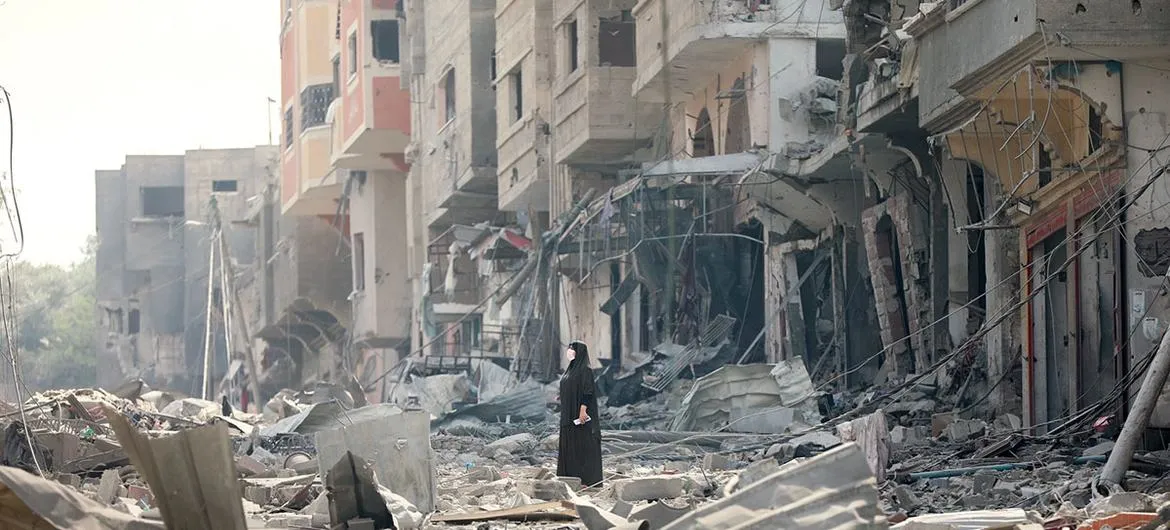
Two reports released this week demonstrate, though apparently without actually saying so, the genocidal intent behind Israel’s war of genocide in Gaza: Not only to kill Palestinains in the present, but also to keep the dying going even if the shooting were to stop. Not only has the Palestinian economy’s capacity to support the population been destroyed by Israel’s war, but so also has its capacity for producing and supporting the next generation of Palestinians.
“The prolonged military operation and long-standing restrictions have driven the economy of the Occupied Palestinian Territory into its most severe contraction on record, wiping out decades of development gains and deepening fiscal and social fragility.” This is according to a new report issued yesterday by the UN Conference on Trade and Development (UNCTAD). “The report [‘Developments in the Economy of the Occupied Palestinian Territory’](https://unctad.org/news/unctad-report-warns-economic-collapse-occupied-palestinian-territory-calls-urgent ) finds that two years of military operations and restrictions have triggered an unprecedented collapse across the Palestinian economy,” according to the UNCTAD press release. “This has unfolded against a backdrop of long-standing economic and institutional fragility, with severe social and environmental consequences. ….
“The resulting economic crisis is among the ten worst globally since 1960; while the situation in Gaza stands apart; being the most severe economic crisis on record.”
“In 2024, Gaza’s GDP contracted by 83% compared with 2023, following a sharp decline the year before. Over 2023–2024, GDP shrank cumulatively by 87% to $362 million. GDP per capita fell to $161—among the lowest globally—representing just 4.6% of the West Bank’s per capita GDP, down from near parity in 1994,” UNCTAD said.
“Extensive destruction of infrastructure, loss of productive capacity and population displacement have inflicted lasting damage on human capital. Disruptions to education and basic services will have long-term effects on livelihoods and the very foundation of societal resilience.”