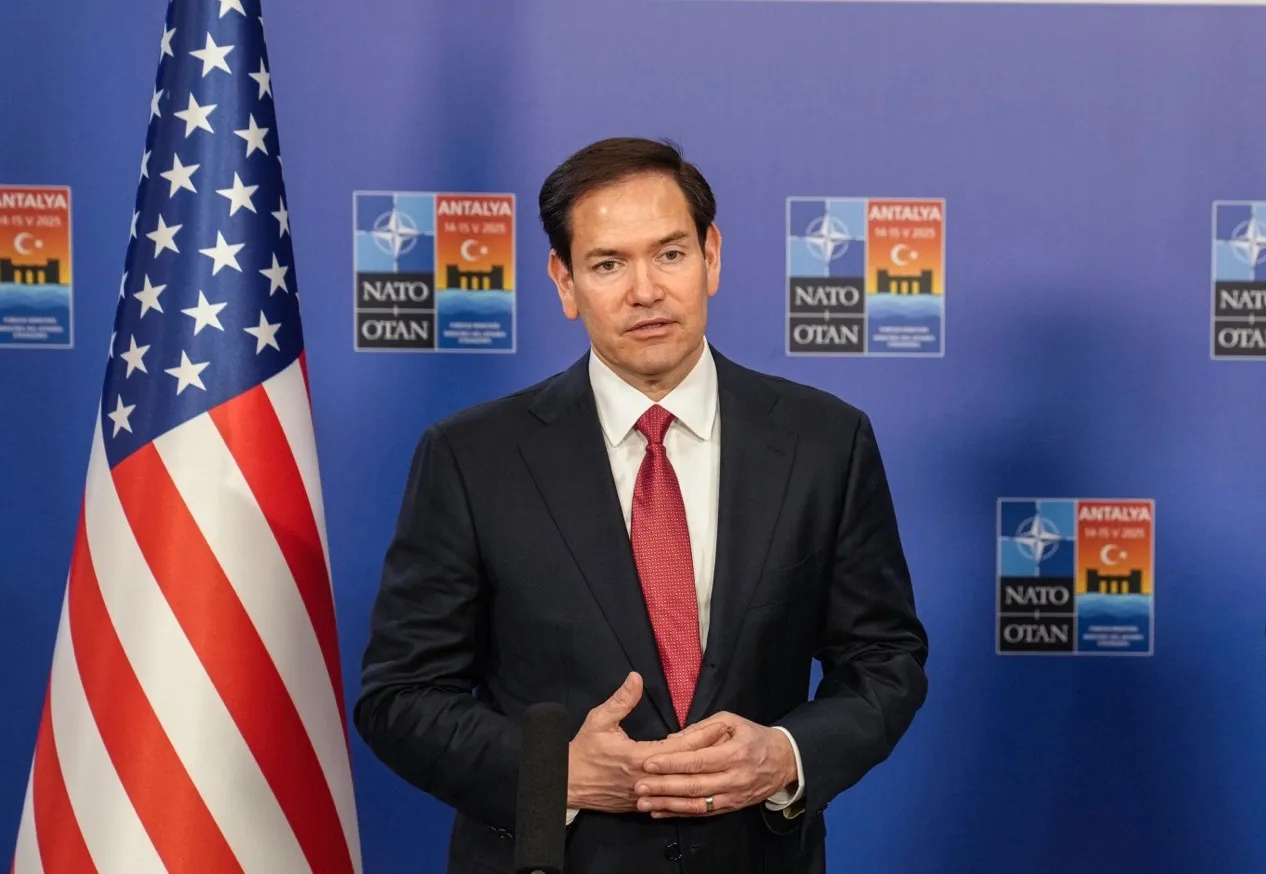
This coming week could witness U.S. President Donald Trump giving the green light for a U.S. attack on Venezuela by land and by air, crossing the Rubicon of unleashing another Forever War of the sort he was elected to never permit. Perhaps it should be called “crossing the Rubio-con,” since Secretary of State Marco Rubio is known to be the driving force inside the Administration for this disastrous neo-con policy. President Trump would be wise to see John Bolton whenever he looks at Marco Rubio.
This week will also see a meeting in the Kremlin of Trump envoys Steve Witkoff and Jared Kushner with Russian President Vladimir Putin, which could consolidate an approach to solving the Ukraine crisis that addresses the underlying causes of that war, as the two countries had agreed to on Aug. 15 in the Anchorage, Alaska summit between Trump and Putin. To stick to that approach, which is the right one, will require President Trump standing up to London’s sabotage efforts—as played into his administration again by Rubio—far more decisively than he has to date.
And yet, even with those major political developments looming before us this week, we instead turn our readers’ attention to matters of more lasting import: the Schiller Institute’s upcoming International Online Youth Conference on Sunday, Dec. 14, “Young People of the World, Unite!”. The gathering will build on the foundation laid at the Nov. 8-9 Schiller Institute conference in Paris. There, the invitation for Dec. 14 notes, “young people from South Africa, Côte d’Ivoire, Niger, the Democratic Republic of Congo, Kenya, Uganda, Nigeria, Brazil, Mexico, the United States, and all of Europe have thus united their voices to bring about an international movement demanding a paradigm shift to establish a new architecture of development and security.”
The Dec. 14 Schiller Institute youth meeting will address solutions and provide answers: “This means replacing financial speculation with a productive economy, war between all nations with mutual win-win development, and the clash of civilizations with a dialogue of cultures where everyone shares the best of their history and culture,” the invitation reads.
True statecraft requires such an emphasis on youth, because statecraft is defined by the future it intends to create—not the crises of the day to which it is also obligated to respond. To wit:
On Nov. 28, Russian President Putin addressed 8,000 youth from over 100 countries who had gathered in Moscow for the Fifth Congress of Young Scientists. He told the gathered young scientists: “The most important thing to become happy is to make sure that whatever you do—and it is creative work that you are engaged in … that there is nothing more enjoyable than creative work. Your mind is constantly at work, searching—and eventually, you find it, and then you see your idea fulfilled and realized to somebody’s benefit.”
A parallel thought was expressed in the “Initiative on Cooperation Supporting Modernization in Africa,” signed on Nov. 24 by Chinese Prime Minister Li Qiang and South African President Cyril Ramaphosa, which recognizes modernization as “a common pursuit and an inalienable right of all countries of the world.” The document calls on all nations to join in “contributing to the economic, social and technological transformation of the African Continent.” Africa, after all, has 1.5 billion inhabitants, and 60% of its population are under the age of 25, making it the youngest continent in the world. And its population will grow to some 2.5 billion by the year 2050. Of course Africa must modernize! Of course its youth must lead the continent’s technological transformation!
Lyndon LaRouche, speaking to a gathering of a few hundred youth at a LaRouche Youth Movement conference in Los Angeles, California on Aug. 18, 2002, addressed the existential question facing youth:
“You say, OK, I’m going to die. What happens to what I’ve done after I die? Have I made a contribution? What do I think the future of mankind must be after I’m gone? How must I be seen three generations ahead after I’m dead? When you can think in that way, you begin to be truly human. And it’s only when you think in that way that questions of the type that you pose around property can be properly answered. The question is, our interest lies in humanity; the human species, which we call a creature made in the image of the Creator of the universe. Why do we say so? We have proof. Because mankind has a power, the power of ideas which no other species except the Creator has.
“We not only are able to change our relationship to nature, we are able to change nature. Some people say the Sun will die and we will go with it, some billions of years from now. I say, no, not if I’m around! Or if somebody who thinks like I do intervenes in the process. We are going to control more and more of the universe. Just the way we improve land, the way we improve other things, we are going to improve the universe. That’s our mission. Our mission is to manage the universe. Our mission is to be, in a sense, the servant of God in managing the universe.”