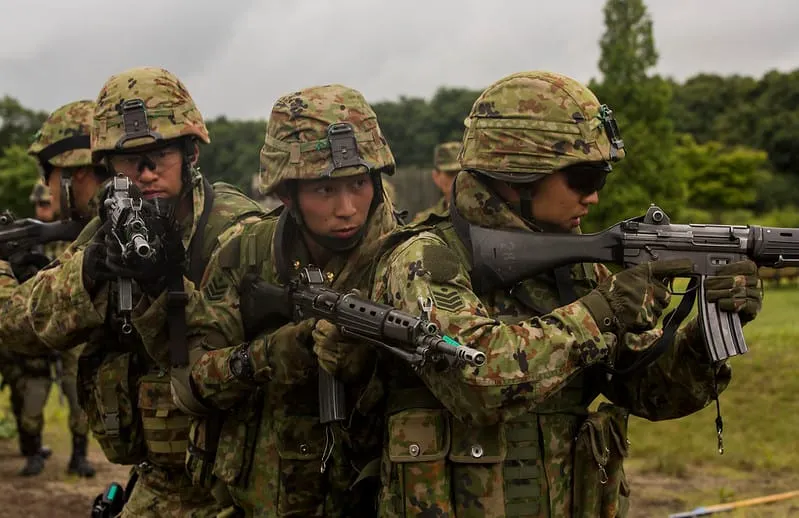

As we recently reported, on Nov. 25, U.S. President Donald Trump reportedly called Japanese Prime Minister Sanae Takaichi to tell her to avoid escalating tensions with China. Takaichi had said that an attack by Beijing on the island of Taiwan could prompt a Japanese military response. Her comments drew not only the immediate and forceful protests from Beijing, which reminded Tokyo of the history of Japanese militarism and of the country’s occupation of Taiwan for decades, but also a phone call from Trump not long after his phone discussion with Chinese President Xi Jinping.
It is worthwhile to recall the terms of the 1972 Joint Communiqué issued by China and Japan:
“2. The Government of Japan recognizes the Government of the People’s Republic of China as the sole legal Government of China.”
“3. The Government of the People’s Republic of China reiterates that Taiwan is an inalienable part of the territory of the People’s Republic of China. The Government of Japan fully understands and respects this stand of the Government of the People’s Republic of China.…”
China has also referred to Article 53 of the UN Charter, which states:
“The Security Council shall, where appropriate, utilize such regional arrangements or agencies for enforcement action under its authority. But no enforcement action shall be taken under regional arrangements or by regional agencies without the authorization of the Security Council, with the exception of measures against any enemy state, as defined in paragraph 2 of this Article, provided for pursuant to Article 107 or in regional arrangements directed against renewal of aggressive policy on the part of any such state, until such time as the Organization may, on request of the Governments concerned, be charged with the responsibility for preventing further aggression by such a state. [Emphasis added.]
“The term enemy state as used in paragraph 1 of this Article applies to any state which during the Second World War has been an enemy of any signatory of the present Charter.”