
August 18, 2002
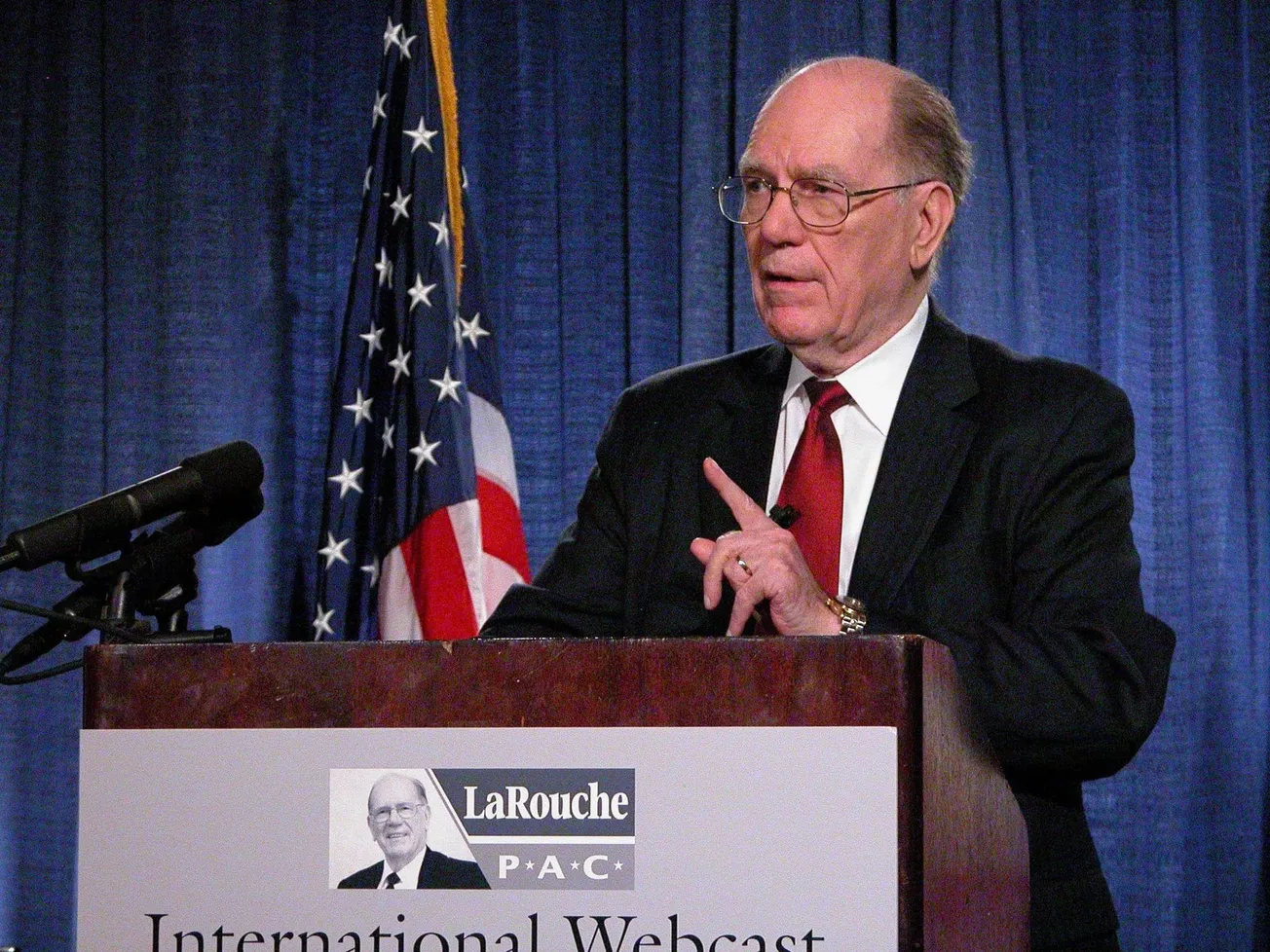
Editor’s Note: This excerpted transcript is being published in EIR for the first time, and is provided courtesy of the LaRouche Legacy Foundation.
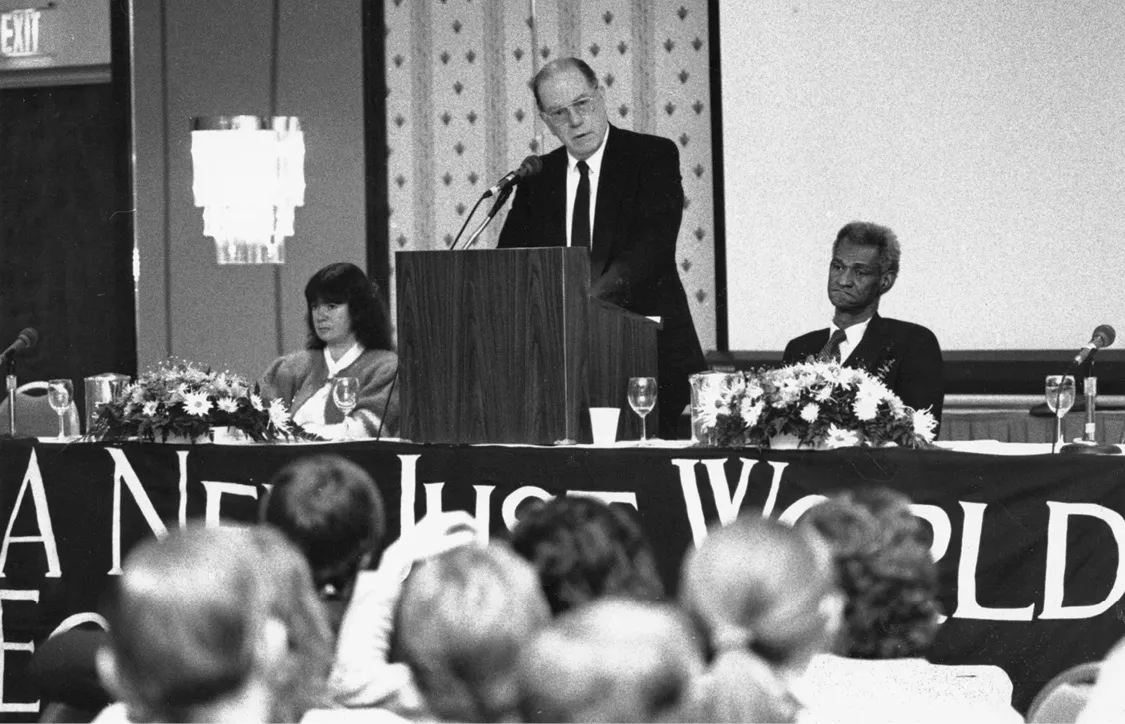
The following is an edited transcript excerpted from a presentation given by American statesman and economist Lyndon H. LaRouche, Jr., to an Aug. 18, 2002 LaRouche Youth Movement conference in Los Angeles, California. The excerpt was presented in video form to Panel Four of the May 24-25, 2025 Schiller Institute conference, “A Beautiful Vision for Humanity in Times of Great Turbulence!” Subheads have been added.
Harley Schlanger: So, I think the most orderly thing to do is I’ll just arbitrarily pick people out who have questions. But raise your hand and identify yourself, and let’s take as many questions as we have time for.
Question: I have a question about the privatization. It has several parts to it. Should the resources of the land belong to the federal government? And if so, where do you draw the line between the ownership by private interest versus the government? And then, should there be a government initiative to develop private industrial sectors, like automotive sectors, steel industry, etc.? And what are the general guidelines for the cooperation?
Lyndon LaRouche: Well, first of all, there is no such thing as an inherent ownership of land by an individual. That does not exist. There’s no such right. What does exist is the right created by governments to entitle people to hold land as in a property form under certain conditions.
The nature of man is we all die. Now, if you’re all going to die, where does the property go when you die? So, what’s your interest in property? Interest in property is, first of all, use. The right of use, the access to use of something. A right given to you under certain conditions by society. And a right which is protected by society under these conditions.
More importantly, what happens to you after you die? What does it all mean? There was this famous cartoon by a famous cartoonist for the New Yorker many years ago, Abner Dean. And he drew this cartoon depicting a horde of mourning people, all naked, lining the sidewalks while a glass coffin was being carried down. And the corpse was lying in the coffin, such. And the caption was, “Now what was that all about.” A very telling—one of the better cartoons, I think, of modern culture.
Man Is Not an Animal
What’s the meaning of life? What makes the difference between a man and an animal? Human beings can have ideas. Baboons do not. Baboons may have more nuts. All right, what are ideas? Take history. If, as I’ve said often again, if man were a higher ape, which is what the idiots say he is—academic idiots, British idiots, Brutish idiots say he is—then the human population of this planet would never have exceeded several million individuals under the conditions which have existed during a span of at least two million years. So, how do we have several billion people now? Our species, if we were a baboon or a higher ape, would never be capable of that.
What’s the difference? Ideas. A baboon cannot develop an idea. Culture is the transmission of discovered ideas from one generation to another over successive generations. The power of mankind to improve his power as a species over nature comes from the transmission and accumulation of these ideas. It is this social process of linking minds together in terms of ideas.
What do I think the future of mankind must be after I’m gone? How must I be seen three generations ahead after I’m dead? When you can think in that way, you begin to be truly human.
You say, OK, I’m going to die. What happens to what I’ve done after I die? Have I made a contribution? What do I think the future of mankind must be after I’m gone? How must I be seen three generations ahead after I’m dead? When you can think in that way, you begin to be truly human. And it’s only when you think in that way that questions of the type that you pose around property can be properly answered. The question is, our interest lies in humanity; the human species, which we call a creature made in the image of the Creator of the universe. Why do we say so? We have proof. Because mankind has a power, the power of ideas which no other species except the Creator has.
We not only are able to change our relationship to nature, we are able to change nature. Some people say the Sun will die and we will go with it, some billions of years from now. I say, no, not if I’m around. Or if somebody who thinks like I do intervenes in the process. We are going to control more and more of the universe. Just the way we improve land, the way we improve other things, we are going to improve the universe. That’s our mission. Our mission is to manage the universe. Our mission is to be, in a sense, the servant of God in managing the universe.
We must keep that work going. Our mission in life is to keep that work going; to make progress. And therefore, we should give to ourselves and our people certain instruments of authority, which they require to do their job; to raise their family; to conduct an enterprise, which is useful for society; to perform some other function, which is useful for society. And they must have the right and the sovereignty, in that matter, to do their job.
Principles of the American System
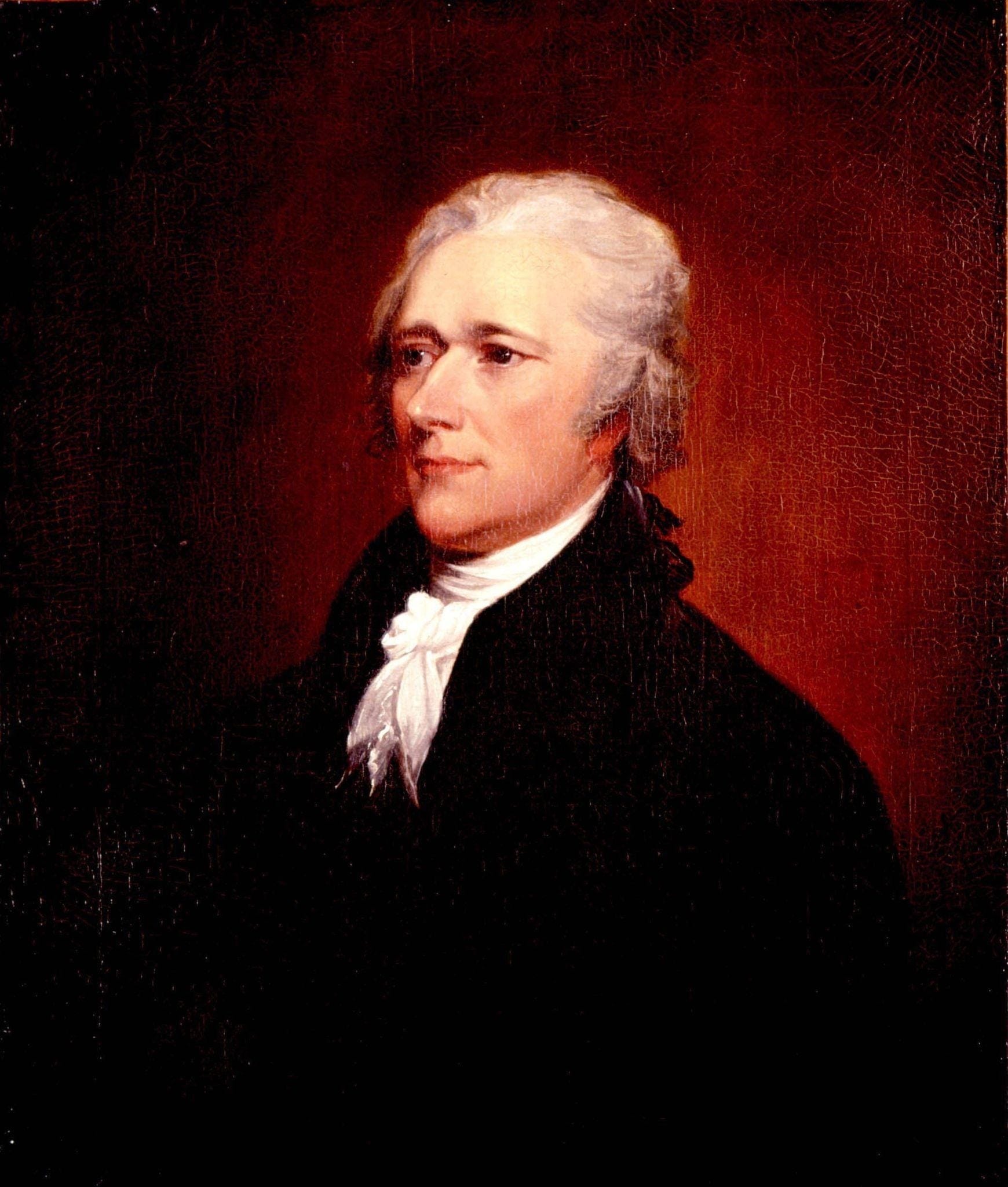
So essentially, under the American system of political economy, as defined by Alexander Hamilton and others, we divide the economy of society into two general categories. The public sector and the private sector. In the public sector, we must provide those things which are absolutely necessary to society. That is, the government must assure that these conditions are provided, and these improvements are provided.
But as you see in the problem of the Soviet system, that does not work by that means alone. You must also unleash the potential of the individual intellect in ways we associate with private entrepreneurship. I’m not talking about shareholders. Shareholders are parasites. They’re not entrepreneurs. A shareholder says, I want my profit. The entrepreneur doesn’t think that way. The entrepreneur thinks in terms of, I must do something for society. I want to do this for society. I want to make things better, and in the process, do something for my family. And therefore, I need certain freedom. Give me the freedom. Give me the right of property, and I will try to do things that will improve society—because the true entrepreneur is always trying to make something better.
And the true entrepreneur is always thinking in terms of principles; principles and technologies derived from principles. How to make something better. And by making them free to innovate, rather than having some mass production of approved ideas, by giving them the freedom to innovate as they choose, society benefits by having— they do it on their own. They don’t have to be given a government order to do it. They’ll do it, because they think it’s the right thing to do. They’ll put themselves at risk to do the job, because they think it’s the right thing for them to do. And that’s how society progresses. That’s what the role of the true entrepreneur in American society, in American economy, has been.
The large corporation has been chiefly a parasite. All the great work in the private sector, in society, has been done by the entrepreneur. The number of employees in an entrepreneurship generally doesn’t exceed much between 100 and 150 people. It’s a privately held firm which detests the stock market. No entrepreneur wants to be a prisoner of the stock market. They don’t want Wall Street to control them. They want independent financing responsibility, independent capital. They would like a loan with a local bank, but they don’t want to be in hock to Wall Street, because they know what that means. I’ve seen it.
Also, you see another thing. In my experience in consulting and observations based on that, I’ve seen many cases in which an entrepreneurship was successful. The entrepreneur died or was pushed out of the firm by the family. “Hey, you’re getting too old. Move over. Make room for us.” The firm almost invariably went bankrupt, because the factor of success in the entrepreneurship was the entrepreneur himself as a leader, as an originator of ideas. The heirs or the successors came in thinking like accountants, and an accountant doesn’t know how to run a business. An accountant is like an undertaker. You call him in only after the business has failed.
So, into this condition, the entrepreneurship and the question of the private family’s right to a private holding for the purpose of raising a family in successive generations, that is a protected right. It’s not an absolute right. It’s a protected right by prudent societies as opposed to other forms, and it’s one we should defend on that basis—but with having no illusion about some inherent natural property right. There is no natural property right.
A Collapsing, Doomed Economy
But, what we do is we loot now; we now loot the world, in various ways, by the IMF, which is the chief instrument. We arbitrarily go into a country and devalue its currency. How is the currency devalued? By orders! By orders of international monetary authorities, controlled by the British and the United States, chiefly. We devalue a currency; we arbitrarily increase the debt. Therefore, we loot the countries, we demand collection of debt, we take resource after resource, sell it to Anglo-American speculators and others, buy up the country, leave nothing for the people. So, here we sit, fat and happy, but not so happy, and too fat. We sit here, living on other people’s labor. We’re parasites. Our current account deficit. We’re sucking the blood of the world.
How do we keep our markets up? We attract, by various mechanisms, we attract vast floods of financial investment in U.S. markets. We drive the market up. We print money like crazy. We get the Japanese to print crazy money—not play money, crazy money—to buy dollars. What the Japanese do overnight, they issue a loan, a so-called zero-interest-rate loan. This loan is now denoted in yen. The yen-denoted loan is used to buy dollars or European currencies. Most of those yen, as dollars, come into the United States as dollar deposits or investments in the United States. Japan’s total bank system is totally bankrupt as a result of this. Japan’s industries are contracting.
Japan is a nation which depends upon imported raw materials to survive. It cannot survive on its own internal resources. It is not earning income from areas in which those resources exist. When the Japanese yen drops, Japan is in a crisis. Japan goes into a crisis beyond belief. The United States has now experienced a drop in its ability to maintain the current account deficit.
The Bush administration has done the worst possible things in response to the crisis with its tax cut and other measures. This is absolute insanity. The flow of funds into the United States is dropping. Only the central banks and printing press money is coming in to keep the market from collapsing. It’s not because of what other countries are doing, it’s what we’re doing.
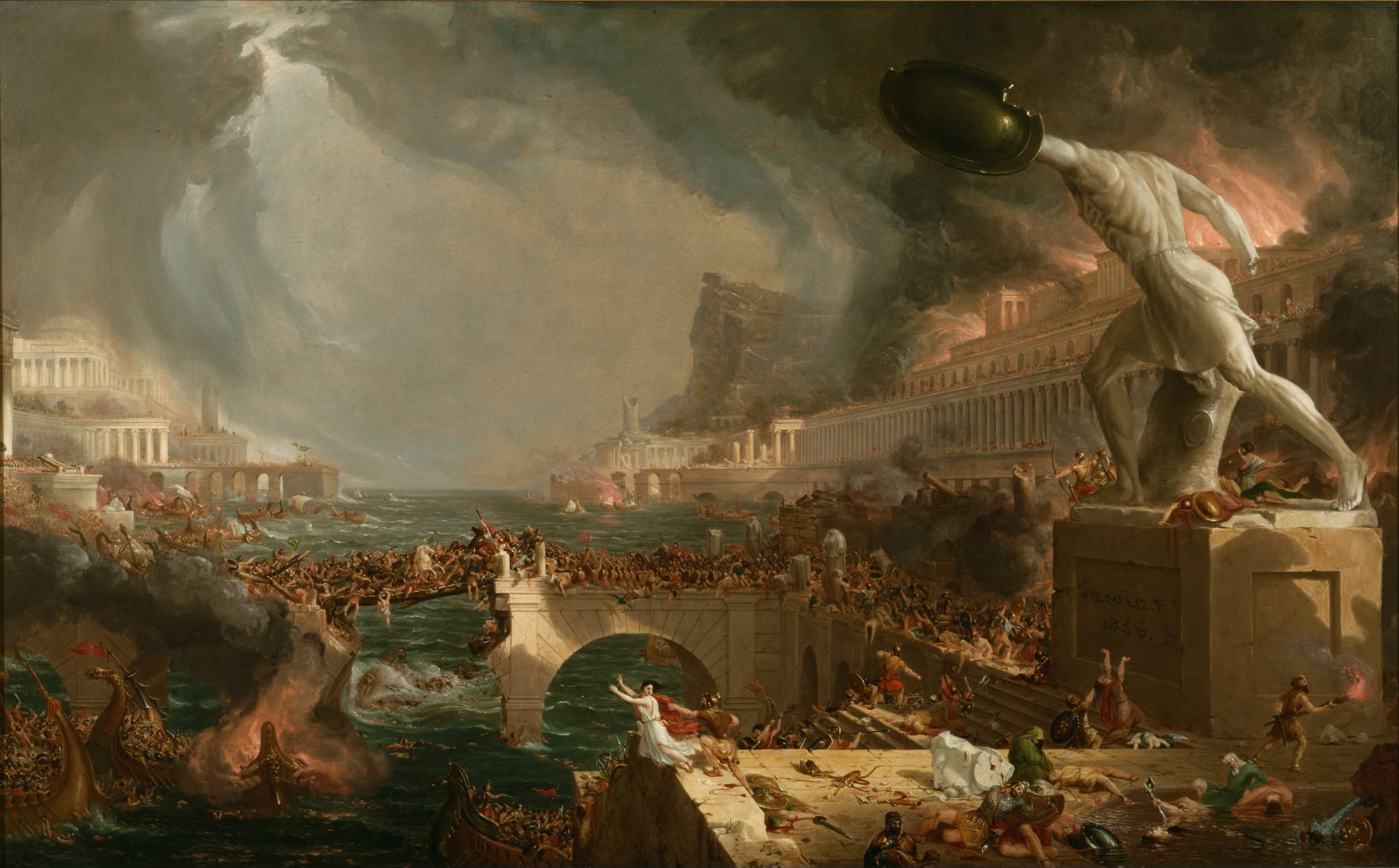
This is a collapsing, doomed economy. This is the Roman Empire at the end phase. And we’re trying to establish a worldwide military empire at the time we’ve lost the empire at home. So, what we’re doing is we have other people in other parts of the world as so-called cheap labor, supplying cheap products given to us by these means, for which we’re not paying as the current account deficit accounts.
We’re maintaining the appearance of income in the United States through debt, like mortgage debt in speculation, because people are hawking their mortgages for second, third terms to the benefit of Fannie Mae and Freddie Mac, in order to get purchasing power for family income expenditures. When those houses come down in value, these people will have no job, they’ll have a mortgage that can never be paid, they’ll be evicted—and you’ll have mass evictions and mass ghost towns in areas where you now have Hollywood-style plastic-covered tar-paper shacks going at half a million to a million dollars up in so-called nominal value. That’s what’s happened to us.
We have become like the Roman Empire. We’ve brought about our own destruction over the past 35 years, by allowing ourselves to change from the most productive economy in the world. And the issue here is, do we say that no human being can be property, and that no part of the world can be the—its resources can be the property of some other part of the world, by some kind of slave-like property right? If we say that, then all the garbage is cleared away. Because all the problems are double-talk around that issue. For example, Henry Kissinger’s a racist. He’s a racist like Hitler. We can prove it out of his own writings. We can prove it out of official U.S. documents. Would you see him on television being treated as respectable? The man’s a mass killer and a racist. He proposes genocide against the people of Africa, South America, and so forth.