The Lead
Diplomacy Must Overcome What Some Call Destiny
by Jason Ross (EIRNS) — Dec. 20, 2025
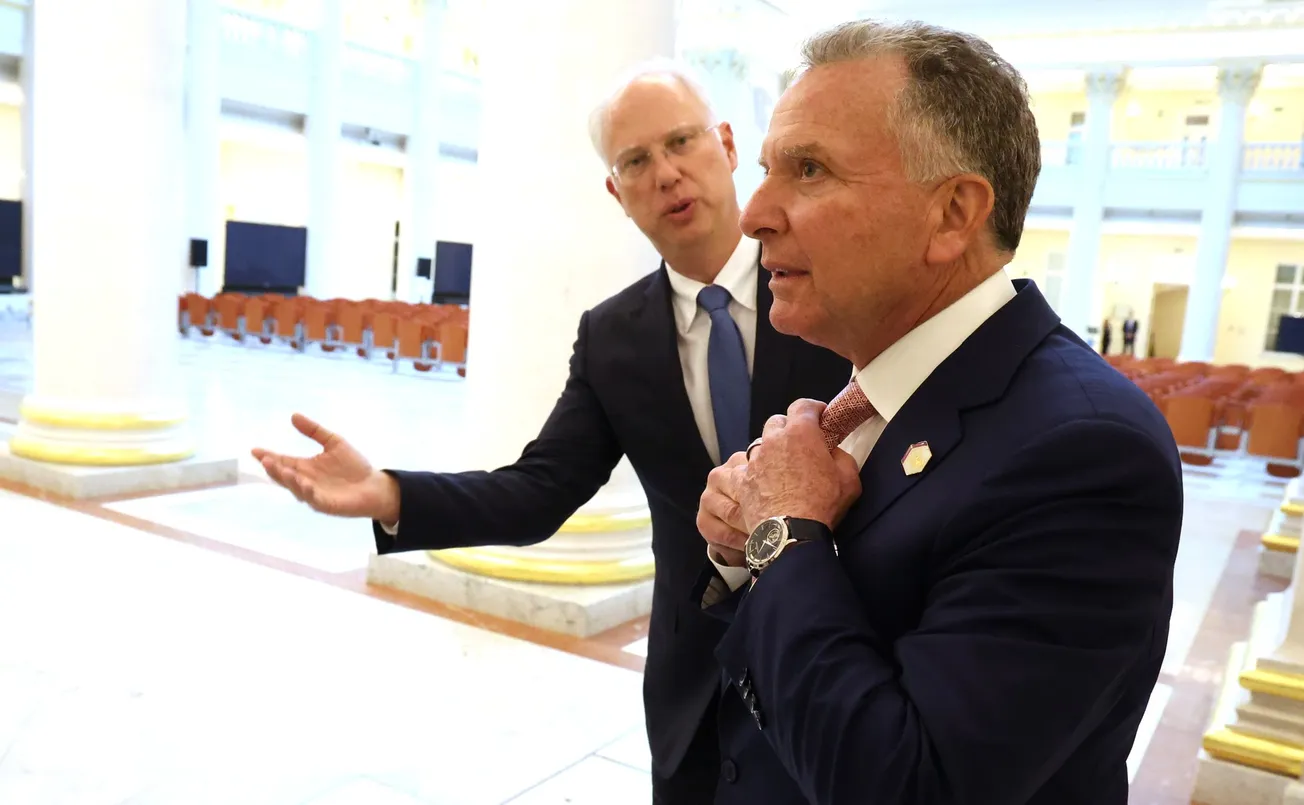
As the danger of wider war mounts across multiple theaters, a quiet but consequential intervention is underway. Kirill Dmitriev has arrived in Florida for weekend meetings with Steve Witkoff and Jared Kushner, focused on ending the Ukraine conflict. At a moment when rhetoric elsewhere races toward “unprecedented” escalation—from the Baltic to the Caribbean—the very fact of such talks points to an alternative: diplomacy grounded in realism rather than fantasy, and security defined as mutual rather than unilateral. Europe, take note!
That contrast could not be sharper. NATO scenarios openly game out conflict around Kaliningrad, which would certainly lead to devastating consequences that would spiral toward nuclear war. In the Caribbean, U.S. military activity edges Venezuela closer to a flashpoint. In Southwest Asia, glossy slideshows imagine a “high-tech metropolis” rising from the ruins of Gaza, as if infrastructure alone could substitute for justice, sovereignty, and a new framework of international relations. These are symptoms of the same failure: The refusal to abandon zero-sum geopolitics.
There is another reference point in today’s briefing. In her recent Global Times piece, Helga Zepp-LaRouche notes that China’s economic trajectory demonstrates something even naysayers cannot deny: “even its harshest critics cannot overlook the undeniable evidence that China is evidently doing something right.” The point is not imitation, but orientation—long-term development, technological progress, and cooperation, as stabilizing forces in a world driven to volatility under the current paradigm.
We hope you enjoy A Letter from Santa to the Children of the West. Beneath its satire lies a serious indictment of a political culture that now treats generosity, universality, and the idea of a shared human future, as threats. Will Santa have his visas revoked by the U.S. and Europe?
The meetings in Florida matter because they test whether statesmanship can still interrupt momentum toward catastrophe. Venezuela, Gaza, Ukraine, and the Baltic present different facets of the same question. Will the leaders of NATO countries adopt a new paradigm of indivisible security and collaborative development? The answer will determine whether warnings of “unprecedented” conflict remain words, or become history—if there is anyone left to tell the tale.
Contents
Strategic War Danger
- Putin Warns That Any Threat to Kaliningrad Would Push Conflict To ‘Unprecedented’ Level (↓)
- Putin: Europeans Are Indoctrinated To Believe War with Russia Is Inevitable; Joint Security Is the Way Forward (↓)
- Putin Tells NATO, Read Your Own Strategy Documents (↓)
- Orban Insists EU Loan to Ukraine Perpetuates War (↓)
- Sachs Urges New European Security Arrangement in Open Letter to Merz (↓)
- U.S. Circulates Fanciful Plan for 'High-Tech Metropolis' on Charred Remains of Gaza (↓)
New World Paradigm
Collapsing Imperial System
- Putin Attacks the ‘False Narratives’ That British Media Put Out (↓)
- Taiwan Bans Popular Chinese Social Media Site (↓)
- U.S. Escalates Military Activity in Caribbean (↓)
- Costs of EU Loan to Ukraine (↓)
- Ben-Gvir Expands Proposed Law on Death Penalty for Palestinians (↓)
- Israeli Settlers’ Movement Demands Opening of Gaza for Settlement (↓)
- U.S. Retaliation in Syria (↓)