

The world’s attention on Sunday, Dec. 28, was turned to the meeting of Presidents Donald Trump and Volodymyr Zelenskyy at Mar-a-Lago in Florida. The two reportedly discussed the various peace proposals for ending the war in Ukraine, with both presidents giving positive comments at their joint press conference afterwards. Few details were disclosed, but perhaps the most important development of the meeting was not anything during the meeting itself, but rather the fact that President Trump spoke to Russian President Vladimir Putin beforehand. Importantly, Kremlin aide Yuri Ushakov described the conversation as “friendly,” and noted that two presidents “share a broadly similar view that the temporary ceasefire proposed by Ukraine and Europe … would merely prolong the conflict.” In other words, Trump may be actually hearing the Russians.
Not surprisingly, Zelenskyy and his European enablers have been pulling all the strings they can to prevent this peace process from taking hold. On his way to the U.S. on Dec. 27, Zelenskyy stopped off in Canada to meet with Prime Minister Mark Carney, and held a joint phone call with a rash of European leaders ahead of the meeting with Trump. If any of these games and antics are allowed to persist, they will quickly torpedo any hope of a diplomatic solution to the conflict, as the Russians have stated repeatedly. To make this even more brutally clear, Putin appeared in military fatigues for a meeting with the General Staff of the Russian military on Dec. 27 to receive a full report on the status of Russia’s significant advances across the frontlines. While there are some “smart people” who are now pushing Kiev to accept a deal, Putin said at the meeting, unfortunately, “the leaders of the Kiev regime are in no hurry to resolve this conflict by peaceful means.” He even went so far as to say that Russia has “virtually zero” interest in rumored Ukrainian offers to withdraw from its military positions in the Donbass given the rapidity of Russia’s advances.
While there is nothing concrete regarding the outcomes of the Trump administration’s diplomatic efforts, there are certainly hopeful signs that this process could yield fruitful results. Russian officials continue to be optimistic about such a prospect, with Foreign Minister Sergey Lavrov underscoring this again in a Dec. 28 interview with TASS. Lavrov noted the “new vision” in the Trump Administration’s National Security Strategy, saying that some of its ideas “are not at odds with efforts to promote dialogue between Russia and the United States.” And Leonid Slutsky, chairman of the International Committee of the Russian State Duma, has said that after the recent years of near confrontation between the U.S. and Russia, “Now, step by step, in small steps, I would say, things are returning to common sense, to balanced interaction” between the two countries.
The question that must be posed, however, is whether the forces for peace in the world will act to actually dismantle the global war policy for good. As the executive editor of Foreign Affairs showed last week when he encouraged subscribers to re-read a 2024 feature entitled “The Return of Total War,” the policy of endless war is still alive and well in leading circles of the West. “Total war is back,” he wrote in an email to subscribers. “Indeed, there are signs everywhere that countries are preparing for all-out conflicts. Just this week, the Trump administration asked Congress to approve the largest-ever U.S. arms package for Taiwan, and the head of the British military said the United Kingdom needs more people ‘ready to fight,’ given threats from Russia.” The referenced 2024 article states that the “era of limited war has ended; an age of comprehensive conflict has begun.”
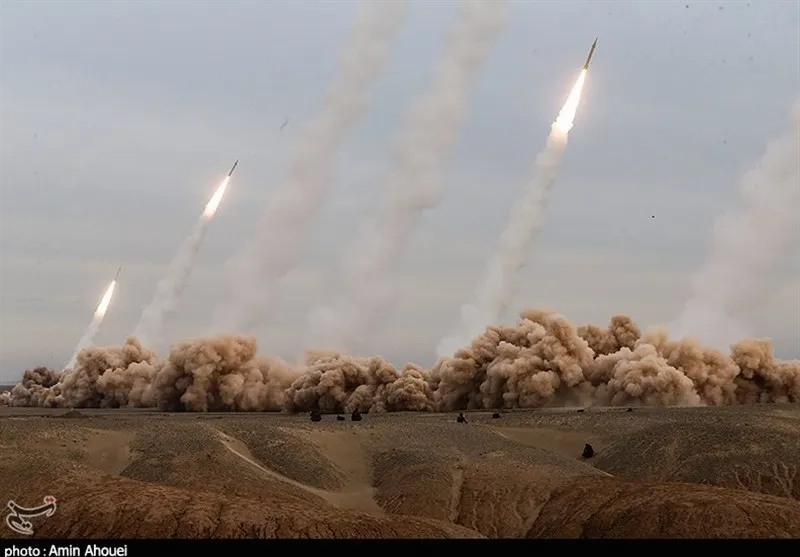
This is the policy now being fully embraced by the top echelons of NATO’s intelligence and power structures, with the intent to ensnare Trump into a new, if slightly different iteration of their intended great power confrontation. Many of these trigger points are now being ratcheted up: Record defense spending is being directed toward Taiwan, while Japan is being encouraged to confront China throughout the Pacific; tensions with Iran continue to increase, with Iranian President Pezeshkian stating that his country is now in an “all-out war” with the U.S., Israel, and Europe; in the Americas, the U.S. is reviving the law of the jungle with regard to Venezuela, in an effort that appears to be largely directed at China and the BRICS; and even in Europe, where Trump is usefully dressing down European warmongers, there has been no indication that he intends to stop next year’s deployment of medium-range and nuclear-capable missiles to Germany—a deployment that will take the danger of nuclear confrontation through the stratosphere.
Dismantling this policy requires a serious rethinking of the outlook and underlying assumptions within it. Only by mastering these and communicating them to others can one become a force to stop what is otherwise a fit of desperation by an imperial apparatus attempting to save their dying system. This is the significance and power of Helga Zepp-LaRouche’s “Ten Principles of a New International Security and Development Architecture,” which should be read and circulated everywhere during this moment of opportunity.