For the past three and a half years, the predominant narrative underlying most foreign policy actions has been the lie about Russia’s “unprovoked aggression” in Ukraine. These words have led to the wasting of hundreds in billions of dollars in military expenditures, the deployment of the largest-ever sanctions regime, the sacrificing of hundreds of thousands—if not over a million—Ukrainian lives, and brought the world to the cusp of nuclear war between NATO and Russia. Further, anyone who attempted to question the infallibility of this narrative was quickly labelled a “Russian asset” or a “disinformation agent,” and was quickly blacklisted or cancelled. In Europe, this lie has even expanded to include the notion that Russia intends to conquer all of the European continent, and has been used as a justification for the largest militarization push since World War II.
Yet, newly declassified documents released as part of a FOIA request by the non-governmental National Security Archive prove that that narrative was actually false from the start.
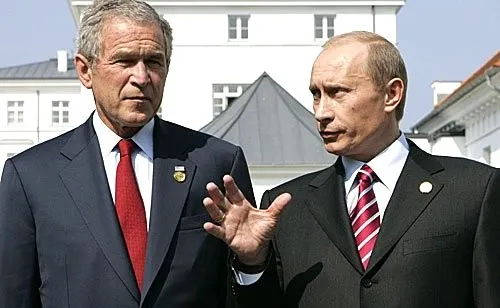
Three conversations between U.S. President George W. Bush and Russian President Vladimir Putin have been declassified by the National Archives and Records Administration, revealing the actual discussions between the heads of these nations. In a 2001 meeting, Putin is explicit about Russia’s sincere interest in becoming an “ally” of NATO and in building up trusting, collaborative relations with the West. In another conversation in 2008, Putin warns in the clearest terms possible that Ukraine can never be allowed to join NATO, an alliance Russia saw then as an expanding military bloc that had no clear mission and was unwilling to talk openly with Russia about its intentions. “[A]ccession to NATO of a country like Ukraine will create for the long-term a field of conflict for you and us, long-term confrontation,” Putin told Bush. “There is always the threat of new military bases and weapon systems in the proximity of our borders.”
For anyone who has been paying attention over the recent years, this is obviously not new news. Nevertheless, the decision to release these documents now will undoubtedly have an effect on the strategic situation, and will further assist in freeing the mental shackles of Western populations, especially as the Trump Administration pushes to end the ongoing war in Ukraine.
However, this is only one notable piece of a larger process. At the Dec. 26 meeting of the International Peace Coalition, Schiller Institute founder Helga Zepp-LaRouche began by stating that she anticipates that the upcoming year of 2026 will see major breaks in the global situation, either “for good or for bad.” “Many processes are so absolutely tense that it is almost impossible to imagine things will continue on the same level for a longer period of time,” Zepp-LaRouche began. “What we experience right now is not just the multitude of regional crises … but we have this unbelievable epochal change of 500 years of colonialism definitely ending. A new order is developing, but not yet totally shaped up, and an old order is disintegrating. The problem is that the establishments of this old order … have not yet come around to the fact that that order, in my view, is irreversibly gone.”
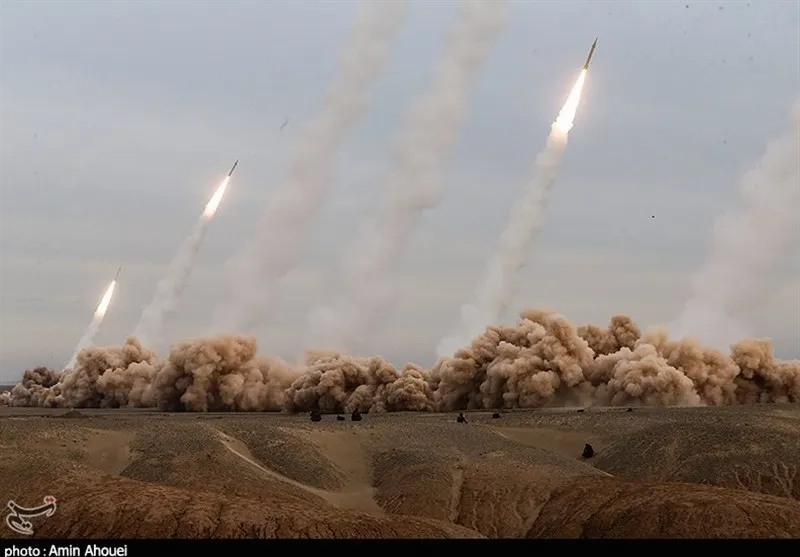
Amidst this process of collapse and global transformation, there are obvious major points of crisis playing out in the world today. Among these are the escalations around Venezuela, where the Trump Administration is threatening war against a major South American nation. Then there is Israel, the ongoing killing in Gaza, and the growing danger of a new war with Iran. There is the danger that some in the U.S. intend to pivot from confrontation with Russia to confrontation with China, and are encouraging the militarization of Japan, Taiwan, and others in this regard. And of course, there are the significant pitfalls and traps around President Donald Trump’s attempts to reach a peace agreement in Ukraine—many of which, despite his better intentions, remain blind spots for him.
In response to these and other crises which are clearly standing in the way of reaching a new, more human paradigm for the world, Zepp-LaRouche insisted that: “We have to really think about how to get to a New Paradigm in 2026; I think otherwise we potentially will have the end of civilization. I really don’t think that this is an exaggerated fear.” The actions of Trump, along with the initial evisceration of the “unprovoked” narrative around Russia and Ukraine, are already having enormous effects internationally, and have opened the door to significant change—even if tremendous dangers still stand in the way. But we must intervene and organize for real solutions to these crises. The solution must be made in the minds and souls of our nations and peoples, not on the battlefield. Otherwise, there is no way to avoid World War III.