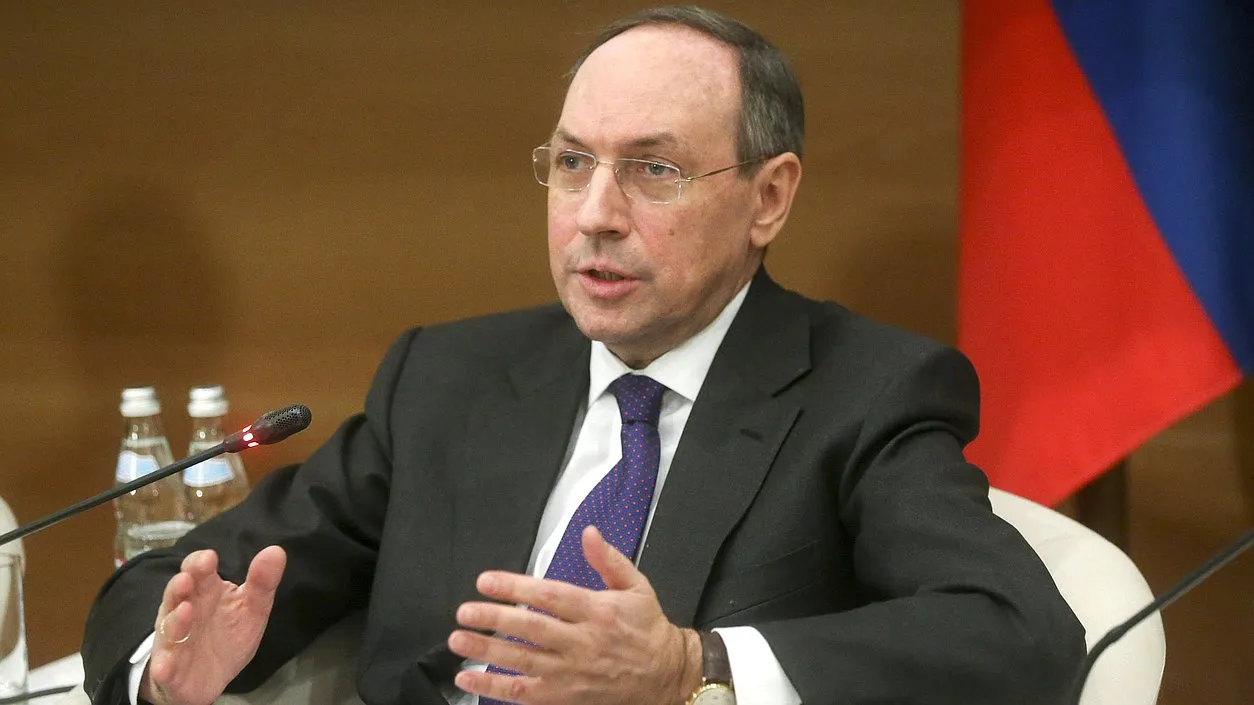
It’s too early to say that restoring Russian-EU relations is impossible, Vladislav Maslennikov, Director of the Department of European Problems at the Russian Foreign Ministry, told Izvestia. “I don’t think that the Russia-EU dialogue is lost forever. The European Commission is always elected for a particular term. And the current European Commission also has its term, and a new commission will be elected when it expires.” That however would not happen before 2029.
“I would like the [EU] to finally realize that they themselves are actually suffering from their sanctions policy towards Russia,” he continued. “Sooner or later they will have to review their approach, because Russia will forever remain their neighbor on the [Eurasian] continent.”
For the time being, the EU will stick to its confrontational approach against Russia and increase its military assistance to Ukraine. The EU is also still trying to develop a legal mechanism through which it would be possible to confiscate frozen assets of the Russian Federation in favor of Kiev, Maslennikov said. In addition, the European Commission pushes militarization among a number of military-related policy documents designed for the long term. Among them are the “White Paper on European Defense—Readiness 2030,” “Roadmap in the Field of Defense Readiness,” “Roadmap for the Transformation of the Defense Industry.” Izvestia mentions that the European Parliament already admits that in 2026, the EU may introduce at least three new lists of anti-Russian restrictions.
Maslennikov points out that the EU sanctions against imports of Russian oil and gas have created a situation in which European energy costs are now two to four times higher than before the crisis. European companies have to pay two to three times more for electricity than American companies, and four to five times more for gas. An increase in the cost of production cannot but affect European competitiveness. Key energy-intensive industries are therefore in decline: “More than half of primary aluminum production has been stopped, the steel industry has lost a quarter of its capacity, and more than 20 major chemical plants have closed over the past two years.”