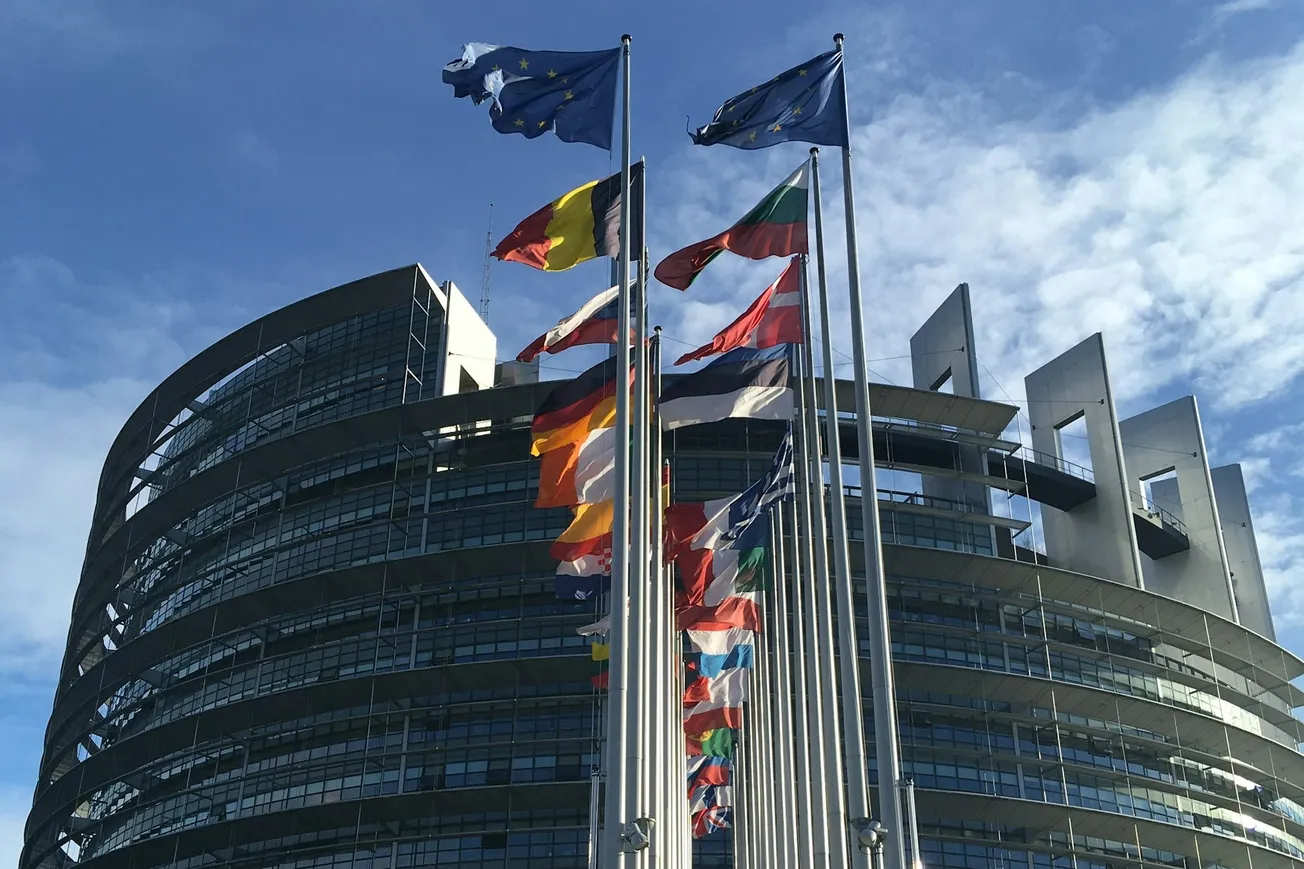
EU leaders have decided to employ an emergency provision contained in the EU Treaties in order to justify lending Russian assets to Kiev for “reconstruction,” even though the specific provision, Art. 122 of the European Treaty, can only be applied to member countries. It is not clear what is more insane: the decision as such, which undermines trust in the Euroclear bank, or facing the massive legal challenges for violating the Treaty.
On Dec. 11, the Danish Council presidency declared that some amount of the EU’s ambassadors, as reported by Politico, agreed to hand emergency powers to the European Commission to keep €210 billion in Russian state assets blocked until the Kremlin agrees to pay postwar reparations to Ukraine. The ambassadors are said to have “agreed on a revised version of the Art. 122 proposal and approved the launch of a written procedure for formal Council decision by tomorrow around 5 p.m.” The decision was said to have been taken by a “very clear majority.”
Apparently, the decision to abandon unanimity, under the guise of an emergency, did not require a unanimous vote, or even a transparent one. Once invoked, by whatever ad hoc procedure was employed, the EU executive now simply needs a “qualified majority”—defined as 15 of the 27 countries. They expect to accomplish that shortly.
All 27 countries have voted unanimously every six months to renew the temporary freezing of Moscow’s foreign reserves in the Euroclear system; but the EU leaders’ desperate financial scheme for funding the Ukraine proxy war requires the elimination of the renewals. Then, Euroclear lends the Russian assets to the EU and it issues a zero-interest loan to Ukraine. Kiev will be asked to repay only if Russia agrees to hand over the assets in the form of war reparations. After this week’s vote, the EU Council will have what it needs by the deadline of its scheduled Dec. 18 meeting.
Belgian Prime Minister Bart De Wever objected to the whole sketchy affair, stating: “There are also many legitimate objections regarding the legality of such an operation.” He pointed out the obvious: “This article is about a state of emergency. Where is the emergency? There is an emergency in Ukraine. But Ukraine is not in the European Union…. So, is it legitimate to use [Article] 122? We can ask a lot of questions about it. I think it’s a sanction of foreign policy, and requires unanimity,” Euractiv quoted him as saying.
The EU decision confirms Brussels’ inclinations to suicide. Euroclear safeguards and administers securities worth about €39.6 trillion on behalf of clients from more than 90 countries. The sheer scale of its operations makes it a cornerstone of the global financial system. A confiscation of the Russian assets would completely destroy trust in the institution, with incalculable consequences, including legal consequences, for the Belgian government.