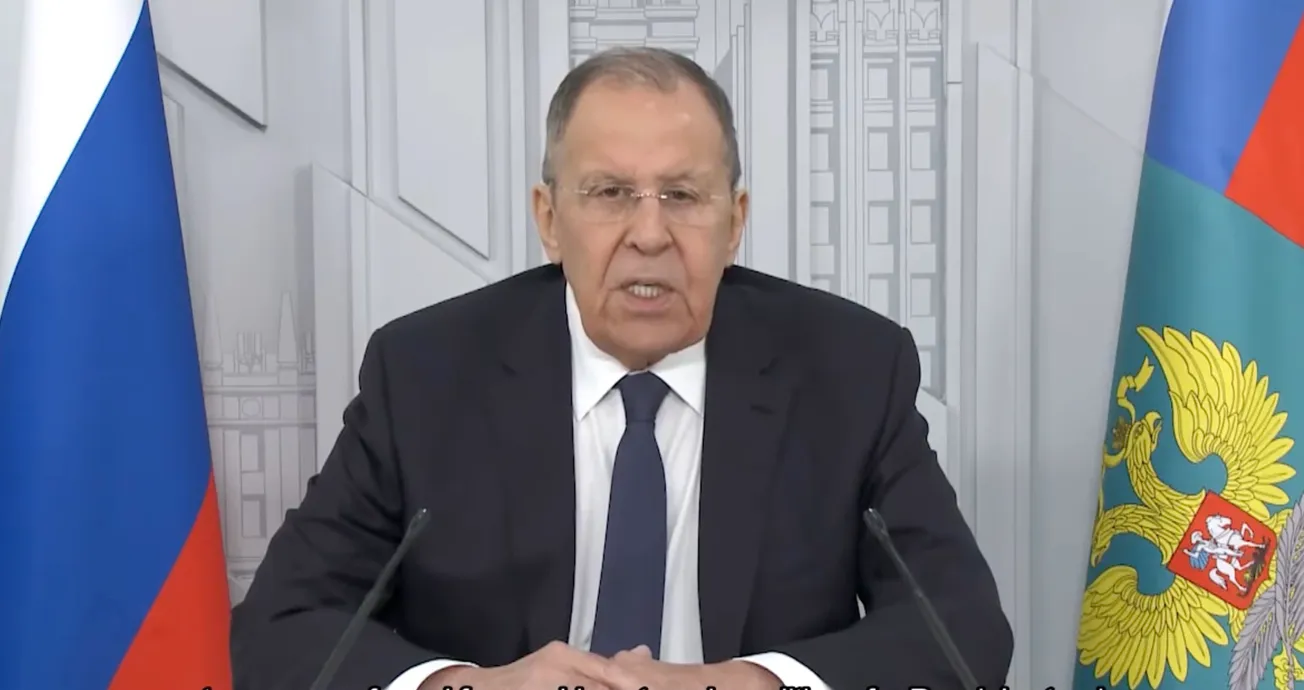
Dmitry Medvedev, deputy chairman of Russia’s Security Council, posted on Dec. 7 to his Telegram account, a measured response to the U.S. National Security Strategy issued by the Trump administration on Dec. 5. He called it a “surprisingly interesting document.”
In the past, some of Medvedev’s responses have been noted for being acerbic, with a certain degree of combative verbal fireworks. This is a somewhat different, calm response. He assesses that the United States NSS is “notable for offering a realistic assessment of today’s challenges.” A few other Russian leaders and thinkers appear to express a similar response.
“1. This time … the White House produced a surprisingly interesting document. … For the first time in many years, Washington is openly talking about restoring ‘strategic stability’ in Eurasia and rebuilding ties with Russia.
“This is no longer the cash-drunk enforcer rhetoric we heard during the Biden era, when they were essentially calling for a crusade against Moscow. The faraway superpower is beginning to realize that playing superhero all alone costs too much—and hits its own interests the hardest.
“For us, this means there’s finally a bit of wiggle room for something resembling civilized diplomacy. Not friendly hugs, not at all, but a clear signal: the U.S. is willing to discuss security architecture, not just pump out endless and, most importantly, pointless sanctions (though the new restrictions on Russian oil show that the ship is staying the old course).
“2. Washington has effectively acknowledged that the global order no longer rests on America’s shoulders alone. The sky has become a bit too heavy for a country that’s been so eager to pose as Atlas. Now it’s looking for someone to share the load. And inevitably, Russia comes in as one of the few countries that has actual influence on European security.
“For the first time in years, Russia isn’t labeled a ‘threat’ in a U.S. strategy paper but a participant in talks on stability. Notably, the document talks about halting NATO expansion—while Ukraine isn’t mentioned in that context at all. The whole thing unexpectedly echoes what we’ve been saying for years: security needs to be shared, and state sovereignty must be respected. Russia has long suggested the path of negotiation as opposed to lecturing the world with one’s nose in the air and imposing a ‘rules-based order’ that isn’t even codified in international law. Now, at last, a small window for dialogue has cracked open. …”