
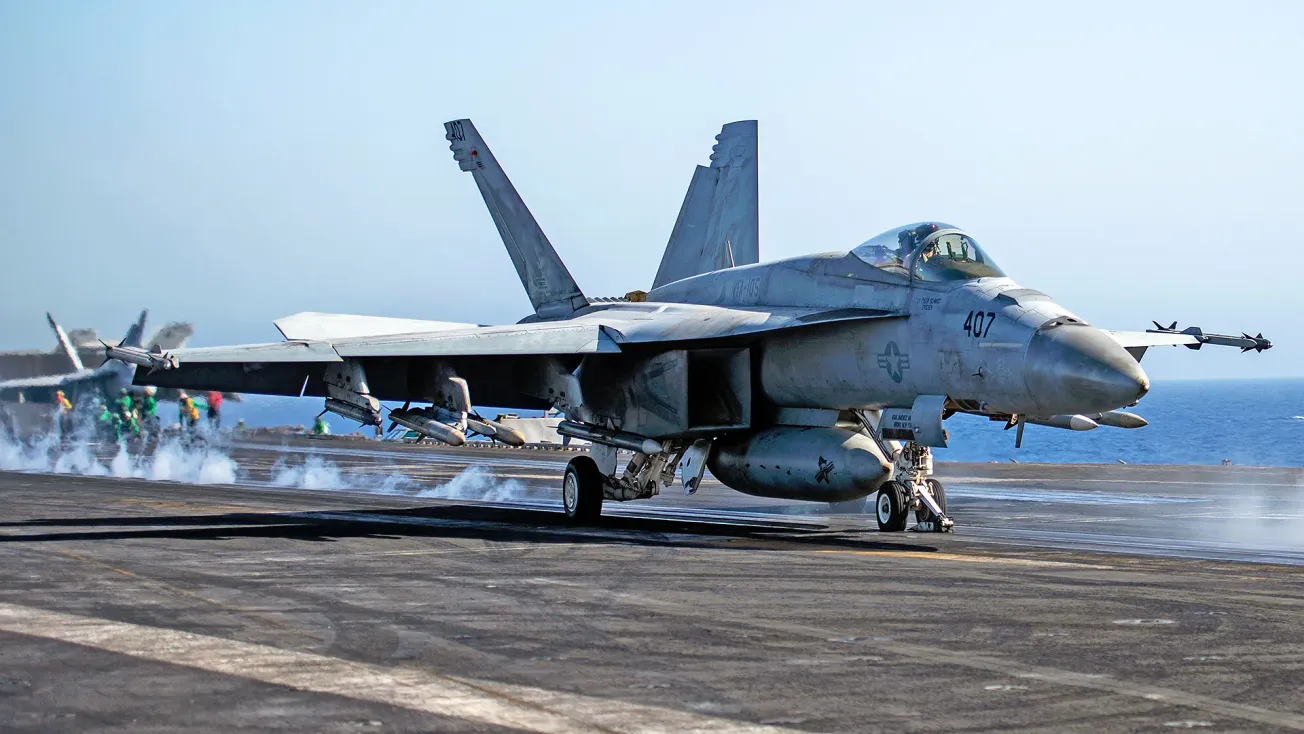
In an obvious attempt at a provocation, a pair of F-18s, presumably from the USS Gerald R Ford aircraft carrier, spent some time flying orbits over the Gulf of Venezuela between noon and 1 p.m.ET yesterday. The Gulf, enclosed on three sides by Venezuelan territory, lies just north of the city of Maracaibo. Its mouth is only about 90 km wide at its narrowest point. An unnamed U.S. military official confirmed the flight to AP, claiming that the jets were conducting a “routine training flight” in the area.
The official could not say if the jets were armed, but noted that they stayed in international airspace during their flight. The official likened the training flight to previous exercises that were aimed at showing the reach of U.S. planes and said the move was not meant to be provocative.
According to press reports, Venezuela’s territorial waters extend only 12 miles off the shores of the Gulf. Venezuela has reportedly claimed the entire Gulf as internal waters, which claim has been disputed by the U.S.
According to The War Zone, a pair of Navy EA-18G Growlers—an electronic warfare version of the F-18—were also tracked flying orbits in the Caribbean just north of the Gulf of Venezuela. A Navy MQ-4C Triton maritime surveillance drone also flew a mission farther out in the Caribbean opposite Venezuela’s coastline at around the same time. TWZ comments: “The combination of F/A-18s and EA-18Gs, with the latter flying in a standoff position, is exactly what one would expect to see during actual strikes on targets in Venezuela. The Growlers would provide electronic warfare support to help cover the Super Hornets penetrating into the threat envelope of hostile air defenses on the way to their targets.”
Another possible objective of the mission might have been to collect intelligence on Venezuelan air defenses. If Venezuelan air defenses activated in response to the presence of the F-18s, data can be collected on them and made available in targeting plans.