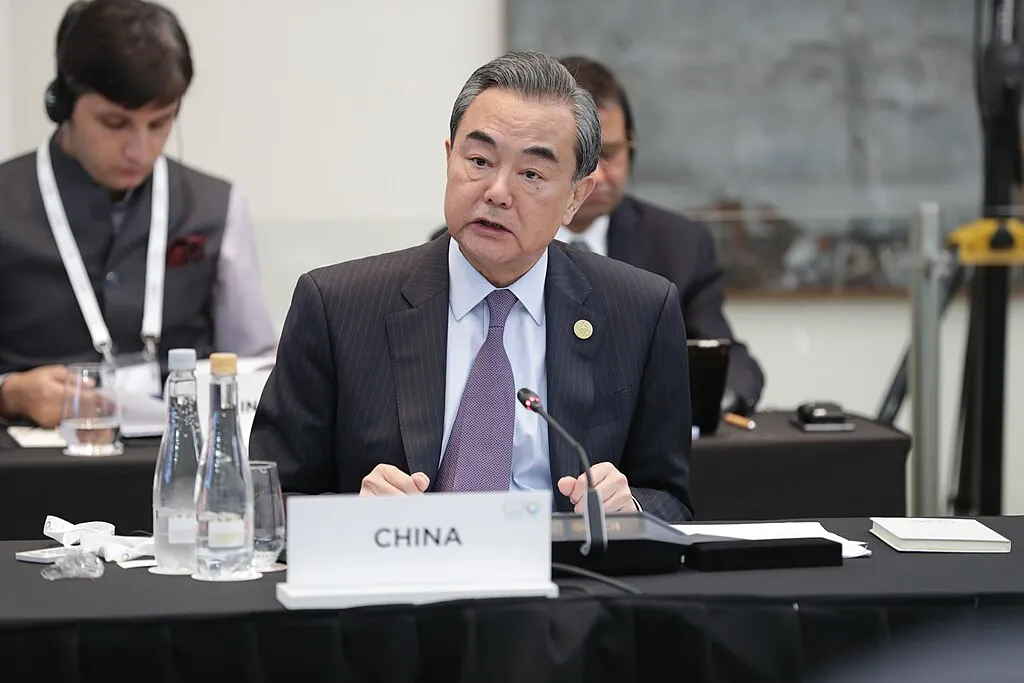
Chinese Foreign Minister Wang Yi’s Dec. 12-15 trip to Southwest Asia, visiting the United Arab Emirates, Saudi Arabia, and Jordan, concluded on Dec. 15. The primary purpose of his trip was to consult on the agenda and schedule for the Second China-Arab States Summit to be held in 2026 in Beijing, according to Global Times, although not stated officially as such. Wang likewise conveyed China’s interest in seeing the free trade agreement between China and the Gulf Cooperation Council (GCC) countries concluded by the summit.
The talks were not held in a vacuum. “The Middle East is now at a critical turning point, with major hotspots in a temporary bottleneck period but no fundamental resolution, making coordination between China and Arab countries particularly important,” Niu Xinchun, executive director of the China-Arab Research Institute of Ningxia University, told Global Times.
Immediately before Wang left for the region, the third meeting of the China-Iran-Saudi Arabia Trilateral Joint Committee, set up after the April 2023 Beijing Agreement on reestablishing Saudi-Irani relations, took place on Dec. 9, this time in Tehran, with the Deputy Foreign Ministers of the three nations participating. Iran and Saudi Arabia pledged to continue their “efforts to consolidate good-neighborly and friendly relations between the two countries on the basis of respecting national sovereignty, territorial integrity, independence and security,” the trilateral Joint Press Release reported. China’s continued support was “welcomed.” The statement cited the “continuous progress in Iran-Saudi Arabia relations” (e.g., opening borders for pilgrimages and discussions of possible joint research, education, media, culture, etc.), but also noted that “the current escalation of regional tensions poses a threat to both regional and global security” make meetings between senior officials even more important.