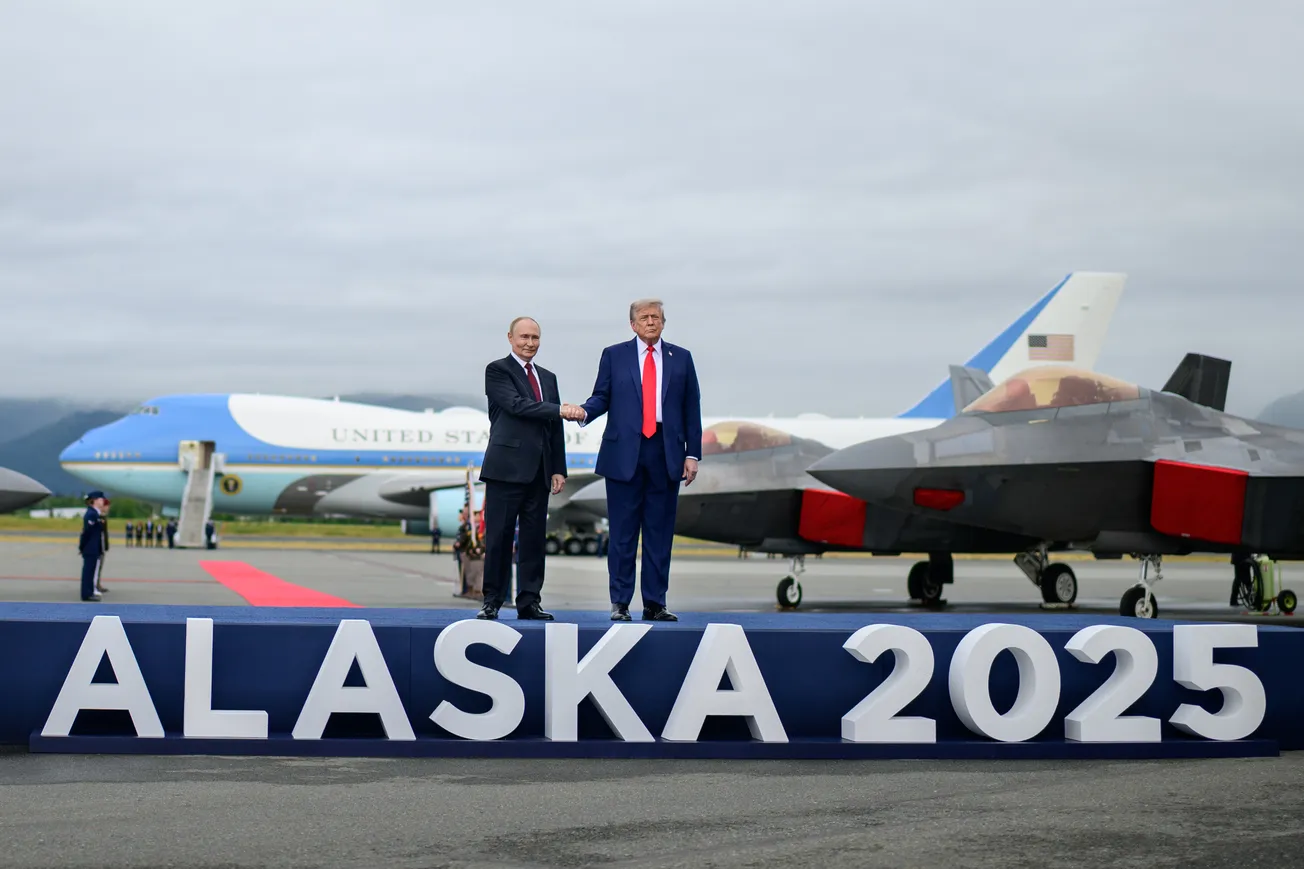
Is it or is it not the case that the two largest nuclear powers on the planet—Russia and the United States—have a discernible common interest that each can turn to as the bedrock for a cooperative relationship? That is the underlying question that President Donald Trump will have to ponder and hopefully begin to resolve this weekend—whether he knows it or not—as he meets on Sunday, Dec. 28, with Ukraine’s acting president Zelenskyy, after speaking by phone with Zelenskyy and his European controllers.
Zelenskyy and the Europeans, after all, have the sole intention of sabotaging Trump’s talks with Putin so that NATO’s war in Ukraine is perpetuated indefinitely. Zelenskyy’s “proposals” are a grab-bag of egregious provocations against Russia, designed to ensure that no negotiations are even possible.
Russian Deputy Foreign Minister Sergey Ryabkov, on the other hand, told Russian TV’s “60 Minutes” on Dec. 26 that a basis for cooperation with the U.S. does exist, and that it had been agreed upon by Presidents Trump and Putin when they met in Anchorage, Alaska, on Aug. 15. “The Americans have agreed that we should adhere to the framework established in Anchorage, and fill it up with specifics,” Ryabkov stated. “Otherwise, there will not only be no stable agreement; it will simply be impossible to achieve any agreement at all.”
The Anchorage framework centered on addressing the underlying causes of the war (as opposed to simply proclaiming an immediate ceasefire), including the need to take Russia’s security interests into account as well as Ukraine’s, based on the principle of indivisible security for all the nations involved. The Anchorage approach also included a healthy dose of discussion of potential large-scale joint economic projects—such as the Bering Strait Tunnel proposal—which pointed the thinking in the direction of a broader new international security and development architecture.
Recently released documents chronicling 2008 discussions between then-Presidents George W. Bush and Vladimir Putin, show that the two countries were at the same crossroads 17 years ago, with the possibility of cooperation on crucial strategic issues under frank discussion. An even more thoroughly-composed policy proposal for a new security architecture was under intense consideration by the two countries back in 1983, in the form of the LaRouche-authored Strategic Defense Initiative (SDI).
In both cases, relations reverted to confrontation rather than cooperation, under intense political and ideological pressure from British geopolitics, coming from both London and from inside the United States.
For a third time, today we stand at that same crossroads—only the choices are starker and the dangers greater.
As Helga Zepp-LaRouche said in her Dec. 26 remarks to the 134th consecutive weekly meeting of the International Peace Coalition:
“What we are experiencing right now is not just the multitude of regional crises, but we have this unbelievable epochal change of 500 years of colonialism definitely ending. A new order is developing, but it is not yet totally shaped up; and an old order is disintegrating. The problem is that the establishments of this old order, which for a long time was dominated by European politics, by colonial powers, by an Anglo-American domination of the world at different phases, these Western elites have not yet come around to the fact that that order, in my view, is irreversibly gone. They have not yet adjusted to the fact that if the West wants to play any role in the future world order, they must change.”
Zepp-LaRouche continued: “I think we have to evoke the best in people. Only if humanity is reminded that we are the creative species—the only one known in the universe so far, and that we are gifted with beautiful gifts, if we permit them to grow and if we respect them in other people—can we have the hope of a human world. I absolutely think that the coming year will be one of incredible challenges, but also opportunities. So, let’s really go into this year with the determination that humanity must come out winning.”