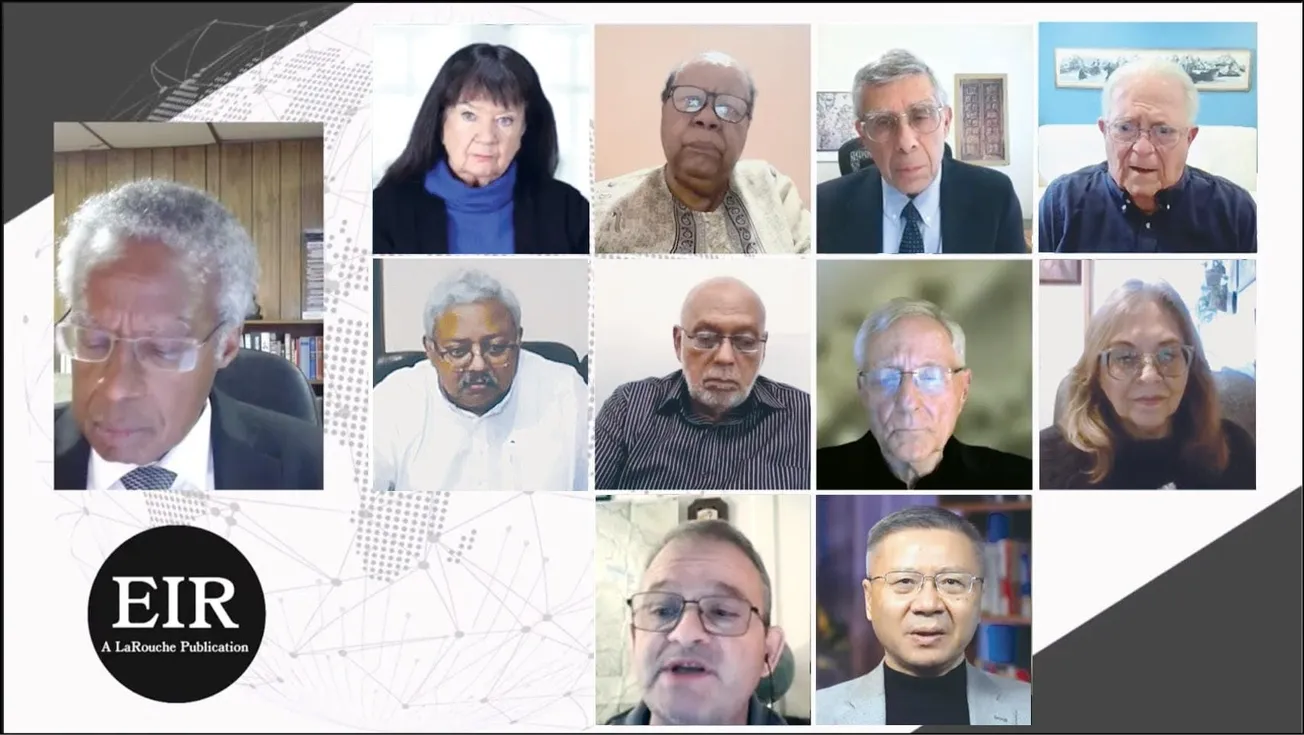
Executive Intelligence Review (EIR) convened an international Emergency Roundtable bringing nearly a dozen senior political and strategic experts from the Americas, Eurasia, and Africa together under an urgent theme: “It’s Worse Than You Think: The Strategic Implications of the Attack on Venezuela and How To Bring the World Back from the Brink.”
The nearly three-hour online session drew a live audience averaging 1,200 participants and featured simultaneous interpretation in English, French, German, and Spanish, underscoring the global scope of the roundtable.
In her opening presentation to the roundtable, Helga Zepp-LaRouche, Editor-in-Chief of EIR and founder of the Schiller Institute, declared that the mission was not to mourn the crisis, but to drive action:
“We have assembled here today… to discuss, analyze, and catapult an international response to restore international law.”
Speakers delivered blunt assessments of the accelerating breakdown of international law and warned that the world is moving toward a dangerous strategic rupture. But the event maintained a focus on creating solutions—calling for immediate organizing steps including a proposed international declaration, the formation of an action group, renewed action through the UN General Assembly, and the formation of a structured international civil society organization to mobilize the “Global Majority.”
Panelists also stressed that upheaval inside the United States is inseparable from growing global instability, that violence abroad and violence at home are not independent. A senior U.S. official warned that “America must introspect.”
At a moment when mankind’s moral fitness to survive is being tested, the speakers agreed on the need to focus on the good: on the idea that the human species is good by nature, gifted with creative reason and therefore capable of overcoming evil and underdevelopment. A consensus emerged that if the best traditions of all civilizations are revived, then against overwhelming odds a beautiful vision of humanity can be realized, provided we act in solidarity.
Zepp-LaRouche concluded the extremely productive meeting and confirmed that an organizing group will be formed to assess priorities and coordinate prompt action internationally.
Participants
• Helga Zepp-LaRouche, Schiller Institute founder, EIR Editor-in-Chief
• Dr. Naledi Pandor, former South African Minister of International Relations and Cooperation and current chair of the Nelson Mandela Foundation Board of Trustees
• Zhang Weiwei, Professor of International Relations at Fudan University in Shanghai and Director of its China Institute
• Ambassador Chas W. Freeman, Jr., retired career U.S. Foreign Service officer and former U.S. Assistant Secretary of Defense
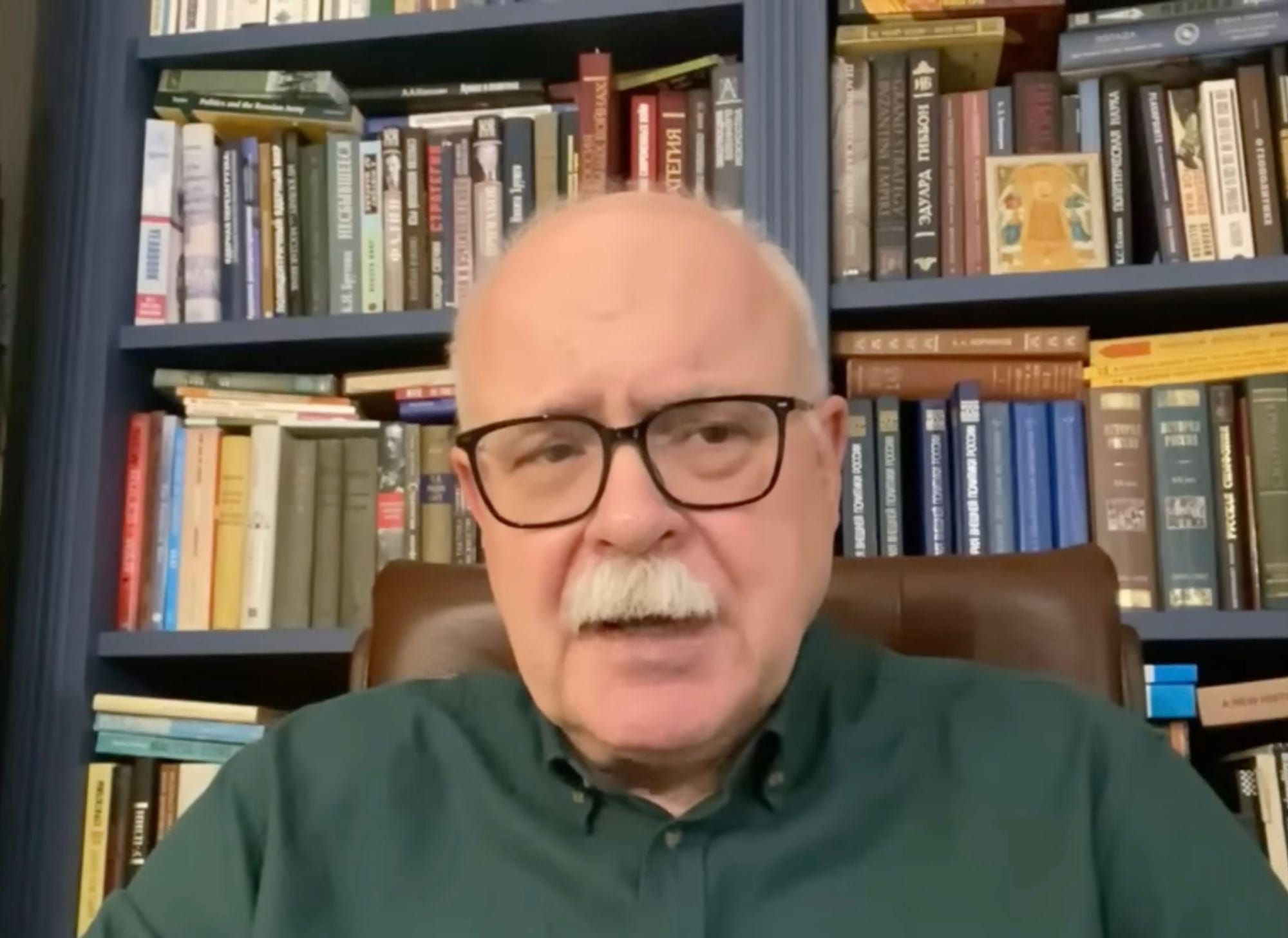
• Dmitri Trenin, Director and Academic Supervisor of the Institute of World Military Economy and Strategy at the HSE University in Moscow
• Donald Ramotar, former President of Guyana
• Graf Hans-Christof von Sponeck, former UN Assistant Secretary-General
• María de los Ángeles Huerta del Río, former Mexican Congresswoman
• Namit Verma, Indian author and security analyst
• Dennis Small, EIR Ibero-America Editor
• Lt. Col. Ralph Bosshard (ret., Swiss Army), former military advisor to the OSCE Secretary General
• Moderator: Dennis Speed
The Principles Necessary To Ensure Mankind’s Future
by Helga Zepp-LaRouche
The following are the edited remarks of Helga Zepp-LaRouche, as delivered, to the Jan. 12, 2025, EIR Emergency Roundtable event, “It’s Worse Than You Think: The Strategic Implications of the Attack on Venezuela and How To Bring the World Back from the Brink.” Mrs. Zepp-LaRouche is the founder of the Schiller Institute and Editor-in-Chief of EIR. The video is available here.
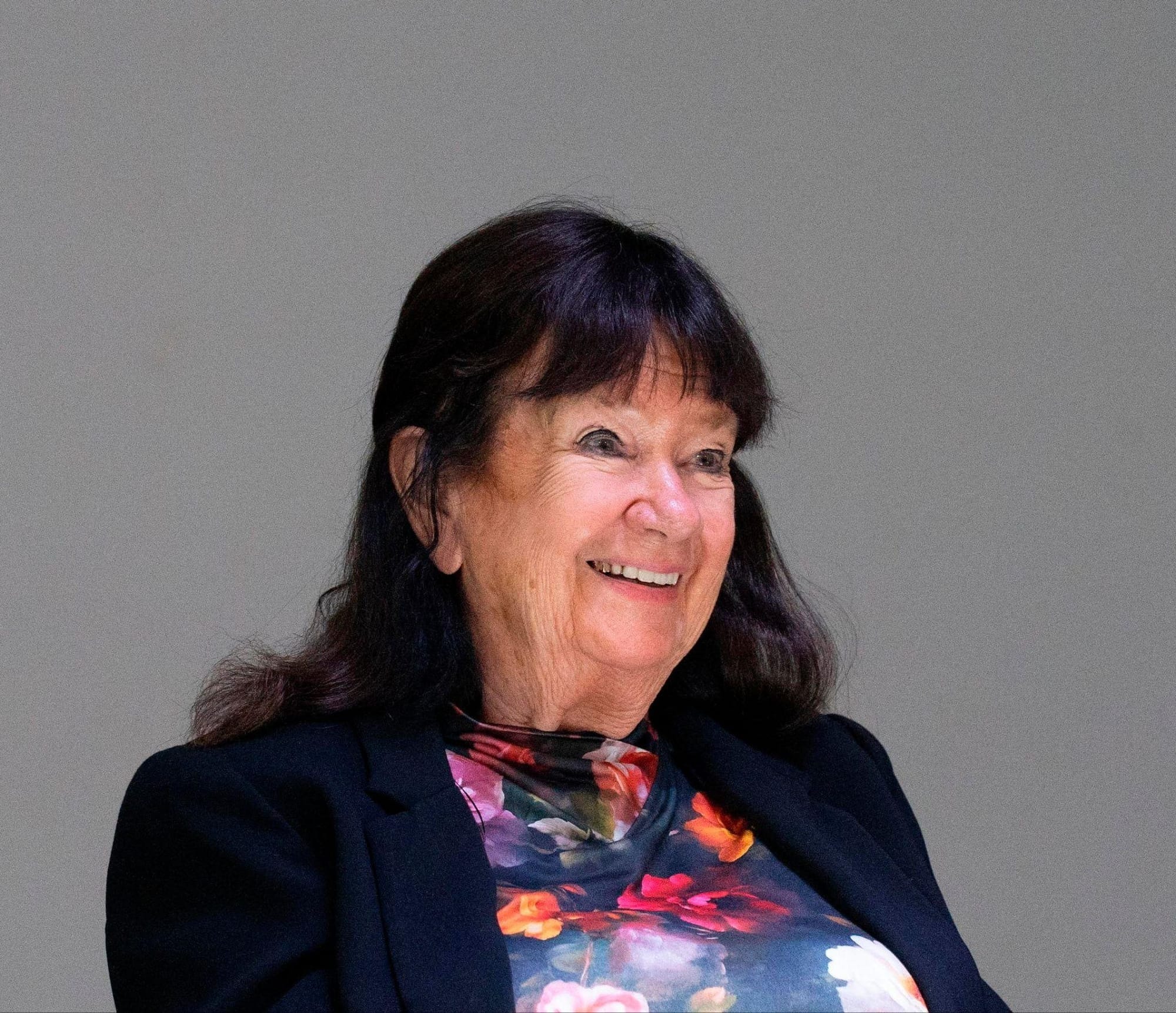
Ladies and gentlemen, dear friends of the Schiller Institute, I welcome you. We have assembled here today not to lament the unprecedented situation which can only be described as a threat to the existence of the entire human civilization, but to discuss, analyze, and catapult an international response to restore international law.
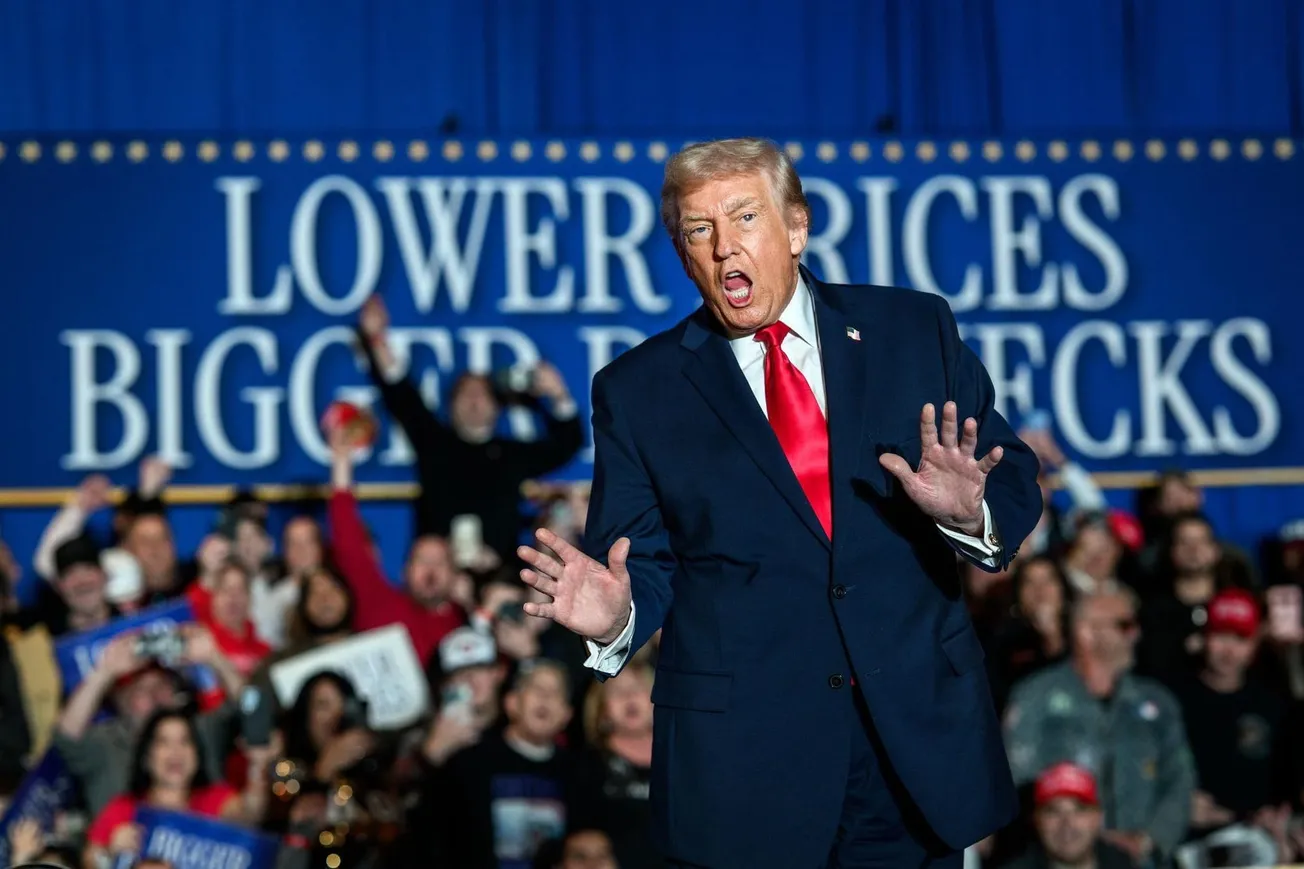
In an interview with the New York Times on Jan. 7, U.S. President [Donald] Trump answered the question if there was anything which would limit the carrying out of his global power, by saying, “Yeah, there is one thing. My own morality, my own mind; it’s the only thing which can stop me. I don’t need international law.” Indeed, that seems to be true. International law has been officially terminated and has been replaced by the “might makes right” principle. In the first ten days of 2026, the United States has unilaterally attacked Venezuela, Syria, Somalia, and Nigeria, and threatened to attack Cuba, Colombia, Iran, and Greenland. To all of that, the response by NATO—of which the United States is the leading part—has pretty much been nonexistent, or called “too complex” to comment on. At the same time, basic constitutional rights are being eliminated.
The First Amendment of the United States Constitution, the freedom of opinion, speech, and press [is being violated] in the European Union—as the case of Jacques Baud [Swiss analyst and former colonel in the Swiss Army] and 58 other individuals sanctioned by the EU demonstrates. Laws are being made for total surveillance of innocent citizens under all kinds of pretexts. President Trump announced that he wants to increase the U.S. military [budget from] $900 billion in 2026 to $1.5 trillion in 2027, which is a two-thirds increase. There is a military build-up in Europe which has not been seen since approximately 90 years ago, under the pretext that Russia would prepare an attack on another NATO country—for which there is no proof but lots of counterarguments. These unprecedented military build-ups can only have one explanation; namely that they are a preparation for a coming world war. There are automated killings based on algorithms and AI software. This is taking place without any public discussion. And naturally the genocide [is] officially registered by the highest courts on this planet, but without any consequence. Of all the many abuses going on, in all likelihood the most dangerous event—[which] gets almost no public acknowledgement and is at best discredited as being fake news—is the attempted assassination of the President of the technologically most advanced nuclear power in the world, with 91 drones, which were repelled.
It should be clear to any thinking person that if that attack would have been successful, we would not be convening here, but civilization would probably have ended already. The answer to that attempt was an attack [by Russia] on the second-largest gas depot in Europe, in the west of Ukraine. It was done with an Oreshnik missile which achieved a speed of Mach 10, which together with other systems knocked out what amounts to 10% of the entire European gas reserves. Neither the attempt on the residence of [Russian] President [Vladimir] Putin, nor the deployment of the Oreshnik missile, has found much mention in the Western media at all.
Today, we learned that last Friday, the U.S. Department of Justice threatened the head of the Federal Reserve, Jerome Powell, with criminal indictments. Powell denounced this as an attempt to interfere with the right of the central bank to set interest rates according to their financial considerations—in the recent period, the Fed [had refused] to accept Trump’s demand to lower interest rates. What if the threatening blow-out of the trans-Atlantic financial system—which is sitting on a $2.4 quadrillion bubble of essentially non-payable financial debt, including a U.S. [national] debt of $37 trillion and a [much bigger financial] derivatives package—is the main engine which causes all their desperate activities, including the effort to attempt to set up a de facto world dictatorship?
The most urgent question is, can mankind act in time to avoid the looming civilizational catastrophe? Given that we are the only species gifted with creative reason known in the universe so far, can we change the course of action and create the means of self-government which allows not only overcoming the actual strategic crisis, but to create the conditions for the durable survival of humanity? We have convened this emergency seminar to formulate a plan of action for the consideration of governments to which I have contributed my Ten Principles, and to which other speakers of this conference will be contributing their ideas.
The Ten Principles of a new international security and development architecture are, very briefly, and I have shortened it here for purposes of time: First, the partnership of perfectly sovereign nation-states; secondly, alleviating poverty in every nation on the planet; third, prolong life expectancy by creating a modern health system in every country; fourth, promote creativity, access to universal education for every child and adult person living; fifth, productive credits—implement Lyndon LaRouche’s Four Laws for a reorganized international financial system; sixth, create a new economic order—build the World Land-Bridge of infrastructure tunnels and bridges connecting all continents; seventh, sovereign nations must eliminate geopolitics.
Our aim is to approach all governments that are members of the United Nations, and suggest to them that they should convene an emergency conference of the UN General Assembly or an equivalent appropriate institution with the intention to restore international law based on the UN Charter and in line with the Five Principles of Peaceful Coexistence; welcoming the discussions of contributions of individual governments, such as the four Global Initiatives introduced by China in the recent years.
Such an international conference must establish the framework for a new international security and development architecture which, for it to succeed, must take into account the interests of every single country on the planet. In the tradition of the conference which created the Peace of Westphalia, the national representatives must first agree on the principles upon which this architecture must be based, and only then proceed to discuss all the distinct regional, historic, ethnic, territorial, economic, financial, etc. conflicts and their solutions. The only way it will be possible to solve the extremely complicated array of conflicts in the world today is by first establishing a completely new paradigm in international relations. This must be the agreement that we have reached a point in the universal history of mankind, where we must agree to always put the interests of mankind as a whole first before we define any national or other particular interests. This is to acknowledge the fact that we are, for the first time in history, all sitting in one boat; that because of the existence of nuclear weapons, the use of which would end civilization, the existence of pandemics which can expand over the entire world in a matter of days, the existence of the internet, etc., we are interconnected as one human species and must act accordingly.
The new paradigm requires a new method of thinking. We must absolutely abandon thinking in terms of geopolitics or any other form of thinking in terms of Aristotelian contradictions, and instead adopt the method of thinking of the great thinker of the 15th Century, Nicolaus of Cusa. Cusa developed the method of the Coincidentia Oppositorum, the Coincidence of Opposites. It involves the idea that the human mind is always capable of thinking on the level of the higher One that is of a higher order of power than the Many, and in which all contradictions on the lower level are superseded. It is actually that method which informed the Peace of Westphalia Treaty to come up with the principles which successfully ended 150 years of religious warfare in Europe. This method of the Coincidence of Opposites corresponds to the greatest power of the human mind as the most developed geological force in the universe, as Vladimir Vernadsky called it. It is the driving force of scientific discovery, of qualitatively new principles of the physical universe, and as such, the motor of innovation and the related increase in the relative potential population-density on Earth, and beyond sometime in the future, as well as the increase in the living standard of all people.
It is therefore of the highest strategic significance that recently in his Jubilee speech, Pope Leo XIV evoked exactly that method of the Coincidence of Opposites of Nicolaus of Cusa as a way to supersede contradictions which must be held together as a method of conflict resolution for actual political problems in the world today. He contrasts Nicolaus with those of his time who were arming themselves for the Crusades, because “he understood that contradictions exist which must be held together, and that God is the secret in which all that exists in tension finds its unity.” It is obvious that in this unprecedented civilizational crisis of humanity we must evoke the best concepts of all great thinkers of the past, such as Confucius, Plato, and Leibniz, as well as those conceptions in the present which can constitute a platform for that higher unity of mankind. Examples of this are not only the reference by Pope Leo XIV of the Coincidence of Opposites, but also conceptions like the Global Governance Initiative of President Xi Jinping.
Let us therefore evoke the best of what humanity has produced over time and in all civilizations in ourselves and bring it to bear. We are truly tested for our ability to survive morally, and whether we can realize the beautiful potential that is only characteristic of our human species. For that, we have to actualize a tender love for humanity—agapē. Thank you.
The World Must Reject ‘Might Is Right’
by Dr. Naledi Pandor
The following are the edited remarks of Dr. Naledi Pandor, as delivered, to the Jan. 12, 2025, EIR Emergency Roundtable event, “It’s Worse Than You Think: The Strategic Implications of the Attack on Venezuela and How To Bring the World Back from the Brink.” Dr. Pandor is the former South African Minister of International Relations and Cooperation (May 2019-June 2024), chair of the Nelson Mandela Foundation Board of Trustees, and chancellor of Nelson Mandela University. The video is available here.
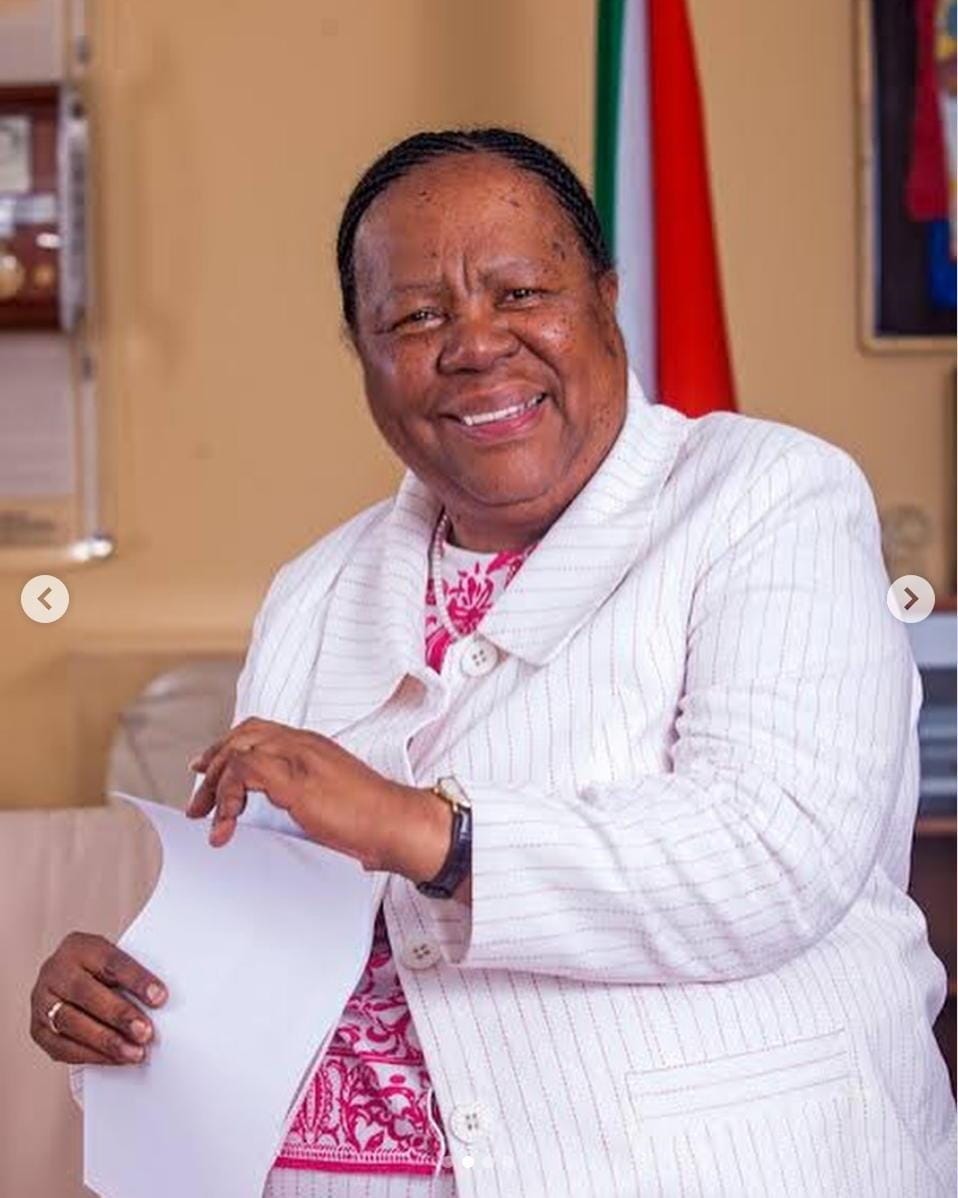
Thank you very much Mr. chairperson. Allow me to thank the Schiller Institute for allowing me to be a part of this very important debate. All of us have been reflecting on the multiple crises that we are facing in this geopolitical context. And concern has been expressed about the evident slide into chaos, and abuse of respect for international law and multilateralism. For many developing countries, and a number of progressive organizations, the events of this past year, while horrifying, are no surprise. They confirm our experience as developing countries, that most of the powerful countries of the West believe they have the power to ride roughshod over the rights of all non-European nations.
Africa and other developing regions of the world have borne the brunt of colonial exploitation and underdevelopment for centuries. And the abuse the global community has silently permitted is now maturing into untrammeled abuse of global cooperation. Much of the flaws lie in the architecture of the United Nations, specifically its Security Council. And any solution we devise must address its fundamental reform, and insert real enforcement power within the reformed body. World cooperation without effective protection of the vulnerable is a global weakness the global community must address.
I recall a few years ago, the African Union was in the midst of a multilateral political dilemma, when leaders of the then-government of Kenya were faced with an ICC [International Criminal Court] indictment. The leaders of the African Union felt significant offense at what they regarded as an international law practice that seemed to find it easy to accuse and sanction Africans, and yet stridently justify Western leaders’ abuses of the same laws and institutions. The leaders discussed a possible continental exit from the Rome Statute, but eventually held that decision in abeyance, following exhaustive discussion and a desire for Africa not to be seen to disrespect international human rights law. The leaders debated the ICC warrant, how to respond to it, and whether, in the context of double standards by others, they should even be party to the statute. After several years of debating whether or not to exit, the African Union decided to remain as signatories of the statute. The reasons for this, I believe, lie in Kenya’s commitment to international human rights law. The government of Kenya had adopted a modern, rights-based constitution a few years before this debate, and appropriately felt their actions and response to the ICC needed to illustrate respect for the ICC, as rejection or retreat would imply diminished commitment.
The current situation we’re experiencing of flagrant abuse of international law and multilateralism requires increased commitment to multilateralism and to respect and the strengthening of international treaties and conventions. The world is in the most dangerous situation of abuse of global law since the adoption of the United Nations Charter in 1948, and thus we certainly face the likelihood of a Third World War. Increased attention needs to be given to identifying initiatives that could secure global impetus for altering the slide into further global chaos and humanitarian disaster.
While the illegal events linked to Venezuela are extremely worrying, the fallout that will result from any attack on an already abused Cuba would be catastrophic for that nation. The global community, particularly powerful member states of the UN from the West, have proven unable, or disinterested in reasserting respect for law when called on to act on the current abuses. Their inadequacy suggests a need to look elsewhere to strengthen international institutions that have shown a power to make a difference and an interest in making a difference. Formations such as the BRICS formation, the G20, particularly with its developing country membership, the recently established 30-country Hague Group, which has committed to respect international law, the African Union, and other regional bodies should be persuaded to do more to return the world to multilateral engagement. The current lackadaisical response to U.S. Administration breaches has created a gaping hole for further breaches, and urgent action is required.
This might be a moment in which civil society organizations committed to human rights can play a global leadership role. Religious organizations need to be called on to unite with human rights non-governmental organizations, and to assert the vital need for global cooperation; as well as to agree on practices and partnerships which will support enhanced multilateral cooperation. We should include the United Nations as a central partner in such an initiative, and it must be so supported, with resources if required. Using the important commitments of the now 30-member Hague Group, this coalition for multilateralism could assert the critical importance of adherence to UN-agreed treaties and conventions. It could call on all who have breached international law and all perpetrators to face charges in global courts, and also provide support for communication and popular civic education on international law and the need for ordinary members of our societies to support international law.
The world must, in conclusion, unite in action, to reject the notion of “might is right,” and show this rejection in active partnership, and active protest against the abuses that we are seeing today. And we should also simultaneously act together to restore the legitimacy of multilateral cooperation. Thank you very much.
Defend the Principles of Justice and Equity
by Prof. Zhang Weiwei
The following are the edited remarks of Prof. Zhang Weiwei, as delivered, to the Jan. 12, 2025, EIR Emergency Roundtable event, “It’s Worse Than You Think: The Strategic Implications of the Attack on Venezuela and How To Bring the World Back from the Brink.” Mr. Zhang is a Professor of International Relations at Fudan University in Shanghai. The video is available here.
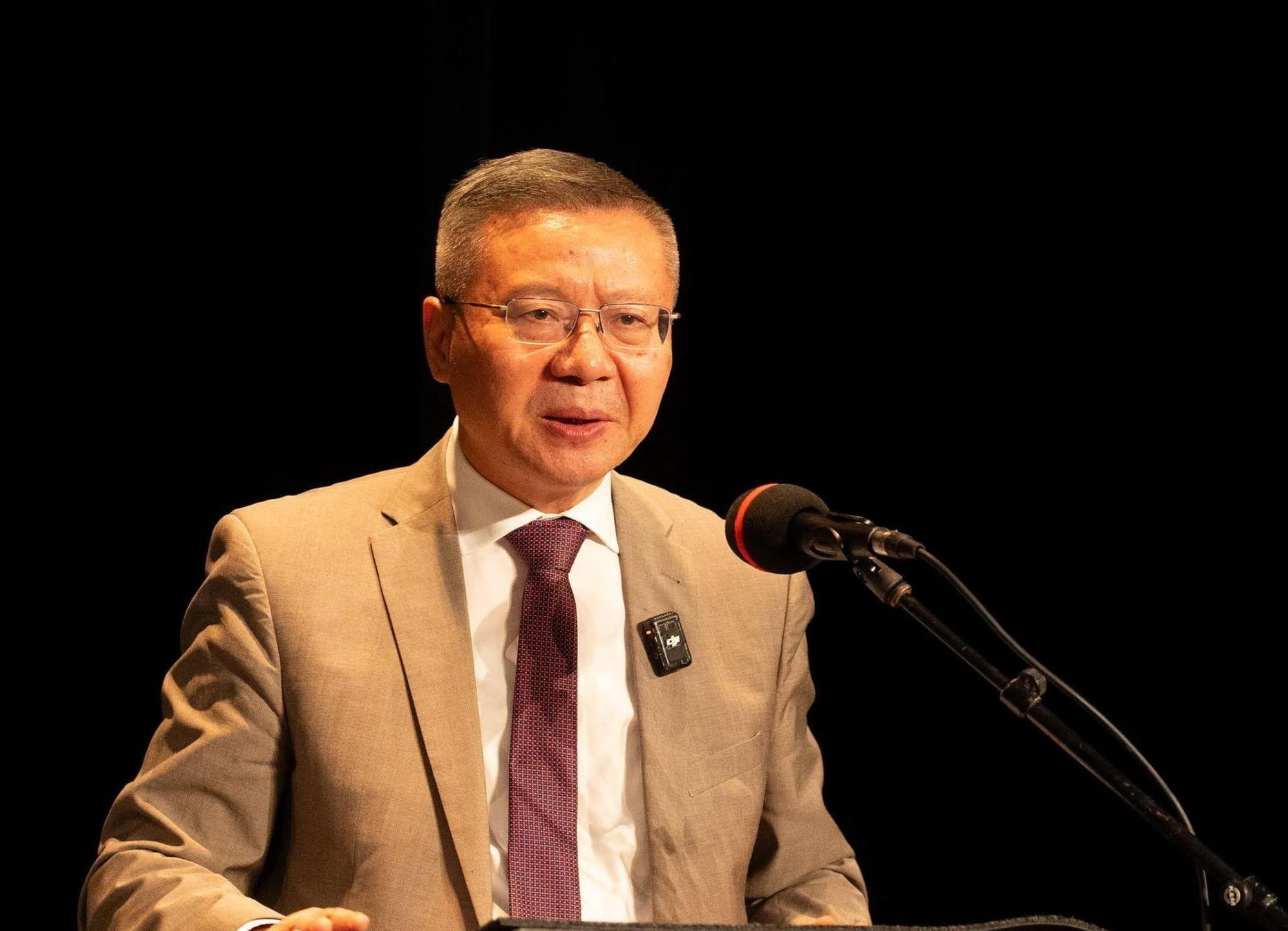
Thank you. Hello everyone. Today we attend this emergency roundtable dialogue to condemn in the strongest possible terms, the outrageous acts perpetuated by the [U.S. President Donald] Trump Administration against Venezuela: the arbitrary arrest of President [Nicolás] Maduro. This brazen act constitutes a flagrant violation of international law, a gross infringement of Venezuela’s national sovereignty and territorial integrity, and a dangerous precedent that erodes the very foundation of the UN Charter-based postwar international order. The United States has a long and shameful record of unilateral military interventions, from Iraq to Libya to Panama; the list stretches on. Each of these reckless ventures has brought nothing but chaos, human suffering, and protracted instability to the countries and the peoples of these countries. This latest provocation has sparked worldwide condemnation.
China has denounced the U.S. action, which constitutes a serious breach of international law, and blatant encroachment upon Venezuela’s inherent rights, including its unshakeable sovereignty over all its natural resources and economic activities. China firmly supports the government and the people of Venezuela in safeguarding their sovereignty, security, and legitimate rights and interests, and supports the regional countries upholding the status of Latin America and the Caribbean as a zone of peace.
It’s also necessary to place the U.S. action within the broader geopolitical landscape, as it reflects the recently revised U.S. [National] Security Strategy breaking away from the costly pursuit of global hegemony. The Trump Administration now embraces what became known as the “Donroe Doctrine,” seeking to expand U.S. sway over the Western Hemisphere, as arbitrarily defined by Donald Trump, spanning from Venezuela to Panama to Greenland and beyond. Yet in my view, this act is also extremely short-sighted, and will be self-defeating. It has already inflicted heavy damage to U.S. soft power, to its alliance system, and to the very foundation of the so-called rules-based international order.
It also serves as a sobering wake-up call for America’s allies. For years they joined the United States in pursuing a so-called values-based foreign policy, using humanitarian intervention as a fig leaf to orchestrate color revolutions in many sovereign states, and caused untold sufferings to many peoples of the world in flagrant violation of the UN Charter. We roundly condemn both the Trump Administration’s brazen flouting of the UN Charter and long-standing Western practice of waging wars against other countries on the various high-sounding excuses and pretexts.
The international legal system, anchored in the UN Charter, stands as an historic milestone in safeguarding global peace and development, forged from the bitter lessons of the two world wars that claimed the lives of tens of millions. It’s incumbent upon all nations to strive collectively to uphold the postwar international order, underpinned by the UN Charter, and resolutely reject any attempt to erode its foundational bedrock; be it the Trump-style brazen actions or the so-called Western liberal model of military interventions under various excuses, or the dangerous resurgence of Japanese militarism, a force that inflicted untold havoc on China and many other Asian countries.
On January 6, the Chinese government announced a comprehensive ban on the export of all dual-use items to Japan, a key U.S. ally in Asia. This encompasses all goods, techniques, technologies, and services that could be diverted to military purposes. China will never tolerate the revival of Japanese militarism, no matter what excuses are used, or whatever external support is secured. Our stance is rooted in the unwavering commitment to defend the UN Charter and the Charter-based postwar international order. This sweeping ban may also be a warning to the United States that any moves that harm China’s legitimate interests, whether in Venezuela or other parts of the world, will elicit a forceful response from China. Let all peace-loving countries across the globe unite as one in our common endeavor and struggle against any and all acts that trample upon the postwar international order, anchored in the UN Charter.
Let us take all possible means to curb any such acts and defend the fundamental principles of justice and equity that underpin our shared global governance framework. With this, I thank you all for your patience, for your attention. Thank you all.
The Principles of the Westphalian Order Must Be Defended to Prevent a New Dark Age
by Ambassador Chas Freeman
The following are the edited remarks of Amb. Chas W. Freeman, Jr. as prepared, to the Jan. 12, 2025, EIR Emergency Roundtable event, “It’s Worse Than You Think: The Strategic Implications of the Attack on Venezuela and How To Bring the World Back from the Brink.” Mr. Freeman is the former U.S. Ambassador to Saudi Arabia, former Assistant Secretary of Defense for International Security Affairs, and a China scholar. The video is available here.
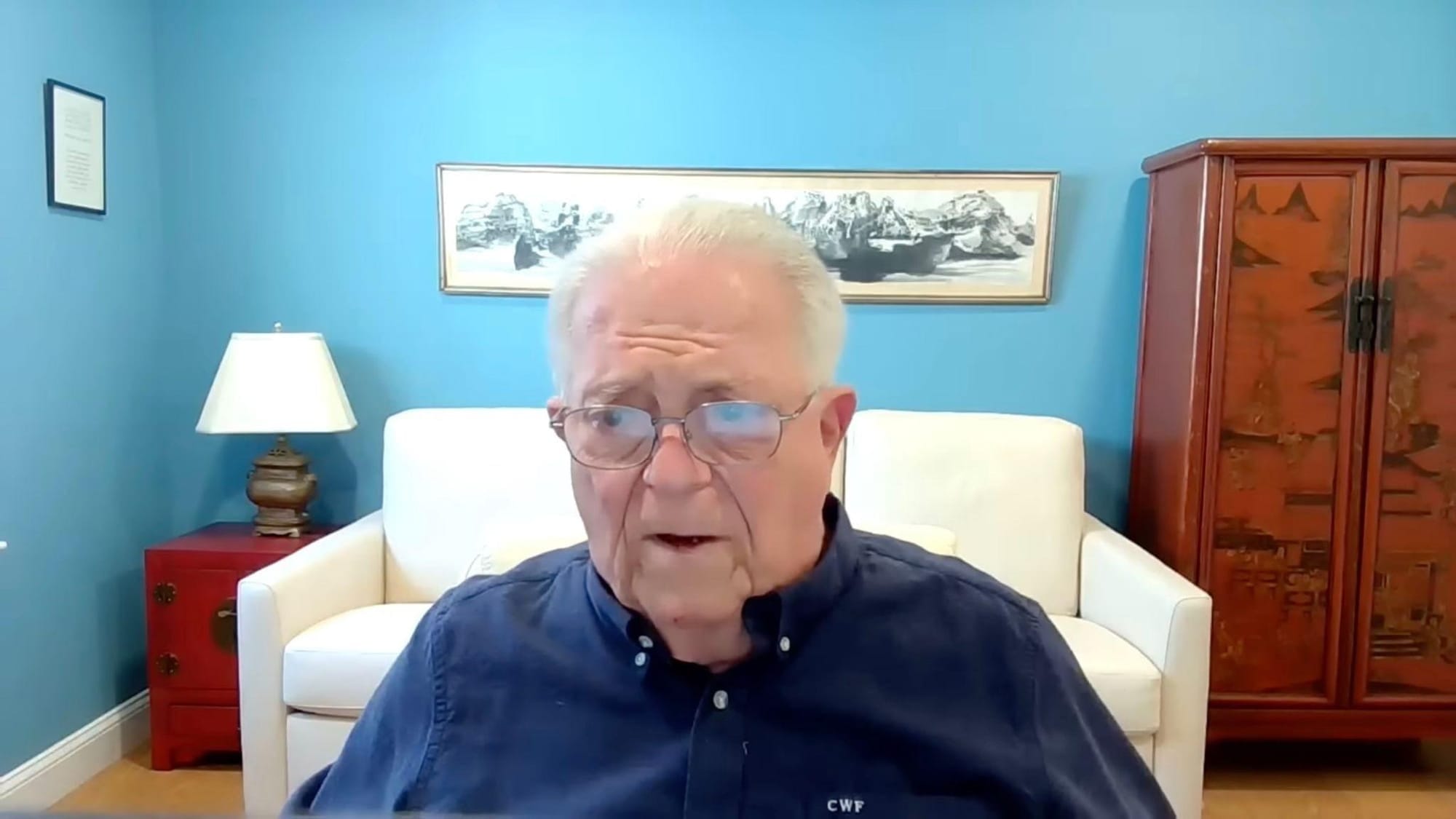
We are here to avert a tragedy—the apparently inexorable unfolding of foreseeably terrible events. As German President Frank-Walter Steinmeier has just warned us, we are in the midst of a “breakdown of values” that is turning the world “into a den of robbers, where the most unscrupulous take whatever they want” and where entire regions or countries are treated as the property of a few great powers.
My country, the United States of America, is the most powerful in the world. It has now followed its Israeli protectorate into protracted war on the truth, repudiation of the rule of law, and shameless bullying and violations of the sovereignty of all who oppose it. The already wealthy once again feel free to rob the poor with impunity. We are back to the law of the jungle and aggressive imperialism. Ever more governments emulate the Mafia’s protection racket practices and intimidation techniques. If this is not stopped, we are headed for a second Dark Age.
The purpose of international law has always been to ensure that the strong could no longer victimize the weak. Insistence on this principle, even if imperfectly respected, is what has separated civilization from barbarism. If the law is no protection, nations will be forced to rearm against potential attack by others. If they face the threat of nuclear, chemical, or biological attack, they will build their own weapons of mass destruction to deter this. If alliances are no longer reliable, nations will hedge or simply abandon them to combat or cut their own deals with adversaries. This is not speculation. It is the visible trend of our times.
As we have seen in the case of the Gaza genocide, words alone cannot halt atrocities. Nor can unenforced decisions of the United Nations or international courts. Intensifying citizen protests have failed to wean allegedly democratic governments from tolerance, complicity in, or support for increasingly blatant crimes against humanity and brutal efforts to subjugate or curtail the freedom of independent nations and peoples.
The collective West continues to profess that all men are created equal, that they are endowed by their Creator with certain unalienable Rights, that among these are Life, Liberty and the pursuit of Happiness. But this now has no credibility. We support Israel’s ongoing genocide and ethnic cleansing of Palestinians, its efforts to dismember Syria, its depredations in Lebanon, and its preparations for renewed aggression against Iran and Yemen. To defend this hypocrisy, our democracies now emulate authoritarian regimes by suppressing freedom of speech, freedom of assembly, and academic freedom. We have abandoned due process to punish anyone who effectively refutes the official narrative. Evidently, we believe that it is necessary to betray Western values to save them. This is a disastrous misjudgment.
In the new world disorder, neither the norms of international law nor public opinion constrain the behavior of great powers. They have learned how to manipulate their citizens’ perceptions of reality to assure public support and achieve impunity for their amoral abuses of power. Mass media faithfully echo official propaganda, journalists self-interestedly amplify it, while corporate media platforms treat anything that challenges it as seditious and ban it.
Western media refused to consider or report the strategic anxieties that prompted Russia’s illegal invasion of Ukraine. They portrayed the U.S. effort to exploit Ukraine’s distress to requisition its rare earths as compassion, not greed.
Unconcealed vanity and hubris have now brought about U.S. naval acts of piracy against Venezuela and murders of its citizens in its near seas, the decapitation of its government, the theft of its natural resources, and its proposed reduction to an economic colony of the United States. So much for the respect for national sovereignty that is the foundation of the United Nations Charter and international law!
The United States now unabashedly presents itself as an untrustworthy expansionist power that substitutes unilateral diktats, intimidation, and the use of force for diplomacy. This gangster logic is contemptuous of the interests and honor of other countries. It now menaces Greenland, a self-governing part of Denmark, a member of NATO and a loyal ally of the United States. The transformation of the United States from protector to predator threatens not just to splinter the core of Western civilization but to unravel the transatlantic alliance.
Washington seems to have decided to abandon Europe to its fate in order to impose a tyrannical monopoly on the political economy of the Western Hemisphere. It aims to expel the influence of competing great powers and keep them at bay, especially China, without regard to the interests of those the United States proposes to dominate. This brutal reinvention of the Monroe Doctrine seems less likely to bring the nations of South America to heel than to encourage them to seek Chinese and other foreign protection against North American control. The kickoff was military aggression against Venezuela, but Washington has made it clear that this was merely an opening move, with much more belligerence to come.
Meanwhile, Israel continues to defy international law and norms of human decency with impunity. It seeks to annihilate those Palestinians it cannot subject to apartheid. It treats the scheduling of negotiating sessions with its opponents as opportunities to murder them, not to make peace. It signs ceasefires only to violate them. Its armed forces and security services routinely invade the sovereignty of its neighbors. It has no plan for peaceful coexistence with them. It aims instead to consolidate a U.S.-backed Israeli sphere of influence in West Asia within which it can continue to expand at will. This is a formula for the ongoing destabilization of the region in endless, escalating warfare and resistance to maltreatment through terrorism. It promises even greater insecurity not just for Israelis but for their Western backers.
The world cannot permit a continued descent into a moral and legal abyss. If governments do not counter lawless behavior with concrete actions, the precedents now being set in Europe, West Asia, and South America will be replicated elsewhere and life everywhere will be increasingly nasty, brutish, and short.
Rhetorical resistance to lawlessness is not enough. We have come to a tipping point. If we cannot now persuade our governments to take effective action to punish and deter further crimes against the Westphalian order of sovereign states, it and the rules-regulated international order it birthed will surely perish from the Earth.
We must now acknowledge the reality that the structures we created to promote peace and progress after World War II have finally failed. Their failure is mirrored not only in the absence of effective statecraft to resolve conflicts, but in domestic constitutional crises and the erosion of democratic freedoms everywhere. It is past time for a fundamental reappraisal of institutions and policies that have manifestly failed by the governments responsible for their failure.
In this regard, Italy’s [Prime Minister] Giorgia Meloni is entirely right to make the common sense argument that peace in Europe demands that Europeans talk to Russia, not just among themselves and to Ukraine. Like it or not, Russia is part of Europe. Without dialogue with Russia about the warfare that threatens Europe and is consuming Ukraine, Europeans cannot resolve the conflict or protect their long-term security interests. The United States is no longer able or willing to do this for them. It is surely anomalous that Europeans should entrust the crafting of a peace that is central to their subcontinent’s stability to amateur envoys of an American President who says he regards them as competitors and who seems to have little interest in them except as wealthy purchasers of American weaponry.
Recent U.S. efforts to subjugate Venezuela underscore the dangerous unrealism of the argument that “every country [including Ukraine] has the right to choose its international alliances” without regard to the impact of their alignment on others. Unscrupulous predators now take what they can; their prey yield what they must. Might may not make right, but it is foolish to ignore it. Whatever Mexico may think about past U.S. aggression, it is careful not to align itself against the United States. Vietnam prudently avoids military alliances aimed at China as Bangladesh does against India. There is no future for a less circumspect approach by Ukraine to its mightier Russian neighbor.
Russian statecraft is dominated by memories of foreign invasion from both the east and west. Moscow’s security anxieties are not irrational. Both France and Germany have invaded Russia. Any peace in Europe must address both Russian anxieties about another Western attack on it, especially as Germany rearms, and Western concerns about Russia. Europeans need to take charge of defining their own destiny. They—non-Russian and Russian alike—are the parties directly at interest in composing a mutually reassuring security architecture for their subcontinent. Prime Minister Meloni deserves the support of other European leaders in a joint effort to engage Russia in dialogue about how peace in Ukraine might help bring forth such an architecture.
Peace in Europe would benefit the entire world, but it alone would not cure the manifest infirmities of our legacy global institutions. If the United Nations Security Council cannot regulate world peace and development or enforce the decisions of the International Court of Justice, we must explore work-arounds and alternatives to it. There is nothing to prevent countries from gathering in ad hoc conferences to agree on the application of collective rules and actions that address common concerns. There is nothing to prevent members of the crippled World Trade Organization from recreating its functions at the regional level. There is no reason to allow the ideal of universality to preclude action at less than universal levels to address and resolve problems that most members of the international community regard as urgent. If the UN system, like that of the League of Nations, has failed, it is time to discuss how to repair or replace it.
The breakdown in values to which German President Steinmeier referred has engendered a disastrous collapse of international law and institutions. It took a devastating disintegration of global order in two world wars to give birth, respectively, to the League of Nations and the United Nations. The current world disorder could well produce another global war, this one nuclear and possibly fatal to our species. Surely, it is in our collective interest to forestall this by taking action to reconfigure the dying 20th-Century system to create something better.
I sense that our governments are beginning to understand that, in the newly anarchic circumstances, they cannot continue business as usual. We must demand that they meet the challenges of the day and no longer allow them to silence those who insist they do so.
The Challenges and Dangers Facing the Emerging New Global System
by Dmitri Trenin
The following are the edited remarks of Dmitri Trenin, as delivered, to the Jan. 12, 2025, EIR Emergency Roundtable event, “It’s Worse Than You Think: The Strategic Implications of the Attack on Venezuela and How To Bring the World Back from the Brink.” Mr. Trenin is Director and Academic Supervisor of the Institute of World Military Economy and Strategy at the HSE University in Moscow. The video is available here.
Thank you very much, Mr. Chairman. First of all, I want to thank the organizers for inviting me to this very important discussion. I’ve just heard the larger part, I think, of Ambassador Freeman’s presentation, and I commend him on the thoughtfulness of his remarks. I must say, however, that I take a much bleaker view of where we are and where we’re moving to. There’s no question in my mind that the world is in crisis; that is a functional analogy of a world war. There are wars around, they do not qualify as one great world war, but functionally we’re talking about the use of force, and the use of other means other than military arms to change the existing world order, or to prevent that change.
I think that instability is the key feature of the current moment, and wishing otherwise is clearly commendable, but hardly realistic. The polycentric world is already a reality, but a multipolar order is not within reach. I think that nations, states, other actors will have to fight it out, will have to fight hard, and they are, even today, trying very hard and fighting hard, in order to ensure that the new international global, or world set-up, meets their requirements, and protects or promotes their interests.
We are taking part in an emergency meeting, emergency discussion, that was provoked by the [U.S.] action in Venezuela, but I’m asking myself, “Is this truly a total novelty?” I think that the action that Israel and the United States took, slightly more than six months ago, with regard to Iran, was a much more stunning example of what war could look like in the 21st Century. What happened in Venezuela just a few days ago was a very light version of that new style of using force to reach political goals.
I think that the advent of [U.S. President] Donald Trump, although it did severely impact the international system, and changed accents and priorities in America’s foreign policy, is still aimed at the goals that U.S. foreign policy has been following since the Second World War. So, I do not see that there’s much novelty there, either. Well, the liberal globalist collective West is no longer with us today. Thanks to Donald Trump, it is more of a great power American drive to establish itself as the prime force in the world. It’s, if you like, hegemony without the responsibility that American leaders felt for the various elements of their empire since 1945. It is an important change, and I think it’s more important for American allies than it is for American adversaries. But it’s really a variation of the policies that we’ve been familiar with in the past eight decades.
Those who used to fear ideological crusades aiming at regime change in their countries, or military interference in their countries, have to brace for naked military interventionism that doesn’t bother about pretexts for military interventions. So, right is might, that’s clear, and cynicism has replaced hypocrisy. To some people this is preferable to just listening again to the lofty phrases that are providing a flimsy cover for unseemly actions.
Again, I very much commend Chas Freeman on his thoughts and recommendations, but in my view, Trump, as we’re talking about him, will not stop until someone pushes back against him. In Venezuela, it would have taken just a couple of helicopter crashes to lead to a failure of the mission. It was seemingly an easy thing to do, but I think we all suspect that Venezuela was an inside job, and those who did that job did it incredibly well—although clearly that resulted in dozens of people being killed. But as I said, like in Iraq in 2003, this looks like a case of a covert operation that succeeded in using domestic traitors to topple, or in this case, to surrender the head of the government to the invading force.
I think the message that is being sent by Venezuela to Russia, I think to China as well, is be on your guard, no one is safe in this situation. The things that certainly we in Russia thought would never happen have already happened in a number of situations during the war in Ukraine. Russia and China need to interact more, to make sure that attempts against them are duly foiled. With regard to Iran, I think Iran will have to do a better job than it did in June to protect itself, although I think any move by Iran to resume its nuclear program is likely to be countered by Israeli and American strikes, similar to those of June last year.
I think a lot of people will agree that the only protection against interventionism by a major power would be nuclear weapons. That carries enormous risks to the world, but I think that is the message that has been tested, that rests on a lot of experience of the last quarter-century or so. And there’s another message, particularly for the Russians: Do not exercise too much restraint—it may be fatal. I think this message also should ring very strongly in the ears of the Iranians. Let me stop here. Thank you very much.
Peace, Disarmament and Development: the Only Way Forward
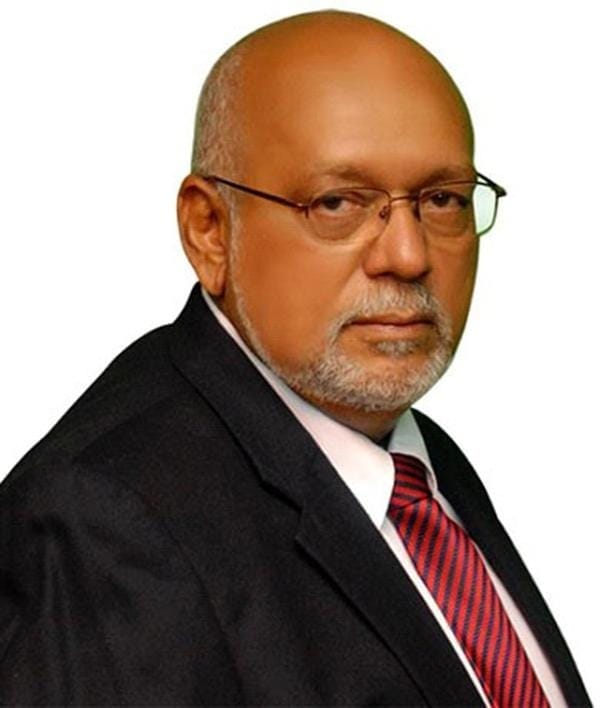
by Donald Ramotar
The following are the edited remarks of Donald Ramotar, as delivered, to the Jan. 12, 2025, EIR Emergency Roundtable event, “It’s Worse Than You Think: The Strategic Implications of the Attack on Venezuela and How To Bring the World Back from the Brink.” Mr. Ramotar is the former President of Guyana (2011-2015). The video is available here.
The kidnapping of Venezuelan President Nicolás Maduro marks a giant step backwards for humanity. It is a return to gun boat diplomacy when a colonial power lauded its troops and changed governments at its will. The big difference now is that we have one colonial power. The United States by its actions has transformed itself into a super-colonial power. It is not now only directed at the Global South and former colonies, but even developed countries in Europe have been now facing colonization. This is how the government headed by [President] Donald Trump is making, or hopes to make, a different interpretation of “Making America Great Again.” This also has a ring of gangsterism in it. It is a Mafia-style operation, reminiscent of Mario Puzo’s The Godfather.
Even the language in diplomacy has changed. No longer do we speak about agreements and accords. Now, we talk about making deals. This gives an idea of the thinking of those who head the most powerful country of the world at this time. It is clear that this administration does not have any regard for the sovereignty of states nor for international laws. We have seen, as we have said here before during these last three years, what took place in the Middle East and today: the terrible suffering of the people of Palestine. International institutions are being totally disregarded, and it’s clear to me that there is an attempt to even destroy them. If the laws and institutions cannot be used by the powerful United States to achieve its ends, then they are trying to get them discarded.
The Trump regime has taken for itself the power to change governments and to take whatever it wants by force. This is now not confined to developing countries, as I have said. We’ve seen the demand to take over Greenland from Denmark. And that is not the end. Countries like Cuba are being threatened, and we know what that can be. The Cuban government has just denied that they have any type of opposition going on with the United Nations apart from the regular conversations they’ve had about migration.
Russia is being threatened as the United States military boards a tanker flying its flag. I think that is testing. I just heard the Russian comrade present here. I agree with him fully, because I think this is testing the resolve to counter what is going on. And it is very disappointing to me to see the Foreign Ministry spokesperson thanking the United States for sending back the two Russian nationals who were on that vessel. I don’t think that this calls now for good manners.
The immediate target is China and the BRICS countries. The United States by its action is admitting that it is incapable of competing with China peacefully. It has openly resorted to using fear to push China out of Latin America and the Caribbean.
Many governments in this region, particularly in the Caribbean, are very much afraid. The Jamaican Prime Minister [Andrew Holness] just made a statement; when he was asked to comment on what took place in Venezuela, he said he wouldn’t comment, because it would anger the United States, and his number one job is to protect the people of Jamaica. He said it loudly; the other Caribbean leaders have not said it that loudly, but that is the prevailing mood among a lot of Caribbean leaders.
Next, they wanted to destroy the BRICS, because of the failure of the sanctions against Russia that were designed to destroy Russia. They have failed completely, and now those countries of the BRICS are resorting more and more to free themselves from dependence on the dollar and trade more and more in their own currencies. This can have a devastating effect on the United States, whose debt is now about $38 trillion, and which they’re paying $1 trillion a year to service.
Disregarding all of that economic situation that exists, Trump is now going to militarize the economy even more, announcing that it will spend $1.5 trillion on its military. This is probably double the next ten countries put together in military spending. I think that this is because they fear losing their position, so the United States is now resorting to more and more force to try to protect their number one position.
The brazenness of the attack on Venezuela has shocked the world. But really it should not have; the signs have been there for some time now. Most recently, it was seen in the Middle East. The genocide and ethnic cleansing taking place on Palestinian lands was not possible without the full support of the United States. This support is all embracing. It includes economic support for Israel’s collapsing economy, military support as it aids in rearmament of the Israeli military machine over and over again, and in intelligence. Parts of that aid went into intelligence, giving them the most sophisticated type of aid in both intelligence and weapons.
They used the poor Palestinian people as guinea pigs in developing more destructive weapons and other forms of communication. Diplomatically the United States has supported them, as we know, and even sanctioned United Nations personnel, preventing them, taking away their visas. Saying the same thing in the criminal courts, and all of that. It is supported, because the United States and Israel intend to ethnically cleanse Palestine. They want to make money; this is greed in its nakedness. Unfortunately, the Arab states sadly have been acquiescing in this diabolical plot.
The actions of the United States government internationally are a reflection of what is beginning to take place inside the United States itself. For some time now, we have been seeing many unhealthy trends in the body politic of the U.S. This trend began accelerating with George [W.] Bush’s Presidency at the beginning of this century. We spoke over and over about the misinformation that was used to invade Iraq, to invade Libya, and to destroy those countries. Important institutions in the United States are being undermined. Trump is accelerating it, but it started well before Trump came into the government.
In the United States itself, those institutions that have been upholding democracy in that country and upholding some of the basic freedoms are beginning to appear to be impotent. Congress itself is now being denuded of a lot of its authority. Opposition to many of the actions of the United States both at home and abroad is being crushed. We saw during the last two years solidarity by students with the Palestinian people being punished with expulsion from the country, students not being able to graduate, and attacks by police and military forces. Now, we see a military presence in many of the big states, many of the big cities in the United States—something we never expected to see. But that is now becoming a norm, and which resulted in the killing of a poor woman [Renee Nicole Good]—a brutal murder I would say, having had a chance to look at the video myself. It’s clear the shooter was in no danger of his life as is being stated.
So, with this situation, we have reached a stage where civilians are shot while protesting. We were warned of this possibility by President [Dwight] Eisenhower as far back as 1961 in his farewell address. What is clear now is that the government of the United States is in the hands of the military-industrial complex completely, in alliance with the oil companies. Maybe a proper examination will show that they have interconnected directors.
Having captured the most powerful state machinery, this elite is now aiming at controlling as much of the world as possible. Latin America and the Caribbean are the easiest victims because of their geographical proximity to the United States. We are at a stage where we must work to halt this crazy plan. If we don’t, then at best we will be bequeathing to future generations a new struggle for national liberation, which our generation had fought for at great sacrifice; many people died; and at worst, we can end in a global war.
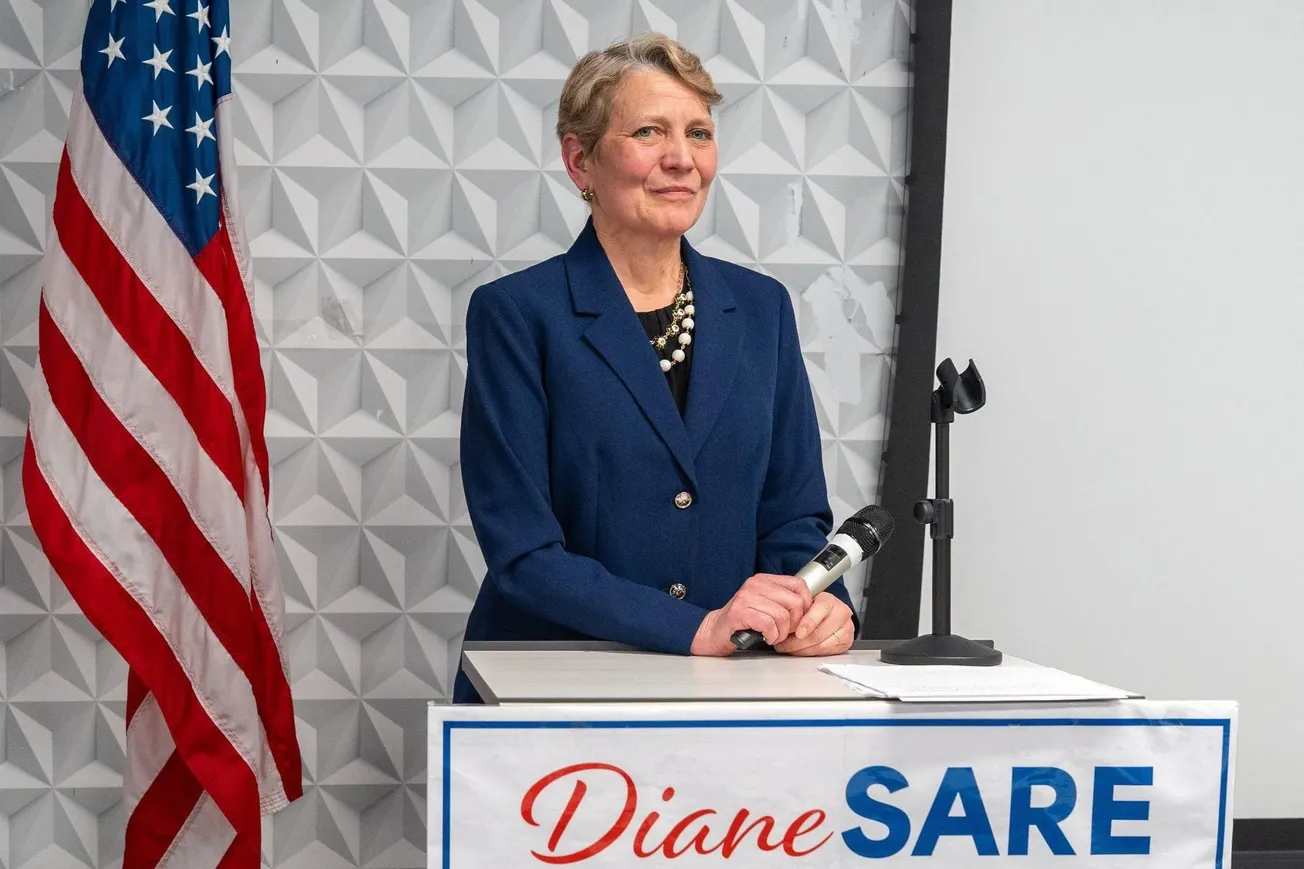
With science and technology at a level where we are at the moment, as we speak, it will not only be millions of people who are dying, but the possibility that life itself on our planet would die. Therefore, the unity of all peace-loving and democratic forces in the world is indispensable to success. In the United States, we must strive to create a very clear alternative to this madness that this clique has put us in. That is why I commend the announcement a day or two ago of a [U.S.] presidential candidate [Diane Sare]. I hope that they will write on their ballots “Peace, disarmament, and development” to save our world from a catastrophe. I thank you for your attention.
A Global Civil Society Organization Is Urgently Needed
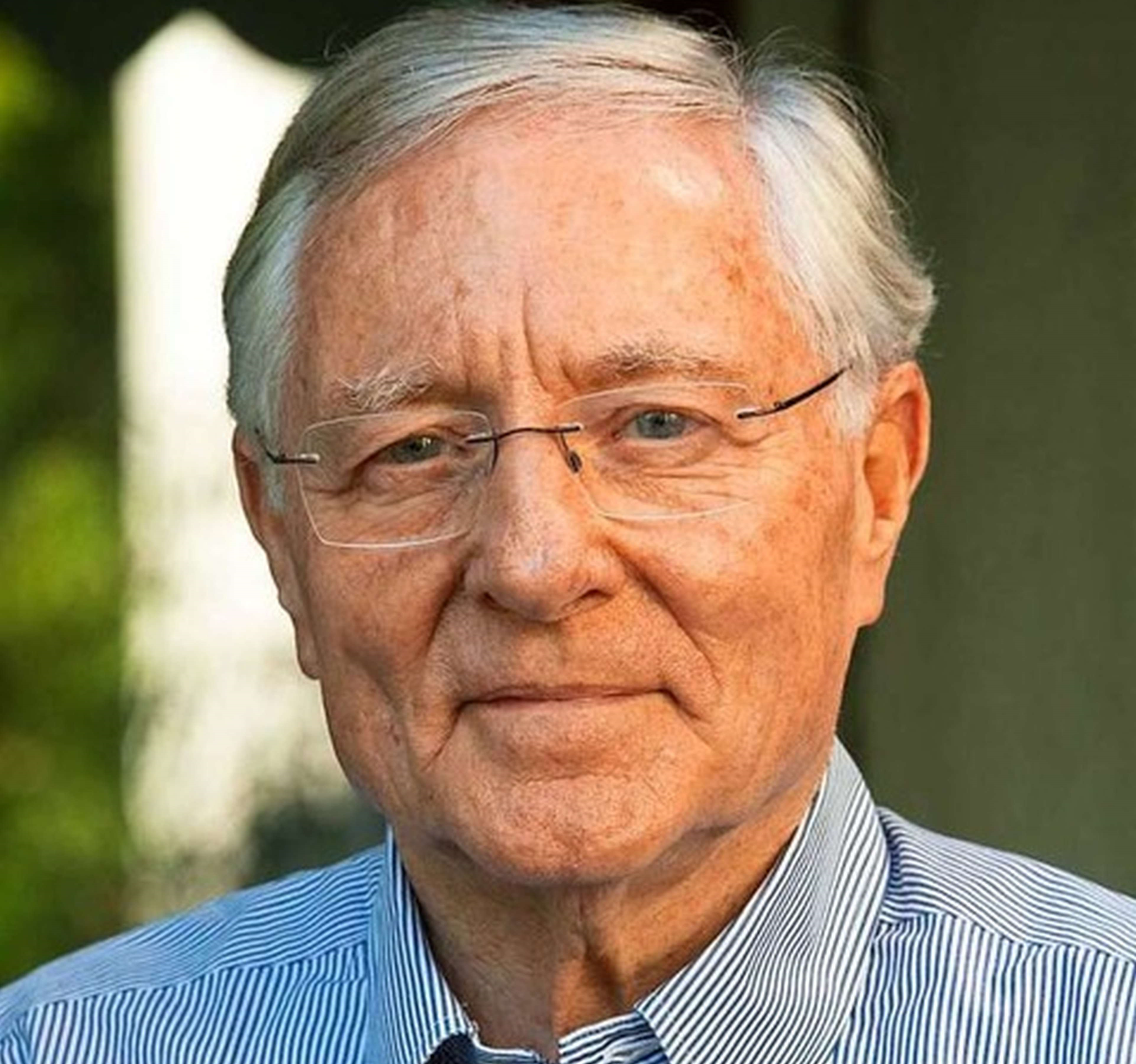
by Graf Hans-Christof von Sponeck
The following are the edited remarks of Graf Hans-Christof von Sponeck, as prepared, to the Jan. 12, 2025, EIR Emergency Roundtable event, “It’s Worse Than You Think: The Strategic Implications of the Attack on Venezuela and How To Bring the World Back from the Brink.” Mr. Von Sponeck is the former UN Assistant Secretary-General and former UN Humanitarian Coordinator for Iraq. The video is available here.
I have lived, studied and worked in America. What I see, read and hear from current U.S. leaders is not the America I have learned to appreciate. I firmly stand by the good America that still exists. We must help this good America to get on its feet and do so with compassion and honesty but also with fortitude and determination in rejecting the irresponsible muscle politics, the brutality, the immorality and the dishonesty of the present U.S. administration. The U.S. Government’s military attack on Venezuela’s sovereignty—this act of invasion—needs no further debate, only confirmation of its profound illegality. Diplomatic appeasement or sycophancy have no place here. What is needed are carefully considered responses from governments, civil society and the UN to react forcefully in conveying that the world is bigger than one, that the world is not willing to subjugate itself any longer to unilateral decision making and that global peace and security for all have their unequivocal attention. I see four key areas of concern.
Concern 1:
The UN General Assembly in partnership with civil society should be encouraged to pass a resolution rejecting U.S. geopolitical behaviour and pointing out the global consequences for the U.S. should it continue to violate UN Charter and other international law.
The resolution should remind political leaders that impunity of the few will have to be replaced by accountability of all.
Concern 2:
The real danger that in the aftermath of the U.S. attack on Venezuela, civil war may break out in Venezuela, should invoke international responsibility to prepare immediately a UN-supported mediation process between the Government of Delcy Rodríguez, the Acting President of Venezuela, and opposition groups.
Concern 3:
After years of continuous serious violations of international law and its UN-related obligations, by U.S. governments, the time has come to invoke Article 6 of the UN Charter, which states: “A member of the UN which has persistently violated the Principles contained in the UN Charter may be expelled from the Organization.”
The expulsion of any nation from the United Nations should, however, be avoided. Instead, U.S. membership in the UN should be frozen until such time that its government shows a credible willingness to abide by international law.
Concern 4:
Our world lacks an integrated social movement. The World Social Forum is defunct. A truly world-wide civil society organization is urgently needed and, if created, could become the strongest power on Earth. This should encourage governments and citizens alike to make every effort to work towards such an organization and do so in compliance with the UN Pact for the Future adopted by the General Assembly in 2024 using proposals that already exist in Japan, South Africa and Switzerland.
From the American Trench to the World System: For a New Paradigm of Sovereignty for All
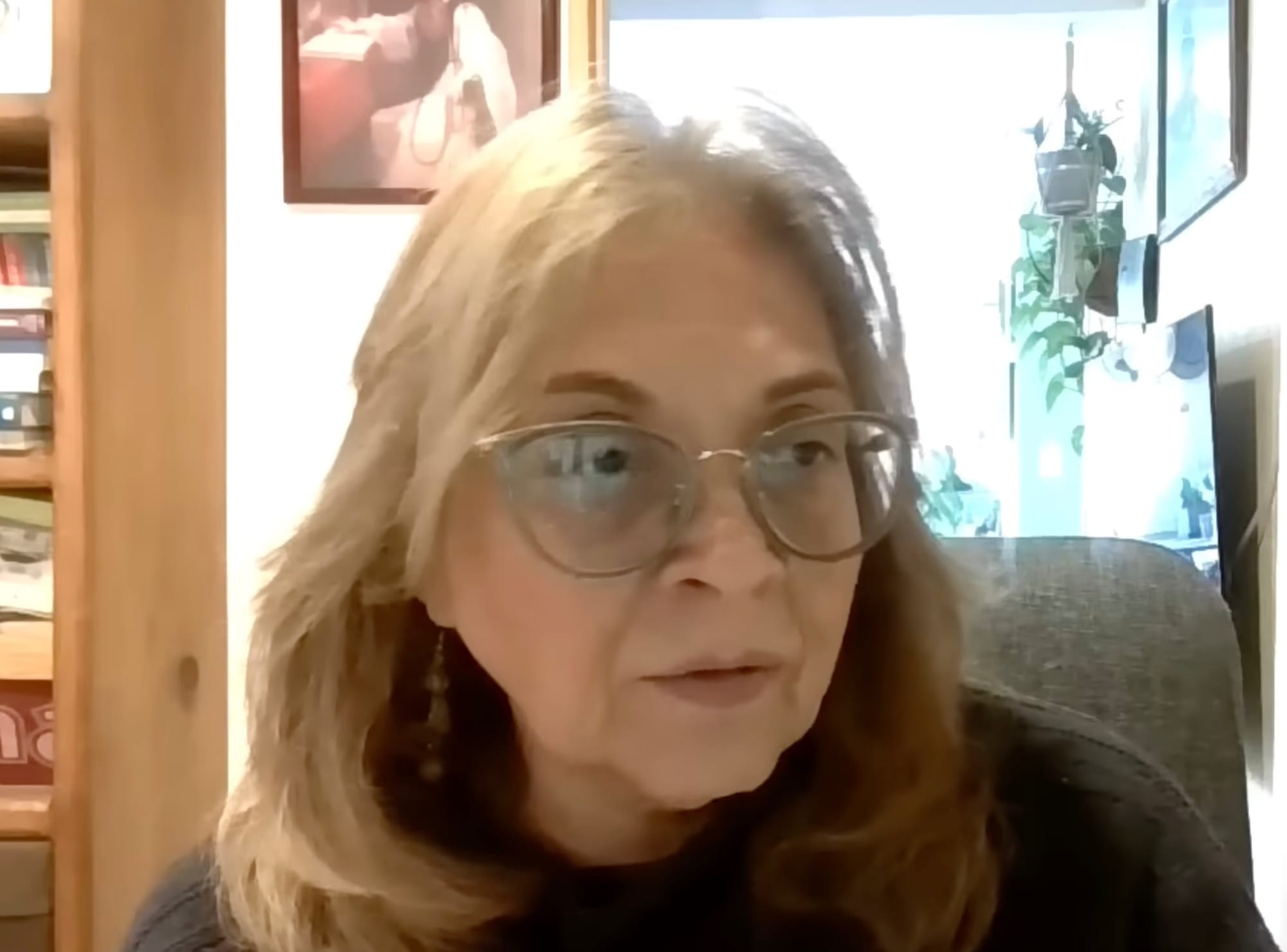
by María de los Ángeles Huerta del Río
The following are the edited remarks of María de los Ángeles Huerta del Río, as prepared, to the Jan. 12, 2025, EIR Emergency Roundtable event, “It’s Worse Than You Think: The Strategic Implications of the Attack on Venezuela and How To Bring the World Back from the Brink.” Mrs. Huerta is a former Mexican Congresswoman (2018-2021). The video is available here.
1. Introduction: The Jungle Unmasked
I am grateful to EIR and the Schiller Institute for this urgent call to action.
2026 is showing us brutality unmasked. The attack on Venezuela, the threats against Mexico, and global depredation are the death throes of a dying paradigm: a bankrupt financial system that conceives of the world only as a jungle. It is geopolitical Darwinism in action.
Our task is twofold: to condemn the abyss and to orient ourselves toward a new paradigm. We will act on three levels: the tactical trench, the strategic continent, and the global system.
2. The Trench: Latin America and the “Plan for the Reconstruction of Development for the Americas” (PREDESA)
Venezuela is the first trench. We propose that this Reconstruction Plan (PREDESA) have three specific pillars:
Pillar 1: A Monetary and Energy Sovereignty Fund.
Capitalized by BRICS-Plus and Latin American countries, operating in national currencies. Its first objective is to financially protect Venezuela and Latin America and create an alternative payment system to the dollar.
Pillar 2: The Bi-Oceanic Corridor E² (Energy and Employment).
A high-speed rail network connecting the Pacific and Atlantic, along with a continental electricity grid based on renewable and peaceful nuclear energy. This will generate millions of industrial and technological jobs.
Pillar 3: 21st-Century Collective Security Pact.
A mutual defense treaty that activates coordinated responses to any military, economic, or cyber aggression. Deterrence through unity.
3. The Continent: Mexico as a Workshop of Synthesis
Mexico is the pivotal state: a trading partner of the United States and, at the same time, its next designated victim. Our strategy is one of parallel sovereignty.
We will not use the USMCA; we will counterbalance it by promoting the E² Corridor and a Lithium Technology Alliance with South America and China.
We will activate the PREDESA Collective Security Pact as a deterrent shield.
Mexico will be the diplomatic bridge that calls on North America to join this new development project, or at least not to obstruct it.
4. The Global System: Development Corridors for Human Civilization.
The Plan for the Reconstruction and Sovereign Development of the Americas (PREDESA) is only the first step of a universal principle: Creative Sovereignty in Interdependence. To make this a reality globally, we propose to create a “System of Development Corridors for Human Civilization” based on three specific mechanisms:
Mechanism 1: A Productive Credit Bank in National Currencies.
A multilateral fund that grants credits in local currencies for infrastructure projects, freeing us from the dollar as a geopolitical weapon. It would be capitalized with contributions from BRICS-Plus countries, sovereign wealth funds, and development bonds guaranteed by projects.
Mechanism 2: A Global Agency for Continental Interconnection.
A permanent technical body, an “OPEC for Infrastructure,” where engineers, scientists, and planners from around the world design the links that connect the major continental corridors: the Belt and Road Initiative, the E² Corridor, and the trans-African network. Its first task: a global interconnection master map for 2030.
Mechanism 3: An International Development Security Tribunal.
A legal-political body offering collective guarantees against interventions that sabotage sovereign development projects. Any country that attacks development infrastructure will face unified economic sanctions and diplomatic isolation from all members of the System.
5. Conclusion: The January 12 Declaration and the Immediate Action Group.
We are not here to manage the collapse, but to give birth to something new. That is why I propose that this Body issue today:
1. The “January 12 Declaration” establishing the principle of Creative Sovereignty in Interdependence as the basis of the new order.
2. The creation of an Immediate Action Group with three teams:
Financial Team: to outline the Productive Credit Bank within 30 days.
Technical Team: to convene the first summit of the Global Interconnection Agency.
Diplomatic Team: to present the Development Security Tribunal initiative to the UN and regional blocs.
Venezuela is the trench. Mexico is the workshop of synthesis. But the common workshop of the creative species is our definitive homeland.
From condemnation, let us move on to creation.
Citizens of the world, let us begin to build!
Can the Moral Commitment of Americans Be Revived?
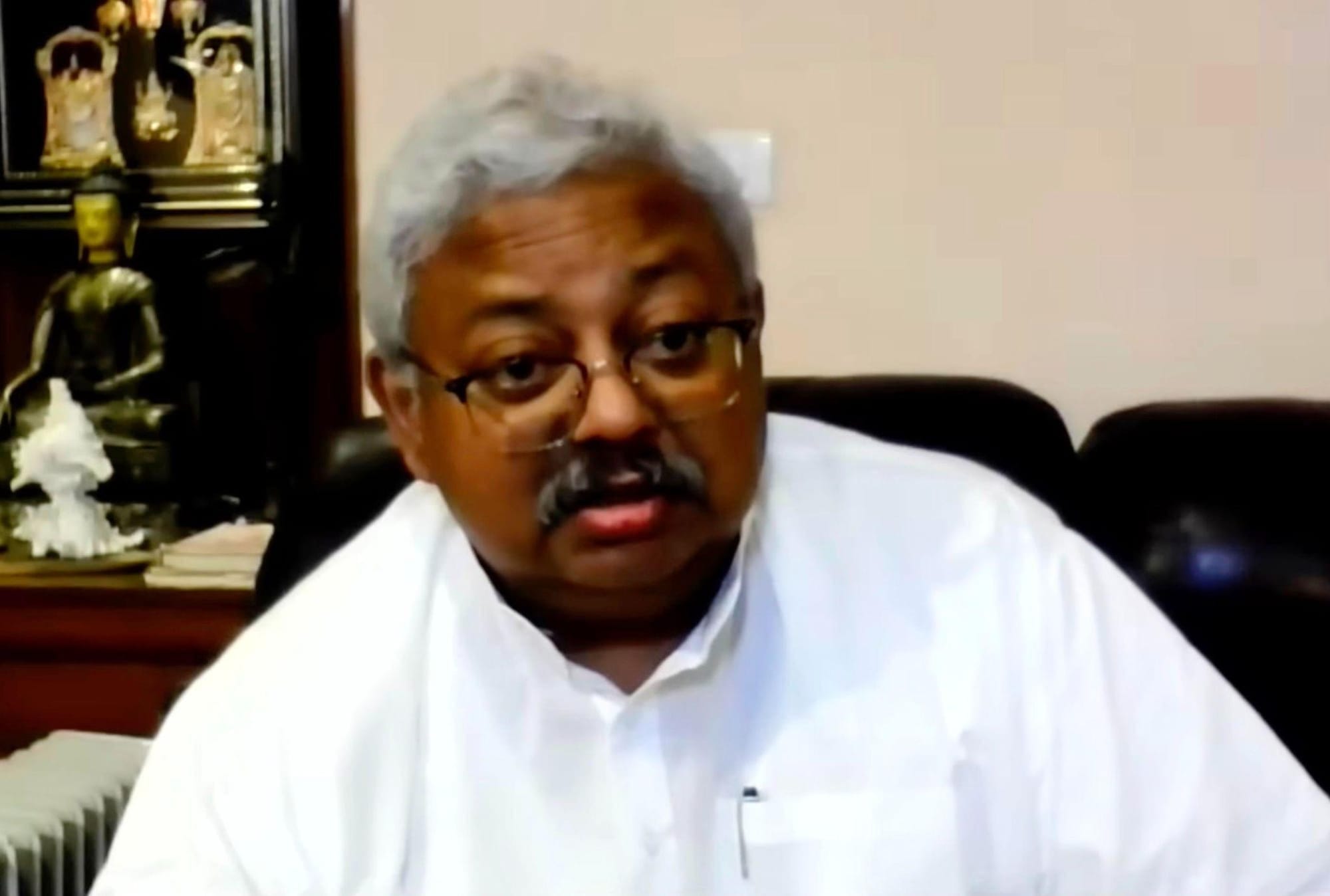
by Namit Verma
The following are the edited remarks of Namit Verma, as delivered, to the Jan. 12, 2025, EIR Emergency Roundtable event, “It’s Worse Than You Think: The Strategic Implications of the Attack on Venezuela and How To Bring the World Back from the Brink.” Mr. Verma is an Indian author and security expert. The video is available here.
Namaskaram. Thank you, Madame Helga, for inviting me to this conversation. It’s good to hear so many views from different parts of the world. I will try not to repeat what has already been contributed to the discussion, but to draw from each of the previous speakers and move more towards what we can contemplate as a possible solution given the crisis today.
It goes without saying that the [U.S. President Donald] Trump administration’s actions have finally woken us all up to the state of the world. It is not that this state did not exist, or that the earlier American administrations were not party to similar activity; the continuum has been present for the last several decades. It is just that the present action is so wild—for want of another appropriate word—that it has shocked the world into realizing the state we have descended into. At the same time, I would not point a finger at the Donald Trump administration alone. I think the rest of the world is equally responsible for allowing this state of affairs to happen to us.
Very interestingly, the speaker from Russia, Dmitri [Trenin], also expressed doubt about whether there was an inside angle to this. That suggests an inside angle not just to Venezuela, but of acceptance of what has happened worldwide. That Mr. Trump did not follow through with more invasive attacks and allowed the [Venezuelan] Vice President [Delcy Rodríguez] to assume the job of Interim President, that he threatened her, as we saw in the Atlantic interview which he gave. He mentioned that much worse would await her if she didn’t abide.
So, obviously there is actually categorically acknowledgement that she would continue to work with the United States, to some extent suggesting that she would endorse the present petrodollar arrangement. I won’t say the agreement, because Venezuela wasn’t part of it. The agreement, in any case, expired last year. But the speaker from Mexico mentioned that the whole situation is one where the dollar, or the United States, is at the end of the end of the petrodollar and therefore has been forced into acting the way it did; which is correct. All of us have been party to this, not for a year or two, but we have tolerated this for 50 years.
After the Second World War, we, all of us, entered an agreement in which the special drawing rights [SDRs of the International Monetary Fund] were created, and that is how we agreed to value our currencies. Effectively, we accepted the American voluntary commitment to link the dollar to gold and thereby provide a gold-related valuation of the SDRs. But when America departed from this on the 15th of August, 1971, that was a unilateral decision. We accepted it, possibly because many of the more dominant trade partners of the United States were locked into a situation where they had no option. But that was not really true of all the world. That was the first betrayal, and from that day on, we have had many betrayals, until we now have descended into this last stage of violence, threatening the onset of a world war. One of my favorite authors, Isaac Asimov, had a character who said, “Violence is the last resort of the incompetent,” sometimes also the scoundrel, but I think that is one that is true at this point in time.
But this act of violence has brought to us many aspects; that America is bankrupt. Do we need to save a bankrupt empire? America, for the last 75 years, has been consuming much more than it has been producing. And the weighted monetary system that it has enforced [since] ’71, the fiat money, has been enforced at the barrel of a gun. It is classic Maoist doctrine; power flows from the barrel of a gun. That is what America has enforced and we have accepted.
Very recently, in fact a day or two after [the U.S. attack on] Venezuela happened, I heard Prof. [John] Mearsheimer, and I’m putting that particular quote in the chat. He said, “States exist in an anarchic international system,”—very true for the situation we are in today—“where there is no higher authority to protect them.” That is why we are faced with this terrible problem of how do we get out of the problem that we are in? The strong do what they can, and the weak suffer what they must.
So, Venezuela is definitely suffering what it must, and America has done what it can. But is America really strong? That is a question we must all ask ourselves. Because, as Mearsheimer says, weakness is not a permanent condition, and the distribution of power is constantly shifting. Look at weakness; your weakness is not a permanent condition; strength is also not a permanent condition. American might has eroded not merely because of the ballast of its armaments; America is old. It fired a lot of Tomahawk [missiles which travel at] 1.8 mach. The rest of the world is no longer limited to 1.8 mach. The American economy cannot afford to phase out all those Tomahawks and bring in new missiles. You have a bankrupt empire, bluffing and pretending, using corruption and bribery to intimidate leaderships worldwide; individuals in leadership, not institutions entirely, not nations entirely. The American [Golden] Dome [a proposed U.S. missile defense system] is not in a position to defend itself against newer, faster missiles from elsewhere in the world.
So, what does it do? It bullies small nations. Russia could not allow Ukraine, because it could not allow NATO missiles in Ukraine on its border. The recent conflagration between India and Pakistan, where Pakistan is now nakedly in front of the world as an American stooge. It always has been, but now the relationship has come forth with Field Marshall Asim Munir being a regular guest at the White House. And we found out by some stroke of fortune that the missile, that the nuclear radiation generated by a hit on the Nur Khan base [in Pakistan, May 2025] was not from Pakistani nuclear weapons, but from ancient American silos which the Pakistanis were not aware of. Whom it was targeted for in that region is a question we all need to ask.
Three years ago, we saw a 28-day exercise between the United States and Nepal. I have not heard of 28-day military exercises elsewhere. Nor have I heard of such exercises held anywhere else being extended to 45 days. This doesn’t happen unless there is a construction element involved. As every NATO member and every American alliance partner who are checking their own premises today should be aware, even NATO membership nowadays requires that the country first sign an agreement. What do they call it? The special agreement between America—the word for the agreement is not coming to me right now, but it’s a state relationship between America and the other state, wherein the American National Guard reaches an agreement with the defense service of the country seeking NATO membership.
Now the National Guard is also the service which—these state National Guards, not Federal ones—are the ones who look after the entire Minuteman [land-based intercontinental ballistic missiles] and other programs. They are the ones who service their missile systems. When those bodies come in, a lot of American money is there for military exercises. But when the force looking after establishing nuclear missile silos comes into smaller countries, spends 45 days constructing silos, this is something very alarming….
Now, that has happened in Nepal three years ago. That has happened on three sites in Bangladesh last year. Now that is what we have to contend with before we can call America’s bluff. If there is a solution, the solution lies in calling President Donald Trump’s bluff. Whether we need to support civil society in the United States, and whether we need to remind the civilian population in the United States that they have a moral commitment which they lost. It was very strong until their actions in the Second World War. But somewhere, American academia needs to reevaluate the contribution of the pragmatists, which is today foremost in their philosophy, and decide whether that has been the seed which has led us to this stage whereby pragmatism has evolved into opportunism. That is a question for the entire American nation, and we must be supportive while they evaluate this.
Having stated this, the question comes how do you find—I know I have been a little blunt, maybe more than a little blunt. But if you do not identify the problem, then there is no way you are ever going to reach a solution. A similar situation happened when my country, India, was under colonial rule of the British. It is always a question of who benefits. And when Mahatma Gandhi gave the call for Swadeshi, for surviving on our own production, he received an invitation from the mill order and the mill workers of Lancashire [England], who were facing unemployment and mills shutting down because their exports to India were no longer possible. He accepted their invitation; they thought they would explain to him the humanitarian case of the unemployment which was spreading all over Britain. He went and he asked them to understand, as unemployed workers talked of their poverty, he showed them a picture of the poverty of India, whose produce was taken at a very nominal price, such that farmers were forced to commit suicide. Then it was sold back to them at a very phenomenal margin, which the elite could afford, but not everybody.
We all know that Gandhi gave up his three-piece suits he used to wear as a barrister in England, to endorse the loin cloth to enter the state of the common man in India and to identify with it. Eventually, it was the unemployed workers of Lancashire who provided the moral basis for the labor movement inside the United Kingdom, to commit to Indian independence. The conservative Tories remained very opposed to the idea. Mr. [Winston] Churchill was very critical of that. But eventually it was the model consciousness of the British people which made it possible to reverse this, at whatever cost. The British Empire gradually unraveled, but morality prevailed.
For morality to prevail, America must similarly be forced to introspect. That, I think, is the only possible way that this problem can be solved. Otherwise, we will keep moving from the last crisis to the next bigger crisis. Thank you.
So, Where Is the System’s Achilles’ Heel?
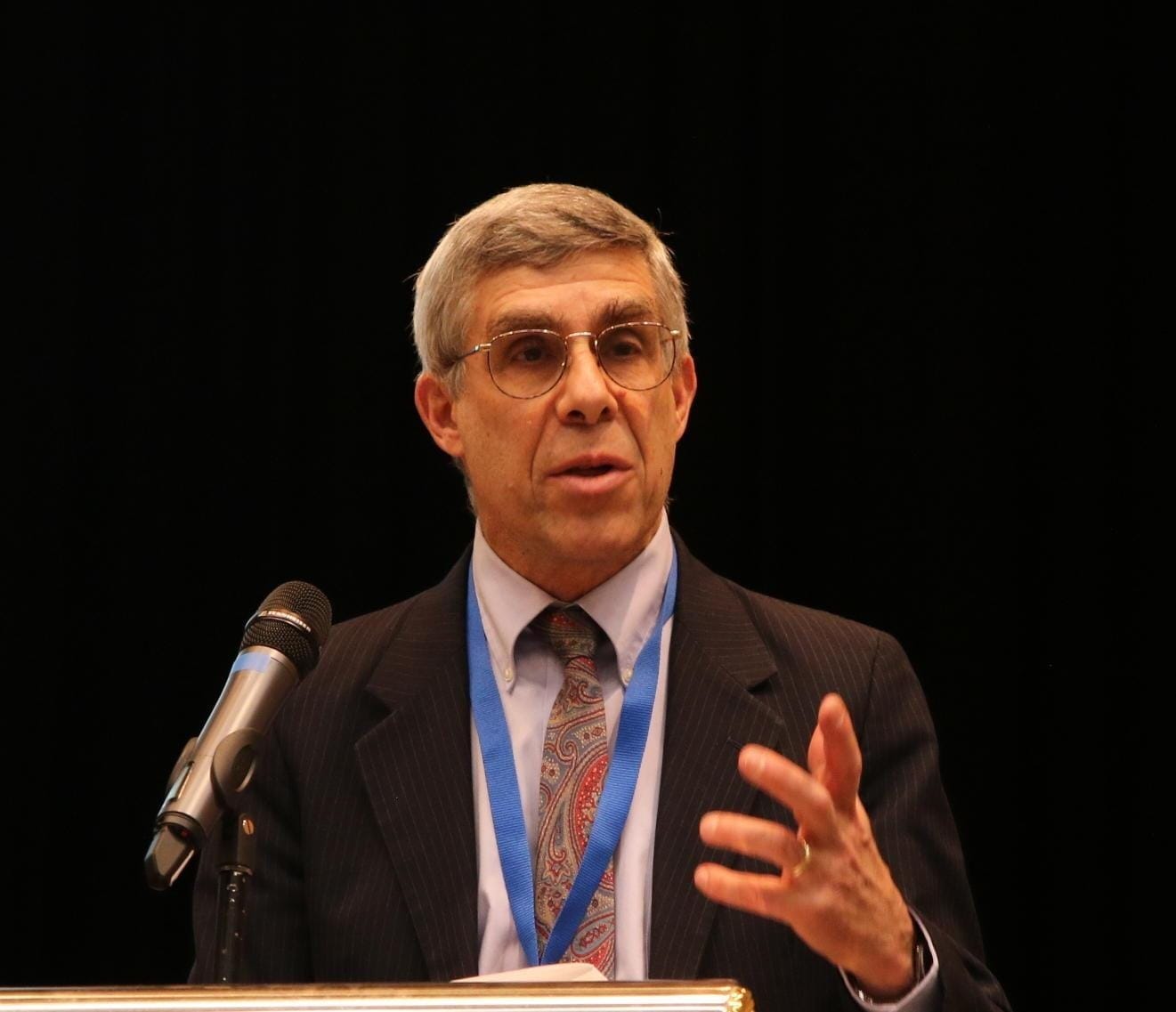
by Dennis Small
The following are the edited remarks of Dennis Small, as delivered, to the Jan. 12, 2025, EIR Emergency Roundtable event, “It’s Worse Than You Think: The Strategic Implications of the Attack on Venezuela and How To Bring the World Back from the Brink.” Mr. Small is the Ibero-America Editor for EIR. The video is available here.
So, where is the system’s Achilles’ heel? We've certainly described and discussed many of the problems so far today, but that issue defines scientifically the way to a solution. I would propose that there are actually two Achilles’ heels. Perhaps the most fundamental one is the very concept of man underlying this current imperial system and the savagery we’re seeing. But I leave that to further discussion and elaboration in the discussion period around what Helga Zepp-LaRouche discussed earlier with her Ten Principles.
The other Achilles’ heel of the system—and note that I did not say “of the United States,” but of the global financial system—is the financial system which is about to blow apart into smithereens. I’m going to make use of some graphics which I prepared for today with some new numbers. As a matter of fact, it turns out that the Bank for International Settlements recently published new numbers going through the first half of 2025 [Figure 1].
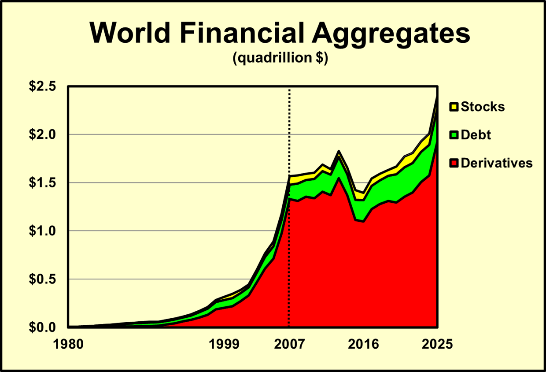
World financial aggregates now total approximately $2.4 quadrillion. Quadrillion. That’s a two followed by 15 zeros. Back in 2008, when we had the financial blowout, it was only 1.6 quadrillion. We’ve seen a 53% increase in this cancerous speculative bubble over this period of time. All of the policies that were implemented to address this crisis have only made it worse. The vast expansion of quantitative easing, the crypto bubble—which is now moving forward very nicely, thank you very much—more quantitative easing coming with what’s planned after U.S. Federal Reserve Chair Jerome Powell departs.
Furthermore, what we have going on in Europe and in the United States is a shift into what is known as Schachtian economics. Schachtian economics is named for Hjalmar Schacht, the central banker of Adolf Hitler. Schacht was imposed on Germany by London bankers, with the help of allies in America like the Wall Street law firm Sullivan and Cromwell, managed at the time by Allen and John Foster Dulles. The intent was straightforward: massive military buildup for the purpose of wars of conquest, and the imposition of depopulation and genocide to maintain the financial bubble.
Now, people are aware, we’ve heard discussion of [President] Donald Trump’s proposal, the latest one, not the earlier one. In his earlier proposal, he told us he was going to cut the U.S. military budget in half. Well, he got that wrong. He actually now plans to increase it from $1 trillion to $1.5 trillion. So, here's an indication [Figure 2].
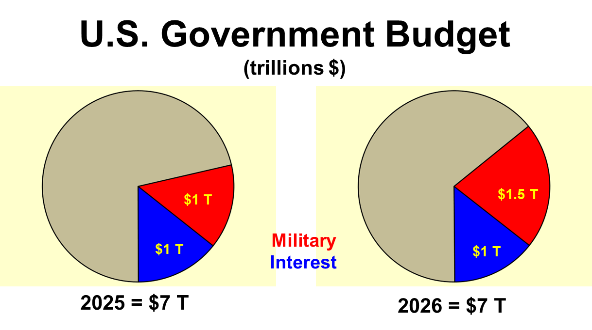
These numbers are not exact, but they're pretty close and give you the idea. In 2025, the entire U.S. government budget was about $7 trillion. Of that, $1 trillion, or 14%, went to interest payments on the government debt. Another $1 trillion is the military budget. Trump now proposes that for 2026, the budget for the military will rise to $1.5 trillion. So, what we’re looking at is that over a third of the entire budget of the United States will go to either the military or to interest payments.
Why do I include these two categories together? Because the military budget for the military-industrial complex that Eisenhower spoke of is actually not a military-industrial complex anymore. It is a military-industrial-financial complex.
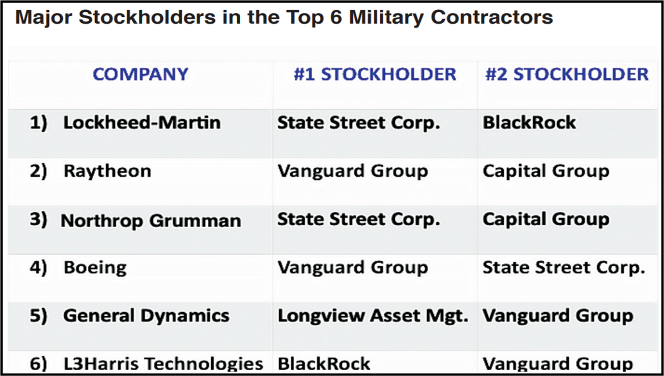
As Figure 3 shows, every major military contractor is run by the banks of Wall Street and the city of London. Lockheed-Martin: its number one stockholder is State Street, followed by BlackRock. You’ve all heard of BlackRock. Raytheon [now RTX]: Vanguard Group and Capital Group. Northrop Grumman: State Street and Capital Group. Read on: Vanguard Group, State Street. Longview, Vanguard Group, BlackRock, Vanguard Group. And these financial holding companies or institutions control vast sums of money. In the case of BlackRock, it's over $13.5 trillion. And in the case of Vanguard Group, it's another $11 trillion. Just the ones indicated here manage close to $30 trillion in assets. So, the military-industrial-financial complex is part of the apparatus for the Schachtian reorganization of the global economy for the purpose of doing exactly what Adolf Hitler did to maintain a financial bubble, in that case coming off the Versailles Treaty. Today it is this $2.4 quadrillion bubble.
Now, it is this, I would argue, that is what is ultimately behind the perennial wars. It is behind the genocide we’ve seen in Gaza. And it will be behind, if we allow it to happen, the exact same policies that we saw with Auschwitz implemented today. We are already beginning to see the first signs of this. I think that you are going to see this precisely in the actual intentions of what is behind the Venezuela operation. I’ll come back to the real intentions there in a moment, because it is certainly not drugs and it is only secondarily oil. The ultimate purpose of this Venezuela operation, as has been mentioned by other speakers today including President Ramotar, is to expel from Latin America and the Caribbean any alternative to this bankrupt Western financial system, which is to say China and the Belt and Road Initiative.
What we are seeing now around Venezuela is the intended financial warfare not just against Venezuela. We’re seeing it also against Iran, bankrupting their currencies, driving the conditions for a social revolt to go along with the intended military actions against them.
Venezuela was, until about a year or two ago, the main supplier of oil to Cuba. No longer. Mexico is now the main supplier of oil to Cuba. Cuba needs to import about 100,000 barrels of oil per day. It is not getting that. And Mexico has just been told in no uncertain terms by [U.S.] Secretary of State Marco Rubio—the man whose presidential ambitions stand in inverse square proportion to his stature, both moral and physical—that Mexico had better follow along with the genocidal blockade of Cuba, and any other nation that chooses to rebel, or they will get the same treatment. They’ll get the Venezuela treatment.
So, what is our flank in all of this? Why is the bankrupt international financial bubble the key flank? Because you cannot take the military issue on directly. There are two countries that can provide some leeway around the military question. They are Russia and China, because they can provide a certain amount of dissuasive force. We’ve seen that in the case of Russia with the Oreshnik hypersonic missile, and China has enormous capabilities as well. In both of these cases, they possess the credible threat to the global financial empire of nuclear retaliation if they escalate against Russia and China. In other words, this is the Kissingerian doctrine of Mutual and Assured Destruction, or MAD. But this only functions if there is a modicum of sanity in the West. That modicum of sanity is rapidly disappearing. Merely escalating with more Mutual and Assured Destruction is not going to work.
The way to stop the financial problem is not to go after the military problem. The way to stop the military problem is to go after the financial problem. That is the Achilles’ heel.
Now, how can this be done? Well, Lyndon LaRouche was very clear on exactly how to go about this. He proposed that the entire Western financial system should be put through an orderly bankruptcy reorganization. And I emphasize orderly, because we have to make sure that we walk that very narrow path between the necessary changes and the danger of global thermonuclear war. In the United States, there’s a form of bankruptcy reorganization which is called Chapter 11. That’s when you have a company whose underlying capabilities of production are still intact, but it has a gigantic debt which doesn’t allow it to function. So rather than liquidating the company—which, when we’re dealing with entire countries, is what Auschwitz is all about: liquidating populations and nations—what you do is you put that financial structure through orderly bankruptcy reorganization. You freeze the whole thing; you write off the illegitimate or speculative portion; and you restructure the productive debt. Now, that can certainly be done today, and it will happen willy-nilly because that $2.4 quadrillion bubble cannot be paid. I don’t care if Donald Trump thinks he’s Ozymandias himself! It cannot be paid, no matter what is done.
So, the question is, how is it going to be reorganized? Now the crucial point in all of this, that Mr. LaRouche always emphasized, is you have to generate new credit for productive activity for infrastructure development, in particular. You have to employ the population productively and increase the technological level of the population. More generally, the new credit which is issued for these projects has to be protected from the old speculative bubble, and that is done, in the case of Western economies, by a Glass-Steagall type of approach, or bank separation. In the case of the developing sector, you do it with exchange controls. You simply don’t allow the financial cancer to enter into your monetary and financial system.
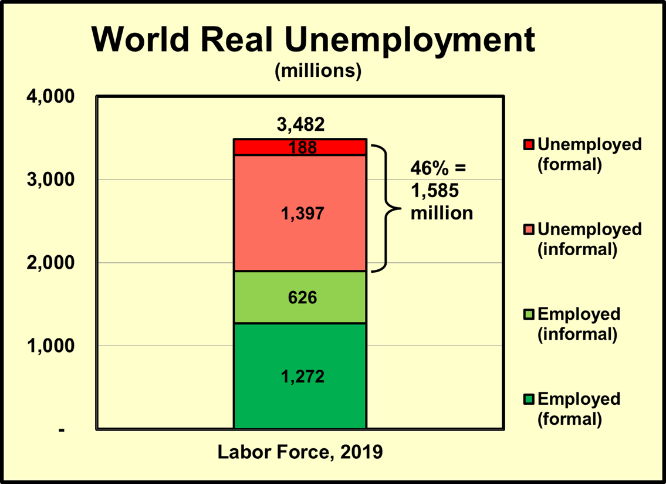
But the crucial question is, we have to increase the productive employment of the world's population. This graph [Figure 4] comes from a study we did back a few years ago. We took the global labor force, about 3.5 billion people, looking at the portion of that labor force that was officially unemployed, but also de facto unemployed—meaning in informal activities that don't produce anything. For example, children who sell chewing gum on the streets in Global South countries, or people who are involved in all sorts of activities just to barely survive—which they need to do, but it’s not productive. And we determined that the entire real unemployment rate worldwide was about 46%, or some 1.5 billion people who need to be productively re-employed.
Consider the enormous generation of wealth, real wealth that will occur as those people are employed building infrastructure projects such as these which we are proposing for the Caribbean Basin [Figure 5].
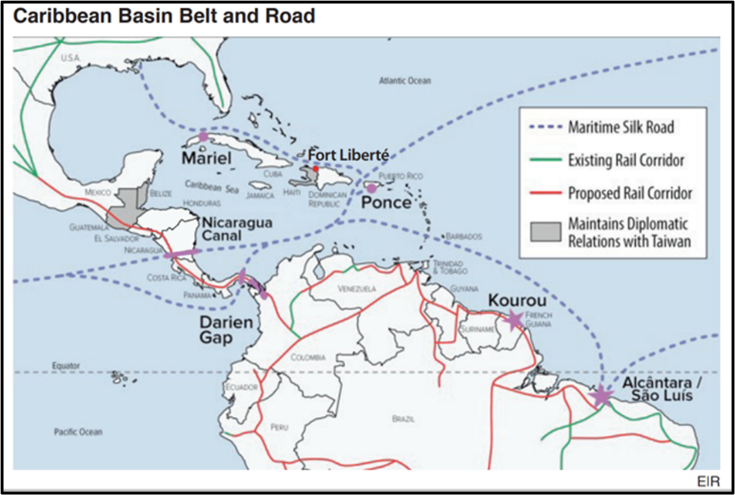
Venezuela would be an important part of this. It would link up with deep water ports in Ponce, Puerto Rico, in Mariel, Cuba, and the Eastern Coast of the United States. High-speed rail development would run through all of Central America into Mexico, up to the United States, through Canada, Alaska, across the Bering Strait Tunnel into the Eurasian Belt and Road. All of these projects would create the conditions for substantial real economic growth and productive employment.
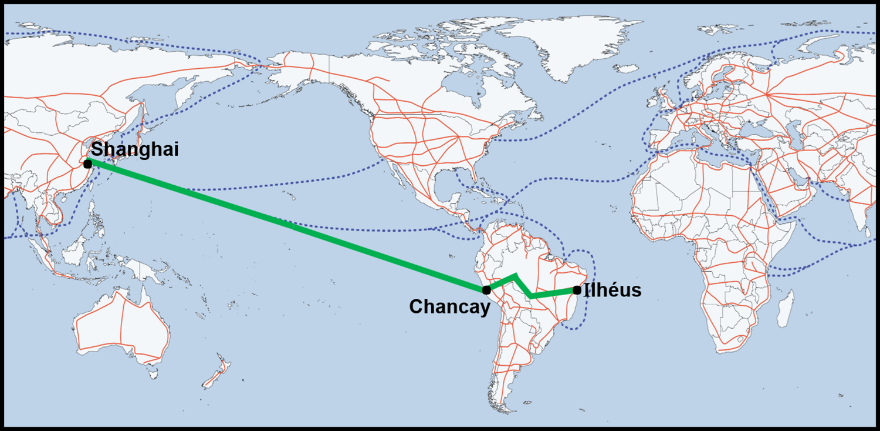
Here [Figure 6] we see the broader picture of the World Land-Bridge which EIR and the Schiller Institute have been elaborating over decades with projects in every corner of the planet. The idea is, since the world is one humanity, a single humanity, we have a single common interest in the development of the productive powers of labor in every nation. What I've drawn on the map here is Chancay Port in Peru, which China and Peru jointly developed, which vastly increases transportation productivity across the Pacific to Shanghai and other Asian ports. What is under discussion now is building a rail system across South America from Chancay to Ilhéus in Brazil.
This is really what the Venezuela operation is all about. It’s stated very clearly by the U.S. Southern Command. “We will not allow China to have a foothold in the Americas.” Because they don’t want this to challenge the bankrupt Wall Street and the City of London.
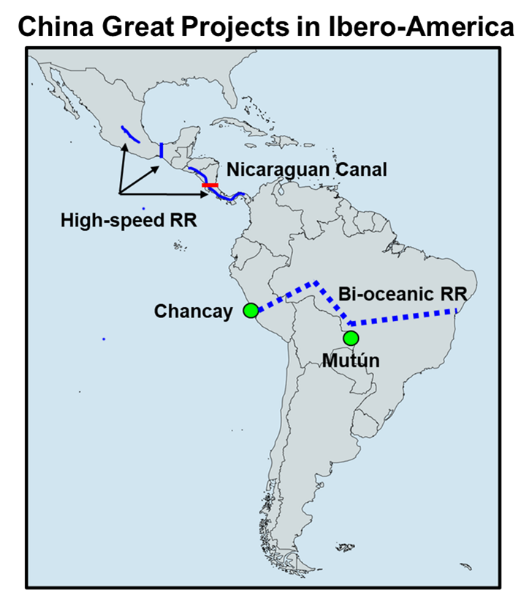
Now, this map [Figure 7] shows what South America looks like to everyone in South America and the Caribbean, showing a few of the great projects which China has either already built or has proposed to build over the last couple of decades. There are more, but these are just a few of them. So, this is the option being presented to people who look at the world from the developing sector, from the Global South. Now compare what China has built to what the United States has proposed and built in the last two decades in South America. You can see the comparison [Figure 8].
This is what the United States is offering: Nothing. Absolutely nothing.
So, we have a situation where we have a global system which is extraordinarily vulnerable. It is also extraordinarily dangerous. But there is a pathway to transforming this if we identify its actual vulnerabilities and mobilize among all nations and across the planet around a common concept of man which is based on our unique creativity to develop the economies of every single nation in the world.
And that is why I say, and conclude with this point, that the concept of man is the fundamental vulnerability, the true Achilles’ heel of the enemy that we have before us. And it is also our greatest strength, if we can but recognize it and wield it.
Diplomacy in the Multipolar World Requires Balance, Not Force
by Lt. Col. Ralph Bosshard
The following are the edited remarks of Lt. Col. Ralph Bosshard (ret., Swiss Army), as delivered, to the Jan. 12, 2025, EIR Emergency Roundtable event, “It’s Worse Than You Think: The Strategic Implications of the Attack on Venezuela and How To Bring the World Back from the Brink.” Lt. Col. Bosshard is a former military advisor to the Secretary General of the Organization for Security and Co-operation in Europe (OSCE). The video is available here.
Thanks a lot, and good evening from Switzerland. I’m happy to understand that the U.S. action against President Maduro’s government in Venezuela has been sending a message to the world, which obviously has been understood. But let’s not put all the blame on Trump. The Trump administration didn’t even bother to consult the United Nations regional security organization, but instead, after an information campaign of limited credibility, struck unilaterally.
This is, however, not an isolated incident by the Trump administration, but reflects a problematic tradition that U.S. administrations began after the end of the Cold War, when they believed that with the collapse of the Soviet Union, as the absolutely undisputedly strongest military power in the world, all conflicts could be sorted out, if necessary, by military force as well. The culmination of this policy of disregarding the United Nations was the illegal air war against Yugoslavia in 1999—we all remember that. At the time, we were surprised that the United States, of all countries, was dismantling the favorite project of its former President and leader from the Second World War [Franklin Roosevelt], but we now see that the Trump administration is continuing this destructive work.
Power and strength are the foundations of world politics today, sources close to Donald Trump have stated. The reactions of the Western Europeans were particularly worrying; they, who otherwise so readily portray themselves as guardians of international law. From the perspective of international law, it is not crucial whether a head of state came to power in a somewhat more or less democratic manner, as long as he or she reasonably adheres to the rules of it in state relations. In this sense, it is irrelevant whether Germany or other Western European states recognized the Maduro government or not.
I would remind you that, according to the democracy indices of U.S. think tanks, only about 30 countries in the world are considered to be fully democratic. They do not have the right to attack all others at will, especially since Americans and Europeans have often demonstrated in the past that they can coexist quite well with undemocratic governments, provided business is good.
The United States remains the strongest military power in the world, and together with the Western Europeans and their allies in the Indo-Pacific region, they are also superior to coalitions of other states. As has just been said, they’re determined to keep their number one position in the future.
The approximately 150 countries in the world that do not belong to a Western military alliance now have both military and diplomatic options. On the one hand, they can form coalitions and build up their military capabilities to a level that allows them to pursue a counter strategy. Or, they can push for the imposition of international legal constraints on the Americans and Western Europeans. I think most of them will do both simultaneously.
With the unilateral actions of the United States against Venezuela, we are once again falling short in the realm of international law, having deviated from the Briand-Kellogg Pact [1928], which was concluded on the basis of the experiences of the First World War. Europe, and probably the United States, cannot afford another century like the 20th Century with two world wars.
So, let’s call a spade a spade. Let’s stop talking about the Monroe Doctrine. The Monroe Doctrine was a doctrine that attempted to prevent Portugal and Spain from restoring their empires in the Americas. Today’s actions of the Trump administration are not aimed at that. They are an attempt to make Latin American countries colonies and to keep China out of the game. Contrary to the Cold War, nuclear weapons—at least, the technology to build such cruise missiles, ballistic missiles, and new artificial intelligence—are available to a number of states, not only to the superpowers, or the P-5, as it used to be. The idea of a nuclear war between the USSR and the United States was frightening enough; but I don’t even want to think about a nuclear catch-as-catch-can between different states with nuclear weapons.
The multilateral world, or the multipolar world, to put it that way, requires a balance not only of military power, but of soft power as well. We should start to invest in soft power as well; to invest in the build-up of diplomatic capabilities not only of the BRICS countries, but of the pro-Global South in general. That’s the key. We should address the Western Europeans and make it clear that in this situation, unconditional support for the Trump administration doesn’t make them more popular in the Global South. It should prevent them from applauding, and discourage them from proceeding alike. Otherwise, the second-mightiest military power in the world will contribute to a worldwide catch-as-catch-can.
So, let’s address the Europeans; that’s the first step in a strategy to get out of trouble now. Thanks a lot for your attention.