We think of the Revolution as a war against empire. But it very quickly became a war for empire.
—Kathleen Duval, as quoted in Ken Burns' The American Revolution.
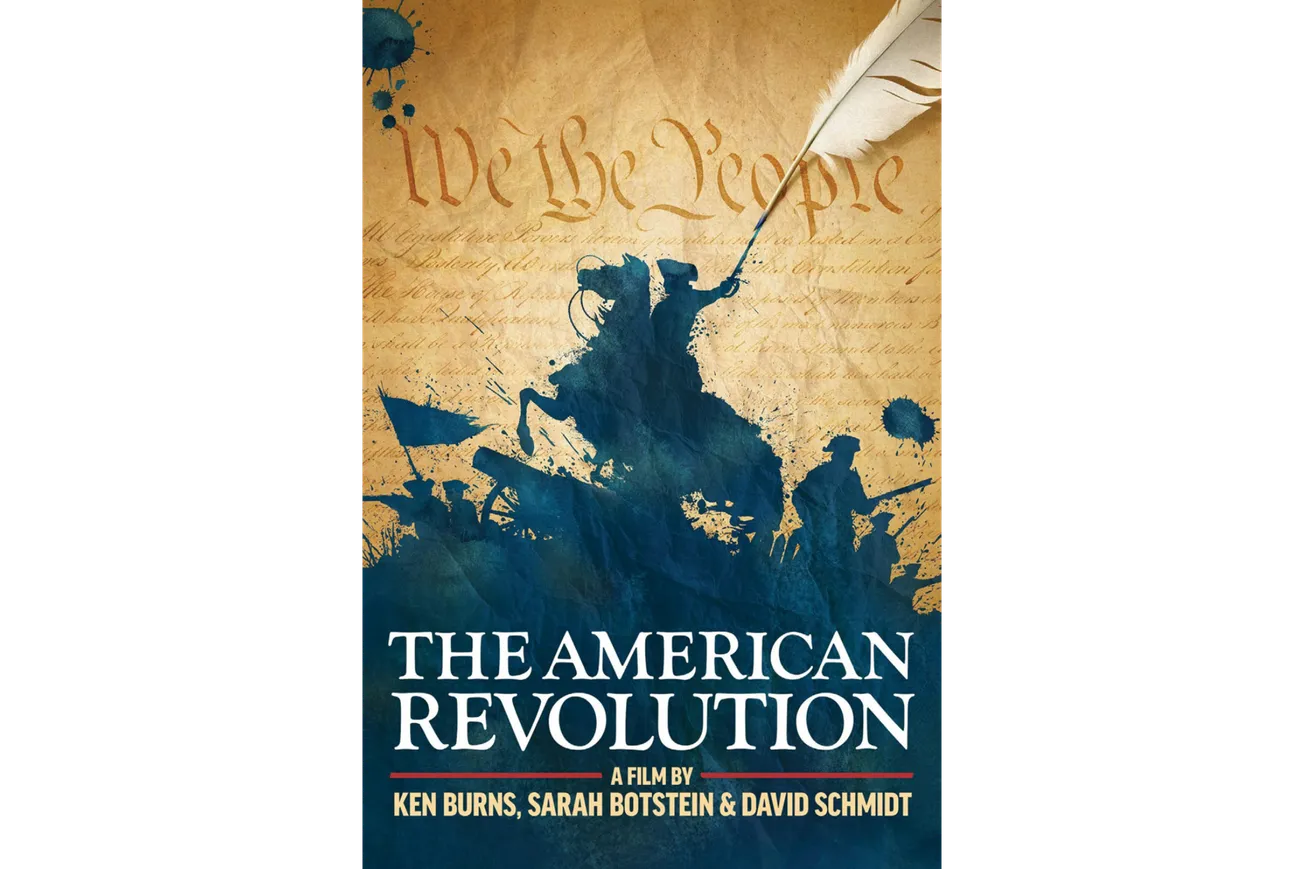
For those seeking to learn more about our Revolution during the year of its 250th anniversary, spending twelve hours watching Ken Burns’ The American Revolution is worse than a waste of time. True, Burns’ latest marathon production does present us with a narrative exposing acts of exploitation, brutality, and greed. The only problem is that the majority of these crimes are presented as being committed by Americans, not by the historically evil British Empire we sought to overthrow.
Some might argue that this six-episode series at least contains a few impressive animations of the war’s various battles. Yet, herein lies the truly evil compositional intention of this otherwise sophomoric attempt at American history. By design, Burns, et al. clearly go out of their way to ensure that the viewer will never be inspired by any of these events by consistently interrupting the narrative every 15 minutes with some new instance of a crime committed against Native Americans by greedy white colonials thirsting for more land and loot, or by a segment seeking to establish an apparent overriding intention of American patriots to perpetuate slavery.
Not surprisingly, these overly preachy, often asynchronous segués are filled with cynical distortions and, in many cases, outright lies. For example, in the very first episode, it is implied that the idea of an American Union (i.e., Franklin’s 1754 “Albany Plan”) was somehow inspired by the Iroquois Confederation. Of course, there is absolutely no historic evidence for this claim, which is why none is offered. Later, we are told that Britain’s Proclamation Line of 1763, aimed at thwarting any further development of the American colonies westward, was nothing more than an attempt by the Crown to preserve Native American lands from ravenous American settlers and speculators, typified by George Washington and Benjamin Franklin! The series otherwise contains virtually no content dealing with the seminal role of Franklin in the creation of the American Republic, other than telling us he spent most of the war overseas.
In another segment, Harvard University’s Vincent Brown claims that decisions by African Americans to join the Continental Army were never driven by any “high ideas,” but instead by entirely selfish, “deeply local” pragmatic interests. We are even led to believe that, after Lord Dunmore’s famous offer to free any American-owned slaves who joined the British Army, African Americans came to believe that “there is one side [the British] that is unevenly committed to slavery, and another side, our side [the Americans], that is fully committed to it.” Of course, there is never any mention of the fact that it was the British Royal African Company that introduced slavery into North America in the 17th Century! Only in the very last episode are we finally told that the American victory over the British Empire did, in fact, radically improve the possibility of finally completely abolishing slavery in the United States and worldwide.
Finally, it is worth noting that the major funders cited at the beginning of each episode of this ill-conceived project are none other than ex-Russian oligarch Len Blavatnick (now His Majesty’s Sir Len Blavatnick and owner of Warner Music Group), and the Boston-based Bain Capital investment firm’s Jonathan Lavine, who is also a major funder and promoter of the notorious pro-genocide libelers, the Anti-Defamation League. Both men are also graduates of the elite Harvard Business School, whose fellow alumni include Jamie Dimon and Hank Paulson. With such cutthroat corporate moneybags behind this alleged historical documentary, the final product is no surprise.
Learn the Truth of the American Revolution
No serious historian questions the horrors of slavery in America, nor the actual crimes committed against Native Americans by the likes of pro-British, populist thugs like Andrew “Trail of Tears” Jackson and, later, by Teddy Roosevelt. But to impute that this was an overriding passion of American Patriots in 1776 is not only historically inaccurate, but truly revolting.
As documented by Graham Lowry’s How the Nation Was Won (published by this news service in 1987), the grand project of the American Revolution came out of a generations-long drive by revolutionary thinkers like Nicholas of Cusa, Jean Baptiste Colbert, Gottfried Leibniz, and others to finally establish a form of society that could be ruled by the “consent of the governed,” free of arbitrary oligarchical tyranny and capable of allowing the development of each and every individual’s creative potential. But, of course, none of this will ever be learned by wasting twelve hours of your life watching Burns’ The American Revolution.
Fortunately, the Executive Intelligence Review has made available a reading list (“The True Roots of the American Revolution”) containing some of the most important research articles on the true history of the American Revolution published by the LaRouche movement over the past four decades. Over the next year, this publication will be highlighting and republishing many of these works in the interest of not only celebrating America’s 250th, but restoring our Republic to its original intention.