Over the past week, the new face of hegemonism has begun to emerge. While the ills of the post-Kennedy assassination world deserve to be rejected—particularly following the Cold War and the establishment of an “endless war” policy in the aftermath of 9/11—the whole-hearted discarding of international law itself can only be described as the acts of a madman. Unfortunately, following the events of the recent days, this appears to be the case, as the Trump Administration has moved to deploy a global shock-and-awe policy to enforce its will.
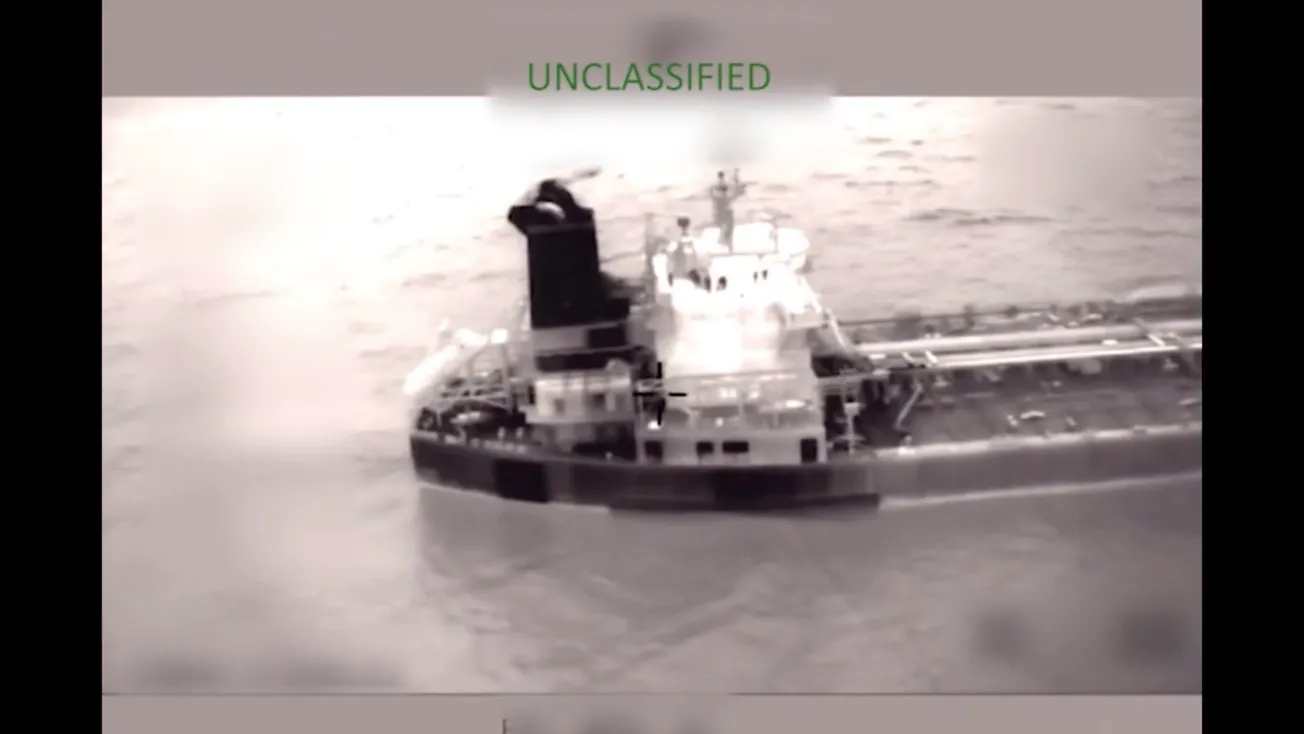
The disaster of the U.S.’ flagrant intervention into Venezuela continues to deepen, with President Trump now threatening strikes into Mexican territory and suggesting a similar fate for Cuba. All pretenses of “stopping drugs” have meanwhile ceased, as Trump rolls out plans for an indefinite occupation of Venezuela and the full-blown colonial theft of its oil. Regarding Iran, there are further indications that the U.S. intends to escalate its interventions there, and use the highly-exaggerated reports of street demonstrations to invent a new justification for regime change in that country. On the high seas, another oil tanker was illegally seized on Jan. 9, further raising tensions with nations such as Russia, whose ships are being targeted by these kinds of pirating operations.
In actuality, it is Russia, China, and the broader BRICS-Plus process that are the intended target of this policy. Venezuela’s crime was not that it was “socialist,” nor that it had too much oil for its own good. Rather, Venezuela was put into the crosshairs because it was “hosting foreign adversaries in our region,” as Trump said following the Jan. 3 operation there. Or, as the former head of the U.S. Southern Command Gen. Laura Richardson told an online forum this week, Venezuela falls within the “1st and 2nd island chain” of U.S. security interests, and had allowed the “axis of aggressors” Russia, China and Iran to harbor there. American actions over the days since indicate that this is the beginning of a new policy doctrine from the Administration. The President has recently announced a $500 billion increase in the Pentagon budget to $1.5 trillion, citing threats from America’s adversaries, and even went so far as to tell the New York Times that the only thing that will restrain him in the domain of international law is “My own morality. My own mind.”
In an almost more horrifying manifestation, the murder of an anti-ICE protester in Minnesota, and the brazen defense of it by Trump administration officials, signals that this policy is being turned against the American people themselves. Consider this along with the policies of mass censorship and sanctioning, as with the cases of Ukraine war opponent Jacques Baud and Gaza genocide opponent Francesca Albanese, and it becomes clear that the same shock-and-awe tactic as is being deployed against the West’s “adversaries” overseas has come home as well.
But will this policy work? Can people and nations be intimidated into submission, even if by the world’s strongest nation and biggest military? Don’t count on it. The response by Russia in its firing of an Oreshnik hypersonic missile to destroy Europe’s largest gas storage facility in western Ukraine indicates one answer to that question. If such a policy is pursued, it will bring the world to thermonuclear war. However, that’s only one level of response, and clearly a higher-level solution is needed if the human species is to survive.
During the Jan. 9 meeting of the International Peace Coalition, Schiller Institute founder Helga Zepp-LaRouche offered another answer to this question. After reviewing the developments around Venezuela and beyond, in which some are attempting to “turn the world into a robber den where everybody can attack everybody else,” she turned to the murder of Renee Nicole Good in Minneapolis. This situation is becoming “extremely serious,” she said, noting that there are already signs the American people are starting to turn to the streets. Therefore:
“We have to make a real effort to mobilize any possible force for peace and for the return of legality and legitimacy of politics, a return to international law. I can only say the Pope, who is American, clearly contradicts what President Trump is doing. He came out defending the sovereignty of Venezuela, and demanded that the migrants must be treated humanely and with dignity; disapproving very clearly with the policy against the migrants of the Trump administration.”
Earlier in the day, speaking to Ambassadors accredited to the Holy See, Pope Leo XIV criticized those who seek peace through weapons, and said the principle established after the Second World War [through the United Nations], which prohibited nations from using force to violate the borders of others, “has been completely undermined.” Leo also said that humanitarian law “cannot depend on mere circumstances and military or strategic interests,” and defended the notion that “every migrant is a person” and, as such, “has inalienable rights that must be respected in every situation.”
Our task is to reestablish this principle in the world today, before it is lost and civilization descends into a new age of barbarism—or extinction. A major step in this direction will be taken with EIR’s Emergency Roundtable on the Venezuela crisis on Monday, Jan. 12. It has now been announced that former South African Foreign Minister Naledi Pandor will speak, joining a panel of experts to raise the level of the needed intervention. Register now and circulate it far and wide.