

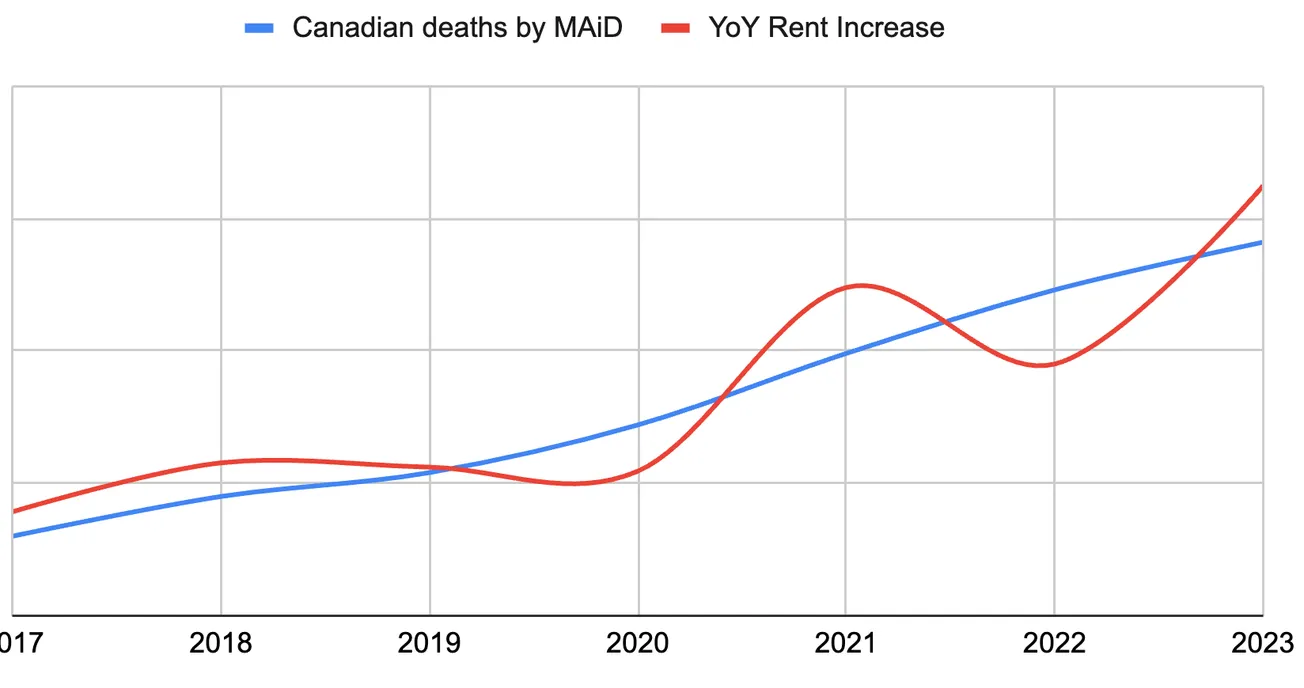
Canada’s Medical Assistance in Dying (MAiD) program is attracting renewed criticism as critics warn the country’s euthanasia policies are expanding faster than safeguards for vulnerable patients.
MAiD was introduced in 2016 for people facing imminent death, but eligibility widened in 2021 under Bill C-7 to include more patients living with chronic suffering, shifting the program from terminal illness toward broader “quality of life” criteria. Reported MAiD deaths have risen sharply, reaching more than 16,000 in 2024—about 5% of all deaths nationally (!), and 7% of deaths in Quebec, the highest rate of euthanasia deaths in the world.
Concerns intensified after an Associated Press report in October 2024 described Canadian clinicians privately debating cases involving patients who sought MAiD amid poverty, depression, disability, long waits for treatment, even obesity. This policy makes MAiD a response not only to medical suffering, but also to social and economic distress, including job loss.
The debate has also widened to include organ transplantation. Canada has emerged as a leading source of organ donations following euthanasia among countries where the practice is legal, prompting warnings about ghastly conflicts of interest, especially as MAiD expands beyond terminal illness. In Quebec, fully 14% of organ donations comes from people who died under MAiD.
Canada has also reversed its policy on organ donations from prisoners. Now, prisoners can both apply for MAiD and donate their organs. What perverse incentives does this create?
Taken as a whole, Canada’s MAiD policy is functioning increasingly as a substitute for achieving actual needs, such as healthcare access, disability support, economic development, and housing supply.
Illustration: a chart correlating rent increases with requests for death by MAiD