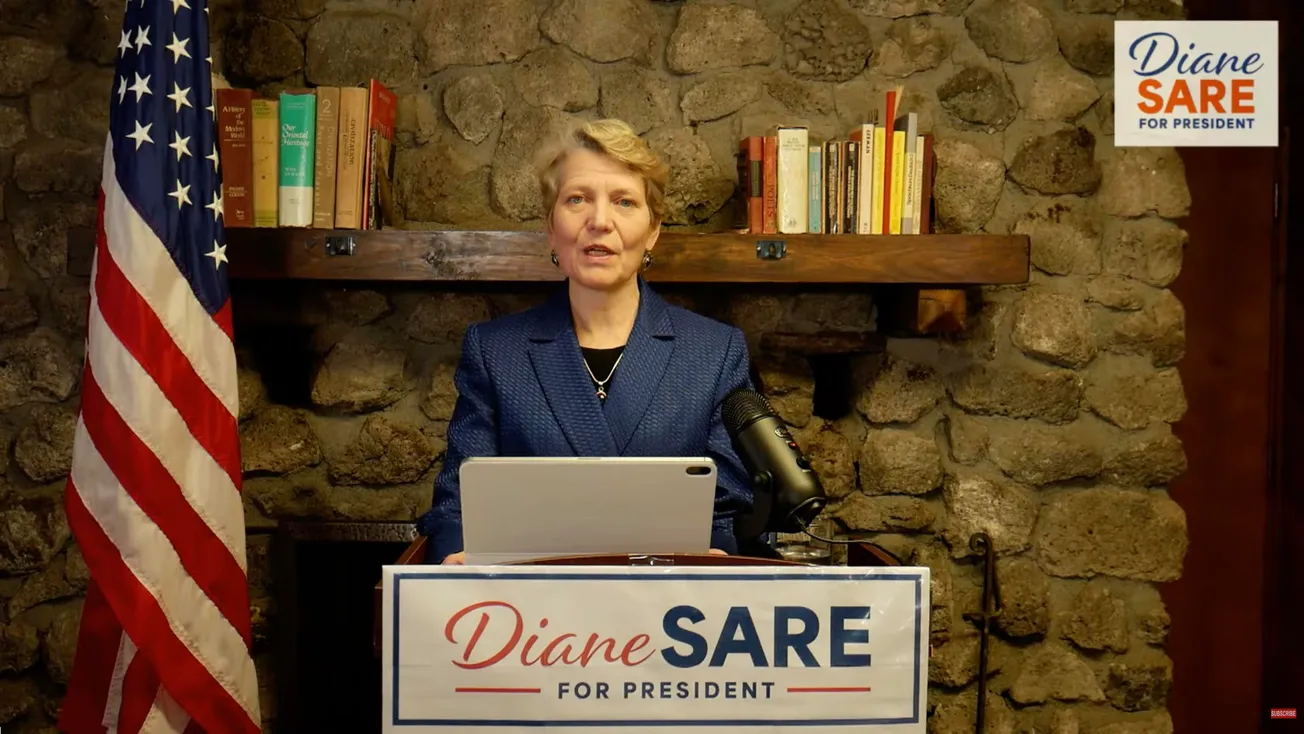
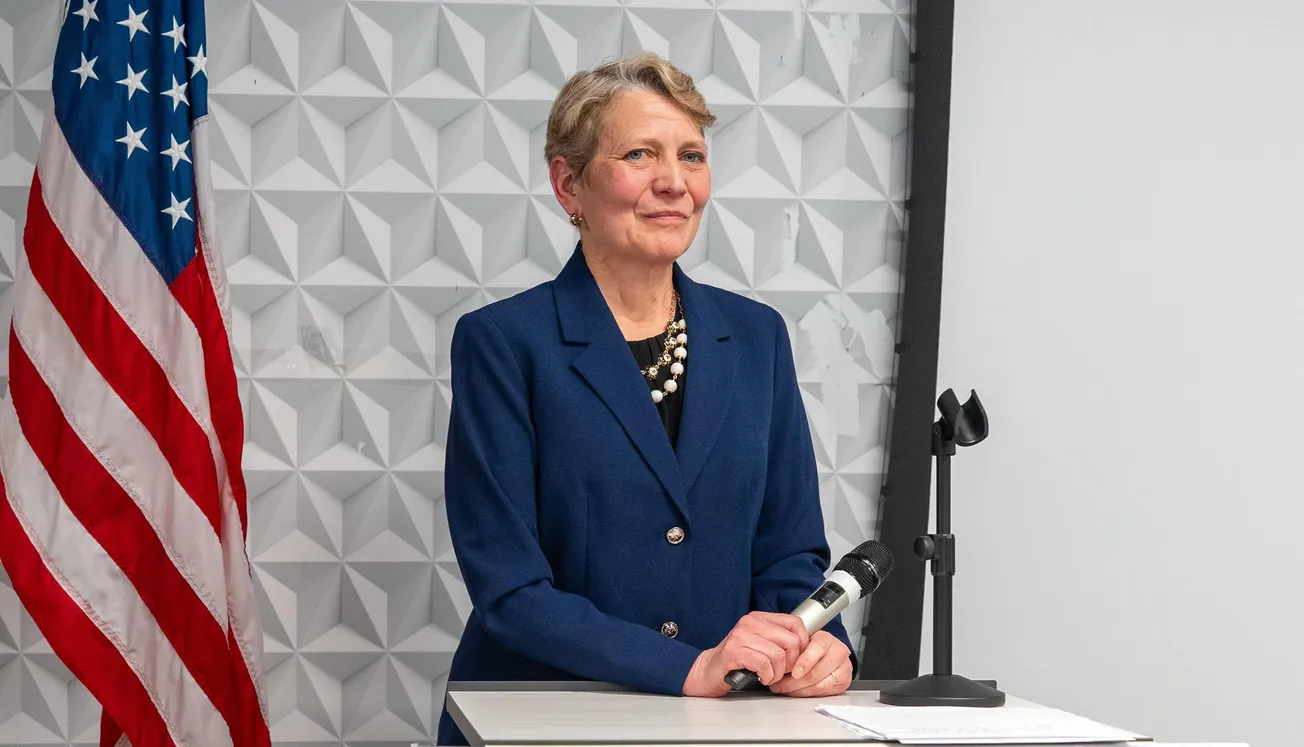
“In the 250th year of our Declaration of Independence,” writes LaRouche independent candidate for U.S. President Diane Sare, “CRAZY appears to have become the new normal. This situation must be immediately reversed or we face consequences that are unfathomable.” She offers what she calls a “cold shower” for those clinging to the belief that the chaos is strategic, controlled, or temporary.
The political class—the parties, the permanent bureaucracy, and the public that tolerates it—has normalized a level of irrationality that would have once been recognized as dangerous. “Crazy is crazy,” she insists. “Let’s admit it, and move forward from here.”
President Donald Trump has publicly declared that he has a “framework” for a deal “with respect to Greenland and, in fact, the entire Arctic Region,” supposedly reached after a “very productive meeting” with NATO Secretary General Mark Rutte—while officials from Denmark and Greenland don’t even know what he means. Denmark’s Prime Minister Mette Frederiksen responded that, while Copenhagen can negotiate on political issues, “we cannot negotiate on our sovereignty,” and Greenland’s Prime Minister Jens-Frederik Nielsen said he has no details on what was discussed, even as he stressed that sovereignty is not negotiable. Trump is announcing geopolitical rearrangements as if they could be worked out over a handshake, while the governments involved insist the core issue isn’t even on the table.
This is precisely the kind of episode Sare warns is no longer treated as the emergency it is, and she ties it to a wider collapse of serious thought in American policy and society. She calls Trump “more delusional than Shakespeare’s failing King Lear.” The danger, she argues, is not only what a President might attempt, but what the system and the population have learned to excuse.
Sare paints a picture of a country unraveling socially and economically—mass homelessness, record personal debt, repossessions, mortgage delinquencies—and then connects that instability to the growth of authoritarian behavior presented as a response to a self-declared emergency. She describes “masked, untrained ICE agents … roaming our streets harassing people of color, kidnapping immigrants from courthouses … and even shooting unarmed American citizens.”
Today’s report covers an internal ICE memo asserting the sweeping power to enter homes without a judge’s warrant, relying on administrative warrants instead—a direction that directly collides with Fourth Amendment protections and long-established boundaries between executive power and judicial authority. This isn’t about immigration; a country that shrugs at warrantless home entry as a matter of administrative convenience is not functioning like a constitutional republic; it is training itself to accept something else.
But Sare’s most uncomfortable accusation isn’t aimed at Trump, or even Washington.
It’s aimed at the public.
”[Y]ou, dear reader, are to blame,” she writes, accusing Americans of choosing silence, or even applause, rather than rejecting the lunacy.
“The first step is to let go of the defense of insanity. Just drop it,” she writes. “What we are seeing from almost everyone in Washington, D.C., including the Democratic Party’s so-called ‘opposition’ is insane. There is no need to defend it.”
Sare’s remedy is global in scope: Reorganize the system through bankruptcy-style restructuring, restore fixed exchange-rate stability, revive Glass-Steagall banking separation, establish national banking, and launch an international development push—from nuclear power and high-speed rail to water projects, skilled-labor training, and even fusion and space.
But the immediate question her statement raises isn’t a technical one. It’s civic: How long will Americans tolerate government-by-delusion?
“Crazy is crazy,” Sare concludes. “Let’s admit it, and move forward from here.”
One way to move forward is today’s meeting of the International Peace Coalition, featuring Schiller Institute founder Helga Zepp-LaRouche, Dr. Ted Postol, MIT Professor Emeritus and one of the world’s leading experts on nuclear weapons, and others.