ANASTASIA BATTLE: Welcome everyone. This is the International Peace Coalition. Thank you all for joining us today. This is our 138th consecutive meeting. My name is Anastasia Battle and I will be your moderator as well as Dennis Small and Dennis Speed, who is coming back after a short break.
As people know, we created this forum 138 weeks ago in order to unite the international peace movement; which is now probably the most important mission that we’re all taking on today. We welcome anyone from different religions, languages, nationalities, philosophies to our discussion today. Share out this invitation with your organizations, friends, and your reasonable enemies, because it is very important. We do have a special guest on today, Prof. Ted Postol, whom we will get to shortly. This will be a lively and important discussion for all of us to be part of.
To start us off today, we have Helga Zepp-LaRouche, who is the founder of the Schiller Institute and the initiator of the International Peace Coalition. Please go ahead Helga.
HELGA ZEPP-LAROUCHE: Hello to all of you. The new year, which is still very young, still feels like sitting in a roller coaster where there is one curve, one steep fall, and then up again, is exchanging themselves with each other. It’s definitely a stormy beginning to the year, which started off on Jan. 3rd with the intervention in Venezuela, kidnapping President Maduro; then on Jan. 7th, President Trump gave an interview to the New York Times in which on the question of what international law he respects, he answered by saying, I only follow my own mind, my own morality. I do not need international law. These developments, on top of everything else going on, caused the EIR team—this is the magazine founded by my late husband more than 50 years ago—to decide to hold an Emergency Roundtable to assemble outstanding individuals from around the world to discuss what is needed to reestablish international law. I don’t think that without it, the world is a safe place. We will talk about that later in the discussion.
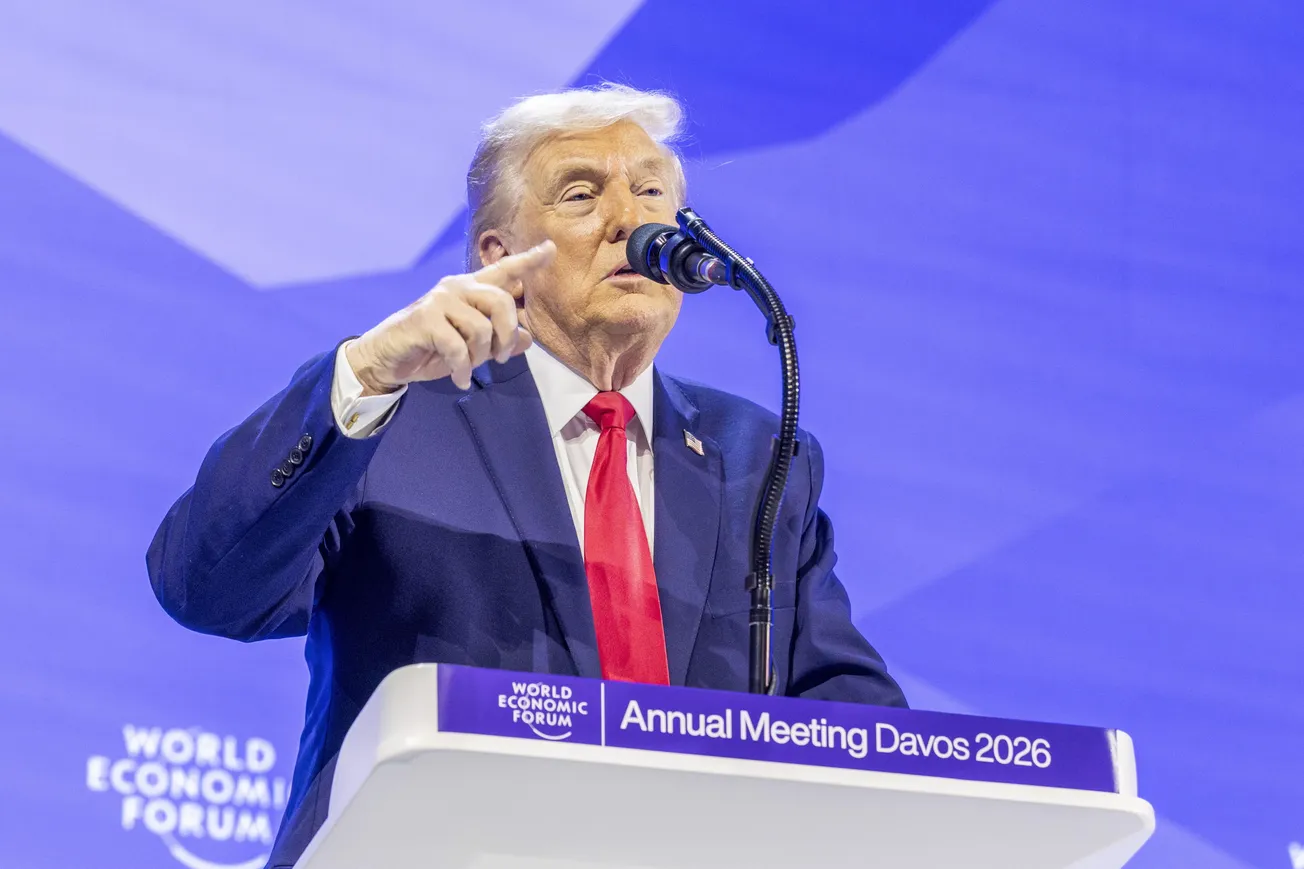
The newest development after the Davos speeches and especially the incredible speech by President Trump, which I will comment on in a second, already two days later we find ourselves in another rather significant development. This time I would say optimistically that the glass is half-full, and using the words of Ray McGovern, maybe even a little bit more than half-full. What this refers to is the news that yesterday the meeting between the American delegation of Witkoff, Kushner, and a third individual, I think his name is Gruenbaum, met with President Putin in Moscow for four hours. The official readout from Ushakov said, “This was exceptionally substantive, constructive, extremely frank heart-to-heart discussion.” In this meeting, President Putin was briefed on the previous contact the Americans had with the Europeans and the Ukrainians on the question of various outstanding topics. In the readout it also says that it was stated again in the meeting between Putin and the American delegation that without resolving the territorial issues, agreed-upon lines from the meeting in Anchorage, Alaska between Putin and Trump earlier in 2025, it would not be worth counting on a long-term settlement. But that refers to the fact that the core interests of Russia have to be taken care of in any settlement. That was very promising. And today, Friday, there is already a follow-up meeting in Abu Dhabi, the first trilateral working group on security issues involving the Russian, American, and Ukrainian representatives. There is also, parallel to that, an economic group on a bilateral level, including Kirill Dmitriev from the Russian side and Witkoff from the American side.
The interesting thing is that the Russian delegation in Abu Dhabi is headed by Admiral Kostyukov from the GRU, a top advisor of Putin, who is the individual who briefed the U.S. military attaché in Moscow on the findings concerning the drone attack on Putin’s residence in Valdai in Volgograd; namely the physical evidence involving who provided the data to the Ukrainians. That is a top hot issue, and that particular individual, Admiral Kostyukov, is top in the negotiations. So, I think this is very interesting and very promising. The Russians also said they would provide $1 billion for the reconstruction of Gaza; this was also Putin’s response when he was invited to join the newest proposal by President Trump to create a so-called Peace Council. Many people were invited, among them Putin; and he sort of jokingly said, “Yes, I will pay the $1 billion, and you can take it out of the frozen assets.” This seems to be directed towards Gaza, if an agreement comes about. And also that the remaining frozen money could be used to reconstruct the territories in Ukraine which would then be part of the Russian part—namely the Donbass and similar things.
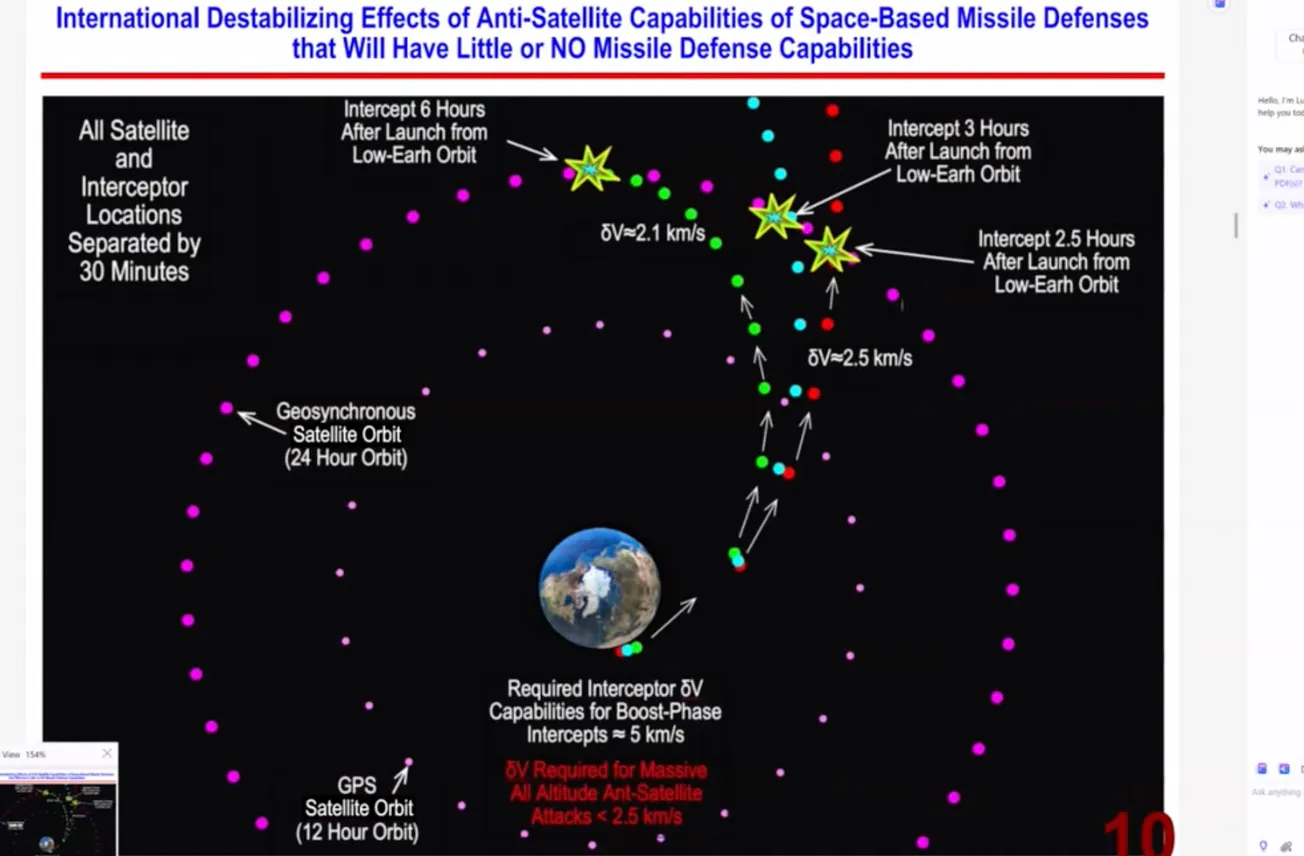
It was also stated that if this Ukrainian agreement comes to fruition, then there would already be large projects decided between Russia and the Americans to be carried out. As I said, it’s a roller coaster, and we can only be relieved if this is absolutely for sure settled. But I would say that given the fact that there is right now from the Russian side such a statement, I think it is a sign of hope. If this is continued, it could really shift the balance. I can only say that given the world situation, which is in a really unbelievably shaky situation, it is too early to stop being mobilized, because in the speech in Davos, President Trump said many things, but the most important focus was on Greenland. He said again and again he wants to own Greenland, not just militarily use it. This was again, as if you can just go and grab other people’s territory around the world. This was a big thing, because obviously the question is, why does Trump want to own Greenland? In the Davos speech, Trump said the purpose is that Greenland would be necessary for building the so-called Golden Dome, which is supposed to be an ironclad defense system the United States wants to have in a couple of years. We invited the very well-known expert Ted Postol to tell us his findings on what the story is behind the Golden Dome. So, I will not even try to discuss the content of that because we have more qualified people on the program to do so. All I can say is that immediately afterwards there was a discussion between President Trump and NATO Secretary General Rutte, in which this whole threat was again reduced by saying that they came to an agreement that there will be no ownership on the agenda, and the issues can be settled between NATO and the United States without the issue of the sovereignty of Greenland or Denmark being discussed. One has to say that neither President Trump nor NATO Secretary General Rutte have in any way the mandate to negotiate over the sovereignty of a NATO member, namely Denmark, and also Greenland. So, we have to see how that will play out. In any case, the present situation, unless we have an absolute agreement, we cannot be in quiet waters.
Also if you look at the rest of the world, it remains extremely tense. Already on his way back from Davos on Air Force One, Trump said when asked about what is happening with Iran, “A big flotilla is going in this direction. I don’t want to see anything happen, but we are watching closely,” making one of these typical mafioso-like statements—you better watch out or else. There is actually a massive deployment of American warships in the direction of the Mediterranean and the region in general; both from the South China Sea various aircraft carrier groups, also from the United States, are on the way. F-16s have already been deployed into Jordan.
Obviously this comes on top of the sanctions and the efforts to provide protesters inside Iran with technology like Starlink to bypass the clampdown on the internet. There were demonstrations in which the issue was regime change; that seems to have calmed down after some back and forth, but why do these massive military deployments into the region take place? Then you have Trump’s ominous statement; so let’s watch and see. We have to remember in June, when the Israelis and the U.S. attacked Iran, there was also diplomacy going on and statements about talking. But then out of the blue came this attack.
So, the trust in the world has somehow significantly decreased. Also, if you look at the overall situation, it remains fraught with many insecurities. On Feb. 6th, the new START Treaty, the arms-control treaty, is running out. Putin had made the offer to prolong it for one year in order to find a new agreement. Trump had made some ambiguous statements about “Let’s see.” But nothing conclusive has happened, and as of now we are still something like two weeks away from the expiration of the last arms-control treaty. And looming is a massive arms race in all areas, including nuclear arms. Also, it has not been revoked that this year the U.S. medium-range missiles are supposed to be stationed; an agreement which was concluded between Biden and Chancellor Scholz outside of the NATO meeting in Washington in 2024. That has been clearly answered by Russia as an absolutely not-to-be-tolerated development, because these weapons can be nuclear-armed. They have dual use, but the Russians would have to assume that they could have nuclear warheads. And the Dark Eagle cruise missile has a range of 2700 km, which is far into the territory of Russia. There have been various statements by the Russian side that that would make Germany a prime target for attack if these missiles are stationed there in an overall fragile world environment.
So, that is why what I think we have to discuss is not only to get an assessment of the situation which we will hear from both Ted Postol and also Jens Jorgen Nielsen from Denmark on the situation in Denmark and Greenland. But we should also then in the discussion period, discuss how to continue the initiative which came out of our EIR Emergency Roundtable from Jan. 12th, where we decided that we would launch an unprecedented worldwide mobilization to reinstall a discussion about international law. We also have a new proposal which I want to announce here. This comes from a French group, and it is a petition to reactivate the UN Charter as it was designed initially. It lists certain points. We will put this in the chat for people to discuss, and if people agree we will include that in the package of our activities. Because out of the EIR special meeting, there is now a political action meeting which has been formed that will meet in the next several days to discuss the many proposals of how to build this international movement. So, stay tuned and get active with us; because this is, in my modest opinion, the most important effort to get back to a system of international law. So, this is what I wanted to say in the beginning.
Remarks during the Discussion:
I think that question being raised requires some serious consideration because the first-use principle has never been abandoned by the United States. President Biden in his election campaign had promised he would abandon the first-strike concept, but when he was President he never did that. Then we have to consider what was mentioned by Rear Adm. Thomas Buchanan in a conference of CSIS in November 2024, where he gave an incredible speech, saying the United States could win a tactical nuclear war, and that as long as they would make sure that they would have enough nuclear weapons as a superior capacity over all other nations afterwards, this was OK. Unfortunately Prof. Postol is no longer here, but he has many times made the argument in his books, but also in presentations—as a matter of fact, one recently in Berlin—where he argued in great detail and with great expertise why the very idea of a tactical nuclear war is stupid; it’s not feasible because it is the nature of nuclear weapons that once you start using one, it’s the logic of nuclear war that all of them would be used. He claims that within five days, any use of nuclear weapons would be escalating to a global nuclear war. And if that happens, the nuclear winter would follow and therefore, in a matter of months all life on the planet would vanish, because that nuclear winter would remain for ten years or more.
He has made many presentations which we have on our website. Also, Prof. Steven Starr has made very important videos, and I have urged every time when they made such presentations that all members of the IPC should help to disseminate these videos so that every single human being on the planet can watch them. Because as Postol in particular has demonstrated in graphic detail, the difference between conventional war, as horrible as it may be—and just remember the rubble field at the end of the Second World War—nevertheless, nuclear war is so much more devastating. Not only the immediate impact of the nuclear weapons, but especially the firestorms which would then erupt and rage in vast areas of the world; burning down everything and just an absolute horror show. So, the very idea that you would risk the existence of the entire human species with even starting to think about using nuclear weapons shows you in what absolute grave danger the human species finds itself. That is why I can only say that the only rational response to all of that is to build a peace movement worth the name. Because that is not what we have; we have very important peace initiatives, but they are not all united and therefore they are not effective. My answer to you, Jens, is basically that the question of the shake-up you report in Denmark, we have to have a movement in every single country of people who demand a return to international law. I would just make the comment that I would not call it a rules-based order, because the very idea of rules is that it’s arbitrary. The idea that you have to have international law as it is approximated in the UN Charter, which corresponds in principle to the idea of existing law above manmade law, which is called natural law. I think we have to have a grounding in a legal or actually in a lawful order which is something philosophers have been thinking about for centuries. The whole debate about natural law in Europe, cosmology in India, and similar other cultures which had similar notions to express this idea of a higher lawfulness on which we have to ground our politics on Earth.
Anyway, I just would like to encourage the building of the international civil movement defending the UN Charter, defending the idea of returning to international law as the only possible answer we should have to these threats.
[re Q on not funding ICE] Very good idea. When we discussed in the EIR emergency session, and last week in the IPC meeting, we agreed that we need an international movement in every single country. In light of also what Prof. Postol said about the condition of the United States, and the fact that he said it does require Americans to deal with it, I think it would be very good to create such an organization from the standpoint of not funding this effort. Even if what Prof. Postol said is only half true, that would be bad enough to do exactly that. I think the comparison to what happened in Germany 90 years ago should really get everybody extremely concerned and start to look at this in a very serious way. That’s why I think we are in danger of a collapse into barbarism. Let me put it positively. The Pope, who is an American after all, has come out in several of his sermons over the Christmas-New Year period blasting not only war—he said the very idea of using war as a means of conflict resolution has to be absolutely outlawed. And he blasted the treatment of the migrants; demanding that the Christian virtues of how to treat the poorest and weakest in a human way is obviously being completely violated in the way that migrants are not even being treated as human. The fact that the United States has now put on an index I think 37 some countries where the people are no longer welcome to come to the United States is also the very opposite of the idea of America as a melting pot. I always used to think that some parts of the United States—maybe not every part, but some parts like New York—were a perfect example of how you can integrate many nations into one well-functioning society. But obviously this now completely out the window, and I think this is an extremely dangerous development, because it’s not just people who are running away from war and political prosecution It is emphatically the many hundreds of millions of economic refugees; people who cannot maintain their living standard, and that’s why they are risking their lives in most case, to become migrants. So, I think we need to really fight for the humanity of our human species. If you look at everything on the planet together, it is hair-raising how much genocide, how much civil war, hunger is going on which is all entirely unnecessary. I’m not proposing to redistribute wealth; even so I think it’s perverse and obscene that some multi-billionaires want now to become trillionaires, which I think is the utmost sign of insanity. But I’m saying that with modern means, modern science and technology, we could eliminate poverty probably within half a year. We could eliminate hunger; we could eliminate the lack of fresh water in a few years. But we could eliminate poverty in a very brief period of time if there was the political will to do so. I think that’s why we need this movement of people who are taking on that fight in earnest.
[re China defending Russia to prevent Western attack] I think that is really not needed, because starting with the Feb. 3, 2022 meeting between President Putin and Xi Jinping, where two weeks before the special military operation [against Ukraine] started, they announced a strategic partnership which was really a qualitative shift. They have reasserted many times since that the strategic partnership between Russia and China is absolutely ironclad, and therefore by implication anybody should know that once they start a war with Russia, they would get not only China, but also North Korea. Because North Korea by now is also in a military partnership of such a kind; that has also been underlined by Putin repeatedly.
Otherwise, I think if you want to find something positive in this ocean of negativity, it is the fact that the European economies and armies are in such a pitiful condition that the idea that they would, in the near future, start a war against the Russian Army is just ridiculous. Look at the British Army; I think they have 70,000 people in their army. Now, according to the latest reports in the Daily Telegraph, it was said they are now calling men up to 65 years old to join the reserve to be called upon in the case of war. I mean, I like older people; I think people should have a lot of respect for older people. I think that’s a good advantage in China, where the older people are much more respected than in the West, but give me a break, you know? You have rheumatism, you have creaky bones, you have all kinds of problems when you’re getting older. The very idea that they would fight against a well-trained, combat-experienced Russian Army is just ridiculous. That is also part of the reason I think that Macron, Meloni, and Merz are now saying maybe we should start talking to the Russians again. There is a realization that without the United States it doesn’t work. The U.S. is NATO; that’s the reality of it. Everybody with this erratic behavior who thinks that if there is an attack on Berlin by the Russians, that Trump would risk the existence of Chicago, San Francisco, and New York is really not thinking in their right mind in the first place. That is why we have such complete disarray in this situation. Whatever people assumed is no longer there. There is no more collective West; I think that’s a reality, and therefore while the situation is very dangerous because of an unexpected or some crazy mistake or mishap, technical error, there is the danger of an unintentional war. But I think we are in a period where we urgently need to give ourselves a clear foundation; because we are swimming in an ocean of broken down assumptions.
[re Carney speech at Davos and U.S. Trade Rep Greer, who only gets tariffs from Hamilton, not the American System] I think Mark Carney said something which is obvious; that the whole rules-based narrative was a fraud. Everybody who is not completely stupid knew that the whole time. Everybody knew the rules-based order was the double standard; it was the idea that might makes right. If you can enforce your will, then you make the rules, and if not, then too bad. That was pretty clear, so for Mark Carney to say this at this point is sort of the most obvious thing after the fact. I must say that some people are praising him. I think that also shows that people really don’t have a sense of economics, because Mark Carney was the author of the Great Reset policy. The entire Green paradigm which ruined Europe to a large degree, long before the sabotage of Nord Stream occurred, and long before the access to Russian gas was cut off, it was the Green reset policy which completely undermined the European economy. Who was the author? It was Carney. Also, in the Jackson Hole, Wyoming annual bankers meeting in 2018 or 2019, it was Carney who suggested that normal governments should no longer determine fiscal and monetary policies, financial policies, but that the central banks should do it directly. So, if you want to have one incarnation of the financial oligarchy, it is him. So, I just want to say that. I have not heard one word out of his mouth which would convince me that he has moved away from these previous convictions at all.
Concerning Greer, I think that point is very well taken, because the idea that tariff policy is identical with Hamiltonian policy was already the big shortcoming when Trump announced it in the first place. Tariff policy with Hamilton was to protect nascent economies to make sure that they would not be flooded by free trade domination from countries that were more developed, which would extinguish their ability to develop their rudimentary industries. But we have to really fight sophistry and the idea of confusing the notions, because it is an effort to control the narrative. That’s why Confucius was absolutely right when he said at the beginning of any serious debate, you have to clearly clarify the notions, because if everybody understands something different under the same notion, then confusion results. He attributes that confusion of notions even to the downfall of entire countries.
So, I think we need a real discussion of what Alexander Hamilton is; what is the difference between the American System of Economy and the British economy? We have not only Hamilton himself, but also the various Reports on Manufactures and so forth; and we have Friedrich List who has written a lot about that difference; we have the economic advisor of Bismarck who wrote a beautiful little writing against the stream, where he discusses exactly what that difference is. We have Henry C. Carey, and we will have classes on all of that; including the classes for the youth movement that Daniel was talking about. So, stay tuned with us, and you will find out what the difference is and why just using the names is not sufficient. The essence of the American System of Economy and Hamilton is what Lyndon LaRouche developed more sharply; namely that the only source of wealth is the creativity of the individual, because it is only the creative power of the human being which can again and again discover physical principles which mean a higher degree of productivity once they are applied in the production process. Subsequently they lead to an increase in the living standard, in longevity, and the relative potential population density of the planet. I have not seen that there was any such attempt by Mr. Greer to emphasize or even speak intelligently about how to foster the creativity of the American population. Because otherwise, you would have to kick out Hollywood; you would have to kick out the drug traffic, for sure, by closing down the banks in Wall Street and elsewhere. So, these things are not just words; they have substance and content to them.
Closing Remarks:
I would like to encourage all people who are listening and are concerned about what the fate of humanity will be, to join our movement. We now have, out of the EIR Emergency Roundtable seminar, developed a group of people who want to become like the steering committee to pursue all proposed activities. We will be meeting in the next several days. Then we will make the results of those discussions public, not the least in the next IPC meeting. But there are various proposals on the table, from creating approaches to governments, working with UN organizations, creating new civil society locales for everywhere in any country on the planet where like-minded people exist, they should get together, form an organization, and decide on actions to take.
If you are in any way worried about what will happen to the world and you want to do something, join this movement. It’s now the best time to do it. We want to become a world movement of world citizens. The slogan is “Citizens of the world, unite!” I think really nothing less will do the job. We absolutely have to arrive at a New Paradigm. We have to discuss the principles of this New Paradigm. There are a lot of proposals on the agenda which all go in the same direction, starting with the Peace of Westphalia Treaty; the proposal by myself for a new security and development architecture which must take into account the interests of every single country on the planet for it to function; the initiative by President Xi Jinping, the Global Governance Initiative, which is a very concrete idea of how to organize such a New Paradigm; and there is the encyclical Populorum Progressio by Pope Paul VI from 1967, because that means the development of all people. So the idea that you have to have a world order which allows the maximum development of the potential of all nations is not a new idea. It has been around for quite some time, and now is the moment in which we have to really make it into reality. You should absolutely take it as your commitment and responsibility to help to bring that into being.