

The greatest danger confronting the United States today, and much of the trans-Atlantic world, is not that it lacks resources, talent, or scientific capacity. It is that it no longer believes in the human mind—in the unique power of human beings to discover new physical principles, transform nature, and improve the conditions of life for generations yet unborn.
As Lyndon LaRouche once stated the issue bluntly: Do Americans still believe, in any significant way, that man is different than an animal? He posed this question at a 2004 event honoring Martin Luther King, Jr.:
Our teaching, we don’t teach that. Look at our standard curriculum. … What our education policies are now, nationally, are a crime. You don’t know anything—you learn to pass a test!…
We’re no longer concerned. We don’t believe, as a nation—we don’t believe in developing people! We have become like Rome, ancient Rome, a society of “bread and circuses.” Get your crumbs, and be entertained. …
For example, today, do people work? Is their mentality one of working? Do they believe in work? Do they believe the society gives them the opportunity to work? No. It doesn’t. It gives them the opportunity to get some money. …
The mentality of the country is that if you’re getting lucky, and winning the lottery, and winning at the track, that you’re getting ahead. Even though your industry is collapsing, your farm is gone, the city government can no longer afford to take care of your essential needs: We’ve gone into becoming a gambling society.
We rely on what? Mass entertainment! … Isn’t this something you really should be ashamed of?
We no longer regard human beings as human. We no longer understand what is human.
Against that civilizational decay comes the view of human identity implicit in today’s news report from China: The drive for controlled nuclear fusion is approaching a decisive phase, with major procurements underway and serious industry leaders now projecting net fusion gain and electricity generation by around 2030. Fusion, they insist, is no longer merely a physics experiment—it is becoming an engineering project, with industrial planning, real investment horizons, and the intention to make it economically viable.
This is what a society looks like when it is organized around the future. Not the future of quarterly profits, social-media hysteria, or geopolitical theatrics—but the future of human civilization itself. A nation committed to fusion is a nation committed to the idea that progress is real, that development is possible, and that the dignity of labor and discovery is not a slogan, but a mission.
Will the United States, and other nations of NATO, reclaim the moral and intellectual courage to take on such missions? To build a world defined not by empire and manipulation, but by cooperation in great projects worthy of the human species?
What we see coming from the White House is not leadership. It’s King Lear: a hollowed-out authoritarian demanding loyalty while the kingdom sunders, surrounded by flatterers, prone to tantrums and misjudgments, and confusing spectacle for legitimacy. Martin Luther King was the opposite species: not a performer hunting applause, but a servant of a mission, rooted in the forgotten men and women, measuring power by uplifting the least, and absolutely refusing the cop-out of “going along to get along.” As LaRouche put it: “As a leader … you have to find within yourself the strength not to flinch. Not to compromise.”
We need the moral courage to know that life is a talent, and that the only authority worth having is that which comes with improving the lives of others.
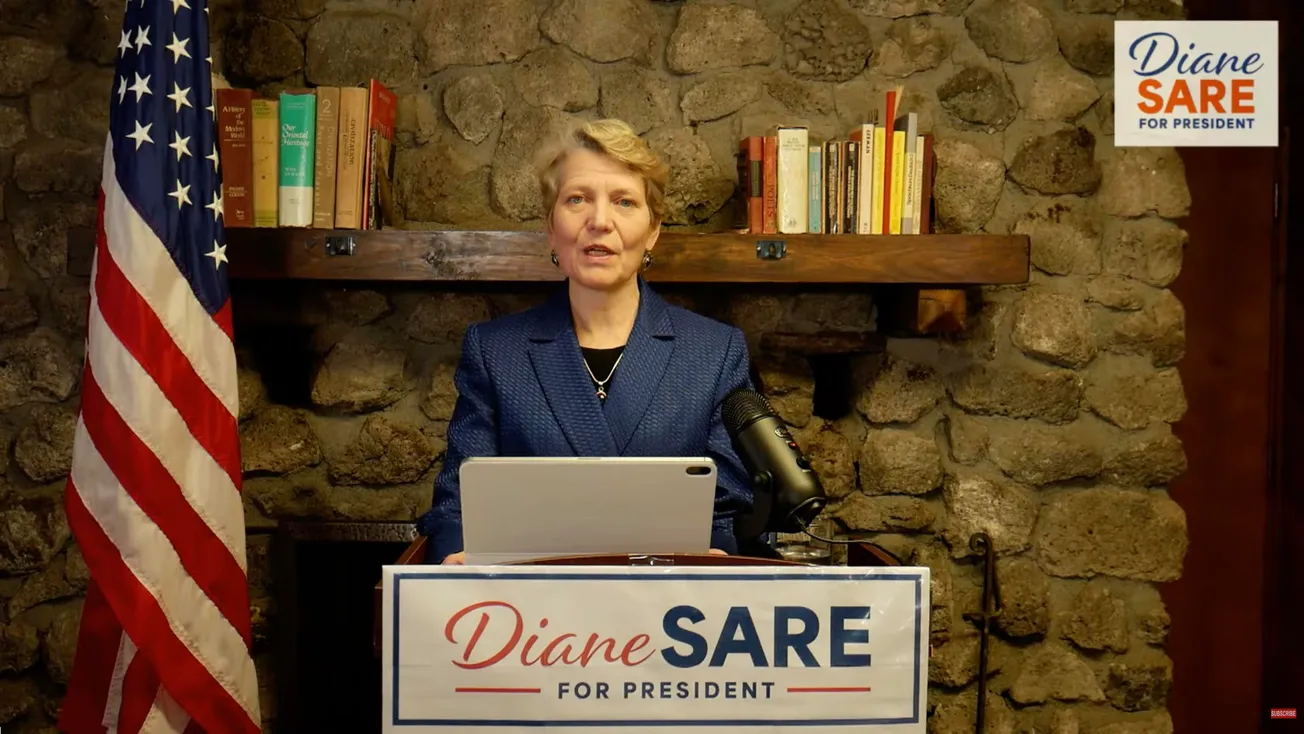
That authority is demonstrated in the highlight video EIR has released of its Jan.12 roundtable. That authority is demonstrated in the campaign of LaRouche independent candidate Diane Sare, running for the office of President of the United States.
Will we choose to become truly human?