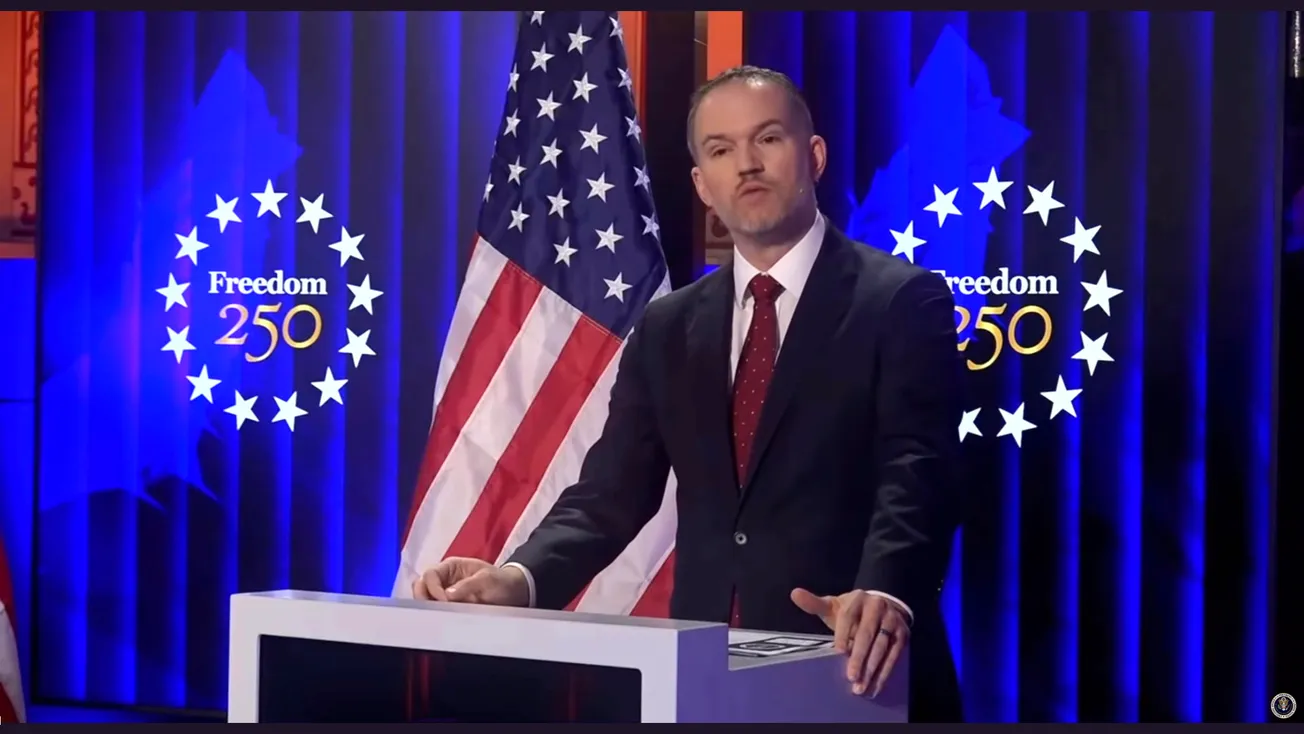
United States Trade Representative Jamieson Greer delivered a prepared speech at the Davos World Economic Forum on Jan. 20, which carried the promising title “The Hamiltonian Economic System That Too Many Have Forgotten.” But the speech, which has received a certain amount of attention among those interested in an urgently needed economic policy change in the United States, fails to deliver on its promise. In fact, the most generous interpretation one might have of Greer’s article is that the author himself is one of those who have “forgotten” the real Alexander Hamilton. One wonders, however, if the intention was not to deliberately mislead the public, at a time when Hamilton’s full policies are so needed to address the current crisis—as Lyndon LaRouche constantly reminded the public.
In a nutshell, Greer equates Alexander Hamilton with the word “tariffs”—and nothing but tariffs. He mentions Hamilton’s famous 1791 “Report on Manufactures,” but somehow “forgets” to discuss three other crucial Hamilton reports that together made up a single unified policy for the first Treasury Secretary: “Report on Public Credit” (1790); “Second Report on Public Credit” (1790); and “On the Constitutionality of the Bank of the United States” (1791). These reports discuss in detail the need for a national bank, the crucial role of directed credit for productive activity, the dangers of financial speculation, etc. Greer’s speech, predictably, says nothing whatsoever about the issue of banking and credit. The only time he comes close, is when he quotes Abraham Lincoln: “My politics are short and sweet, like the old woman’s dance. I am in favor of a national bank. I am in favor of the internal improvement system, and a high protective tariff.” But the topic is never touched again.