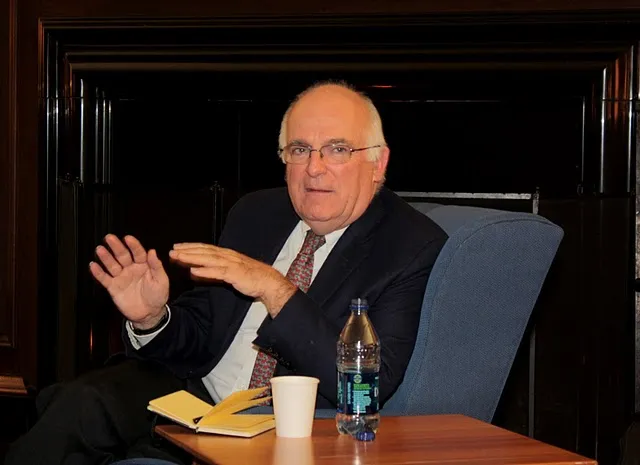

Peking University scholar Lei Shaohua argues in a long and thoughtful commentary that U.S. technology sanctions against China have failed to halt China’s innovation because the two countries operate fundamentally different innovation systems. While American restrictions can delay China’s growth, Lei thinks they cannot stop it.
The professor traces how U.S. pressure evolved from targeted actions, like the 2019 sanctions on Huawei or the chip restrictions that intensified in 2022, into broad controls on semiconductors and AI. Washington expected China’s technological momentum to stall.
But the effect of sanctions has been to accelerate, rather than hinder, China’s economic progress. Lei pointed to fields such as AI, chips, robotics, drones, EVs, batteries, solar power, biopharma, and advanced medical equipment. He said the early 2025 release of China’s DeepSeek AI model challenged assumptions about China’s limits.
His core explanation is simple: technology and industry are inseparable. Innovation isn’t just invention; it requires manufacturing capacity, supply chains, capital, and massive real-world demand to scale and iterate quickly. Lei argues China’s advantage comes from its “whole industrial system,” huge market, and state-backed infrastructure.
He also warns sanctions can backfire, turning bottlenecks into national priorities (as seen in the case of semiconductors) while China’s own export controls on strategic materials like heavy rare earths expose deep vulnerabilities in U.S. defense supply chains.
Washington’s sanctions strategy relies on a logic that is no longer applicable. Blocking access to advanced technology cannot stop China, which has moved into a new phase where innovation is driven by industrial depth and internal demand.
Lei concludes that the U.S. model relies on global division of labor and chokepoint control, while China’s model is built on domestic industrial integration. That difference, he says, is why sanctions are more like a speed bump than a barrier wall.