The Lead
Initiatives Against Unilateralism
by Marcia Merry Baker (EIRNS) — Feb. 03, 2026
Amidst the extreme turbulence in world events, one pattern is noticeable as positive, even if not decisive at present, and that is the growing opposition to unilateralism in international relations.
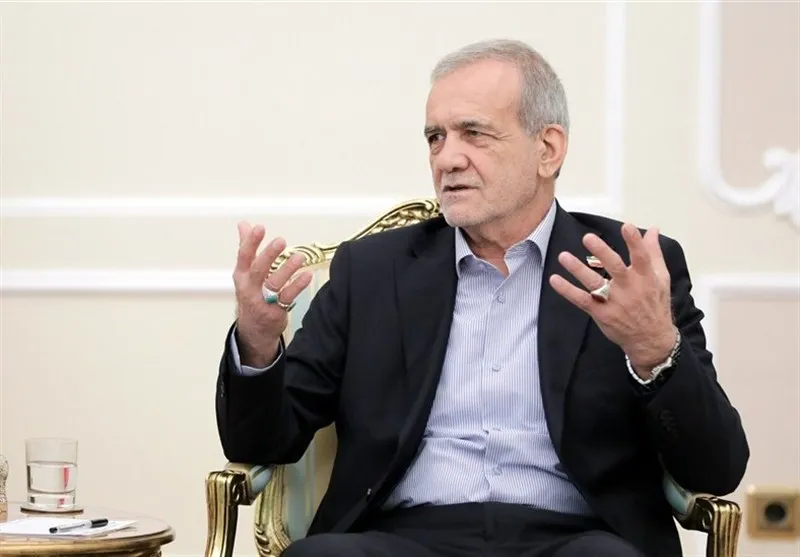
In the case of Southwest Asia, the stance of the United States and Israel that might-makes-it-right for them to exercise a unilateral, repeat attack on Iran, is encountering a chorus of opposition in the form of demands for diplomacy, not force, and in active interventions by neighboring nations. Compared to even last July, neighboring countries have been much more forceful in warning against any military intervention. Saudi Arabia, the United Arab Emirates, and Jordan, all staunch allies of Washington, have also all announced they will not allow use of their airspace for military operations against Iran.
It is reported that for the Feb. 6 meeting between Iran and United States representatives in Istanbul, high-level envoys are also expecting to attend from Egypt, Saudi Arabia, Pakistan, the U.A.E., and Qatar, as well as from Turkiye. This multilateral engagement remains of interest, even though, as of late tonight (Feb. 3), there is talk of moving the venue of the Feb. 6 meeting to a location in Oman.
In the all-important case of the Feb. 5 expiration of the New START Treaty to curb nuclear arms, an expiration because the United States is unilaterally blocking negotiations, certain nations are actively collaborating to look ahead at what can be done. To reiterate: If President Donald Trump would announce a last-minute agreement to accept President Vladimir Putin’s offer of September 2025 to continue arms-control talks following the New START expiration, the world would be grateful. But to date, no such sane U.S. response has emerged.
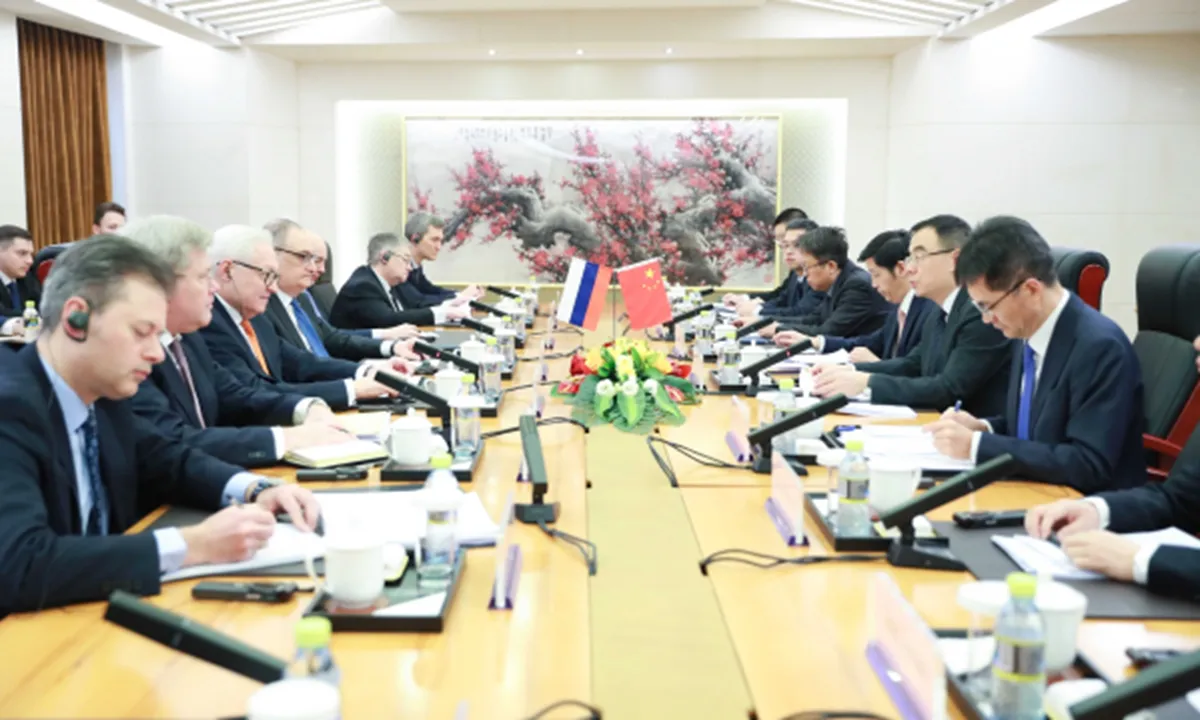
Facing this, Russian and Chinese top officials were meeting in Beijing over Feb. 2-3 for what they call “strategic security consultations.” The Russian delegation is led by Deputy Foreign Minister Dmitry Ryabkov; his counterpart is Chinese Assistant Foreign Minister Liu Bin. Ryabkov described the U.S. non-reply to Putin’s offer in this way: a “lack of an answer is the answer.” Russia and China intend to collaborate even more closely on security in the coming period.
Among the points made by Ryabkov from Beijing, are, first: “We have significant resources to guarantee our security in the form of the systems already created and deployed. The modernization of the Russian nuclear triad is at an extremely advanced stage. New systems have also emerged that did not exist when the [START] was signed.” Second, with regard to Trump’s announced “Golden Dome,” in particular involving Greenland, Ryabkov said: “If they take the path of pumping this region with some kind of systems, if they begin to introduce elements of their ‘Golden Dome’ concept there, this will already be a situation requiring military-technical compensatory measures, and our specialists will be fully prepared for this.” This is a dangerous turn of events, but results directly from U.S. unilateral intransigence.
China’s President Xi Jinping used strong language about the worsening unilateralism, without naming the United States. Speaking this morning, Feb. 3, at the time of his meeting with Uruguay’s President Yamandu Orsi, the first leader from Ibero-America to make a state visit to China in 2026, Xi denounced the danger of “escalating unilateral bullying.” Xi stated his support to Uruguay, which will assume the rotating presidency of the Group of 77 Plus China, as well as the Community of Latin American and Caribbean States (CELAC), and Xi pledged to strengthen solidarity and cooperation with Uruguay in the Global South, and to promote a multipolar world.
The international mobilization committed to turn these critical initiatives into a new world framework to benefit all nations, and end even the nuclear war threat, is currently spearheaded by the effort behind the circulation of the “Declaration of January 12: Let Us Create a Movement of World Citizens!” The joint statement, issued by a grouping of participants in an online dialogue hosted at an EIR Roundtable on Jan. 12, denounces “aggressive imperialism and neocolonialism,” and presents action pointing toward “a New International Security and Development Architecture.” Read, sign and circulate this approach, and plan to attend the next discussion, March 2.
Contents
Strategic War Danger
- Donald Ramotar: A Global Catastrophe Could Follow the End of New START (↓)
- Russia and China Hold ‘Strategic Stability Consultations’ as New START Lapses (↓)
- Russian Foreign Ministry Points Out the Proliferation Risks from Western Non-Nuclear Nations (↓)
- Russia's Moratorium on Strikes in Ukraine Has Ended (↓)
Collapsing Imperial System
- NATO Chief Makes Pop-Up Visit to Kiev, Addresses Half-Empty Rada (↓)
- Draghi: Europe Superstate of the Willing Now (↓)
- What Future for Haiti? Its Economy Unravels, Its 'Government' Dissolves (↓)
U.S. and Canada
New World Paradigm
- Xi Jinping, Hosting Uruguay’s President, Calls for Cooperation in a Multipolar World (↓)
- Mozambique Commissions Graphite Production Plant Built by China (↓)
Science and Technology
- Kazakhstan Developing Nuclear Power with Russia and China (↓)
- China Announces New Plan for Developing Space Resources; Reflects on Ming Dynasty’s ‘Galaxy’ Outlook (↓)
Harley Schlanger Update
Watch The Daily Update with Harley Schlanger, a short video update available every weekday morning from The LaRouche Organization.