
On Jan. 29, the China Aerospace Science and Technology Corporation (CASC) introduced its five-year roadmap. It includes plans for space tourism, orbital digital infrastructure, satellite mega-constellations, deep-space exploration, and space resource development.
The plan is looking at developing suborbital tourism within the five-year period, followed by a phased transition toward orbital passenger services. The tourism will, however, be state-supported, in an attempt to make it the catalyst for a broader commercial system.
The satellite program envisions satellites performing computer-intensive tasks directly in orbit, forming a space-based cloud layer (similar to current computer “cloud-based” storage and retrieval on Earth) powered by continuous solar exposure. This will reshape the economics of Earth observation, secure communications, autonomous navigation, and defense-adjacent analytics.
China will also increase its presence in deep space exploration. Just days before the announcement, the University of the Chinese Academy of Sciences launched its School of Space Exploration, which will focus on advanced propulsion, trajectory modeling, and long-range mission design.
China has also filed numerous applications for reserving satellite constellation spectrum and orbital slots for future systems, numbering in the hundreds of thousands of satellites over the coming decade. Control over spectrum (presumably electromagnetic communications wavelengths) and orbital slots determines who can deploy at scale, who faces interference constraints, and who shapes future standards.
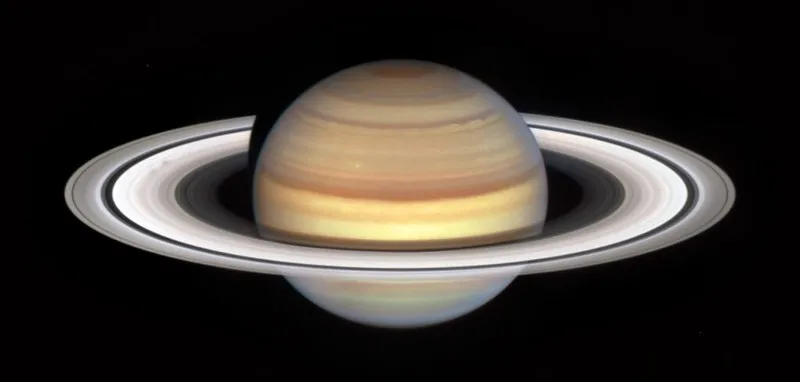
Most fascinating, perhaps, is China’s program for developing space resources. The plan is to build a vast interplanetary fleet to extend resource exploration and mining operations to Mars, Jupiter, Saturn, Mercury, and Venus. It is called Tiangong Kaiwu after a Ming-dynasty (1368-1644) encyclopaedic work outlining the major scientific advances of that period. It hearkens back to the Ming-dynasty scientific philosophy that “Materials are born of nature; humans transform them through craftsmanship.” Ming dynasty motifs are now “trending” in a major way in China, including in films, advertising, and even clothing.
The idea for Tiangong Kaiwu was published in 2023 by a CAS Academician Wang Wei. Centered on Earth, the plan outlines a phased development system extending from cislunar space—the space between the Earth and the Moon—to deep space. “Developing near-Earth small celestial bodies not only allows access to strategic minerals for Earth’s sustainable development, but also provides fundamental materials for future space facilities and interstellar travel,” Wang stated in the paper. “These near-Earth objects almost all contain water and many also contain precious metals like nickel, platinum and gold.”
According to the CASC plan, from 2026 to 2030, China will conduct demonstration missions to extract resources from near-Earth celestial bodies in order to verify technical feasibility. By around 2035, it aims to establish a lunar resource development system and a near-Earth small-body mining system to supply resources between Earth and the Moon.
Around the year 2075, China is expected to achieve the capability for in-depth exploration and resource development of Jupiter, Saturn, Mercury, and Venus. By around 2100, China will supplement the construction of resource supply stations, thereby establishing the capability for resource development across the entire Solar System.