There are at present many points of escalating belligerence in the world, from military confrontation, to financial/economic warfare. This spells both increased danger, especially in the case of the Persian Gulf, where there is the threat of triggering nuclear war, to otherwise needless suffering and chaos, as we see with horror in the eastern Mediterranean and Caribbean Seas. The necessity of counteraction is clear, and every initiative counts.
Even as the talks in Geneva took place this past week between representatives of Ukraine and Russia, plus the United States, sanctions were renewed by the U.S. against Russia. On Feb. 18 Washington announced that any sanctions implemented by successive U.S. administrations in recent years against Russia will all continue for another year.
On Monday, Feb. 23, in Brussels, the European Union Foreign Affairs Council will meet, with an agenda to include the 20th package of EU sanctions against Russia, and the question of the mega €90 billion loan to Ukraine. There may be proposals for more extreme search-and-seize naval powers against Russia directly or indirectly. On Feb. 20 EU foreign affairs chief Kaja Kallas ranted to reporters in Poland that Russia took a “maximalist” approach in Geneva, and must be backed down by extreme pressure. She attended a meeting in Krakow of defense ministers of the European “Big Five”—the U.K. plus EU states France, Germany, Italy and Poland—which held a bizarre discussion of how to make new attack-drones to use against Russia, while saving money by avoiding the expense of missiles. This program is called LEAP—Low-Cost Effectors and Autonomous Platforms.
In Ottawa on Feb. 17, Prime Minister Mark Carney issued details of his new “Defense Industrial Strategy” to build Canada’s war machine, especially to counter Russia in the Arctic.
All the while the United States has an estimated one-third of its extensive international force deployment now concentrated in the Persian Gulf area, counting the USS Gerald R. Ford aircraft carrier group, currently steaming eastward through the Mediterranean Sea. President Donald Trump, instead of commentary focused on resolution of the conflict in the region, has been characteristically issuing real estate-deal type ultimata to Iran about how Tehran must acquiesce to the U.S. terms within 10 to 15 days, “or else.” The latest report is that Tehran, as it has been doing, is offering proposals for settlement.
In the financial/economic sphere, the high tragi-comedy continues with President Trump wielding his tariff weapon wildly against the whole world. On Feb. 20, acting like Rumpelstiltskin, the President stamped his foot in rage at the Supreme Court for ruling as illegal his use of tariffs over the past year. Trump said he will continue his policy, even though by other means, and with delays. Today, Feb. 21, he announced a global surcharge of a 15% tariff on imports into the United States from all nations, effective immediately, up from the 10% surcharge he announced on Feb. 20, effective next week. The 15% level is the maximum rate under the section of the Trade Act of 1974 the President is invoking, in order, as stated in Trump’s Proclamation issued Feb. 20, “To Address Fundamental International Payments Problems.” However, the measures deployed throughout the first year of Trump’s second term—along with his White House tariff team, have predictably backfired, and are fueling even more economic breakdown. The overview on this process is available in the current issue of the weekly EIR, and on EIR.news.
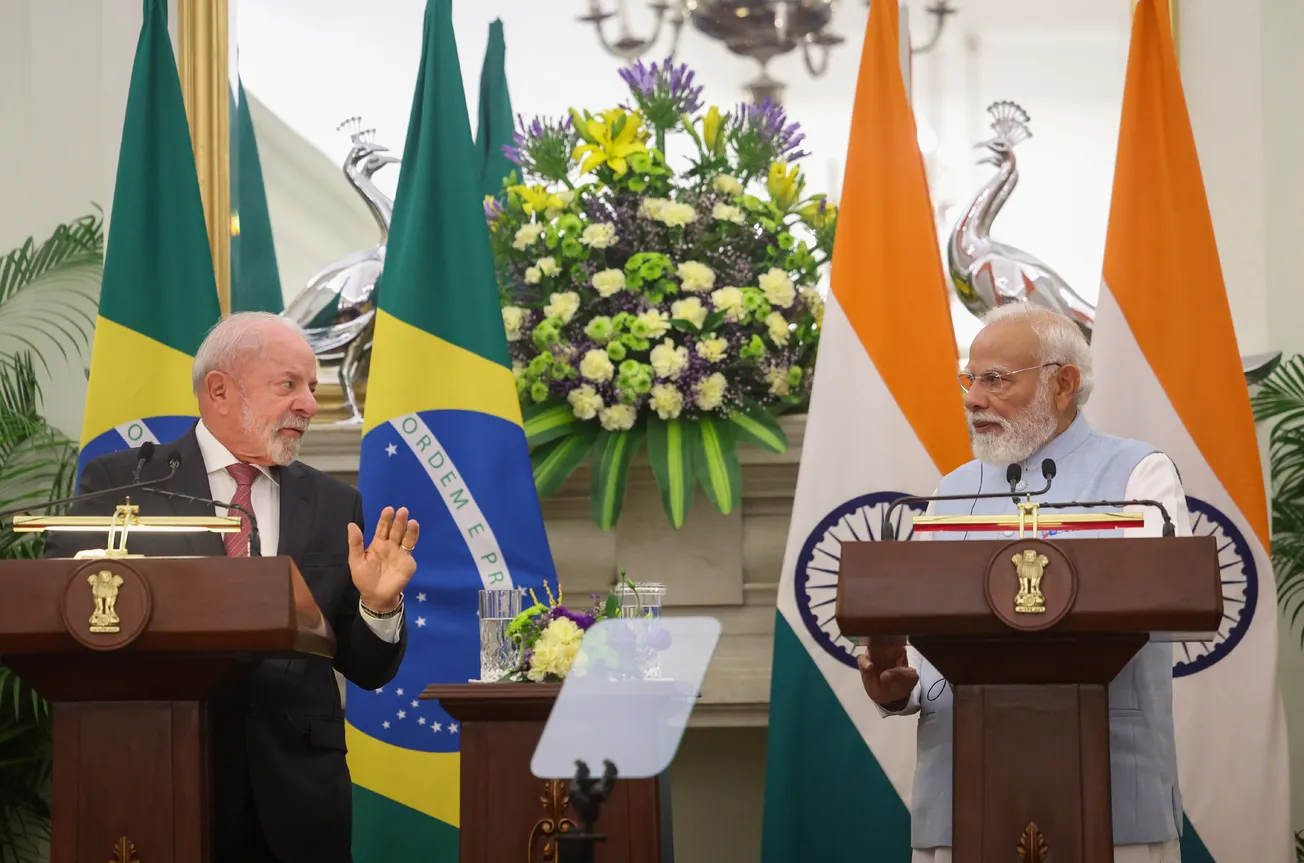
An instance of the opposite, positive approach to improving trade relations for mutual economic benefit is shown in the news out of New Delhi on Feb. 21, where Brazilian President Luiz Inácio Lula da Silva and Prime Minister Narendra Modi have held talks, and overseen signing mining and other deals intended to reach $20 billion in annual bilateral trade in five years, up from the current $15 billion. Concrete measures include, for example, ways to help India increase its steel output capacity, a requirement for new infrastructure and other needs for the most populous nation on Earth. Lula also said on Feb. 19 in India that the two nations will conduct much of their trade in their own currencies, outside the dollar exchange.
All initiatives and discussions count toward a new world economic and security architecture, as promoted most strenuously by the Schiller Institute and collaborators. Take note of the new statement on Feb. 19, issued before the Feb. 24-27 summit of leaders of the CARICOM (Caribbean Community and Common Market), by eight former heads of state or government from seven Caribbean nations. The leaders “call upon the International Community to provide Cuba with desperately needed humanitarian assistance.” They state, “We will never accept the doctrine that might makes right. Economic warfare waged on differences of ideology and political systems is no less odious in our single university than military invasions anywhere for territorial aggrandizement.”
In France and Belgium, a petition has been initiated, “For an Immediate Reactivation of the UN Charter in Support of Multilateralism.” The petition statement calls for an “immediate cessation of interference by Western countries (the United States and its allies) in nations that do not conform to their worldview,” and declaring, “we do not want war.”
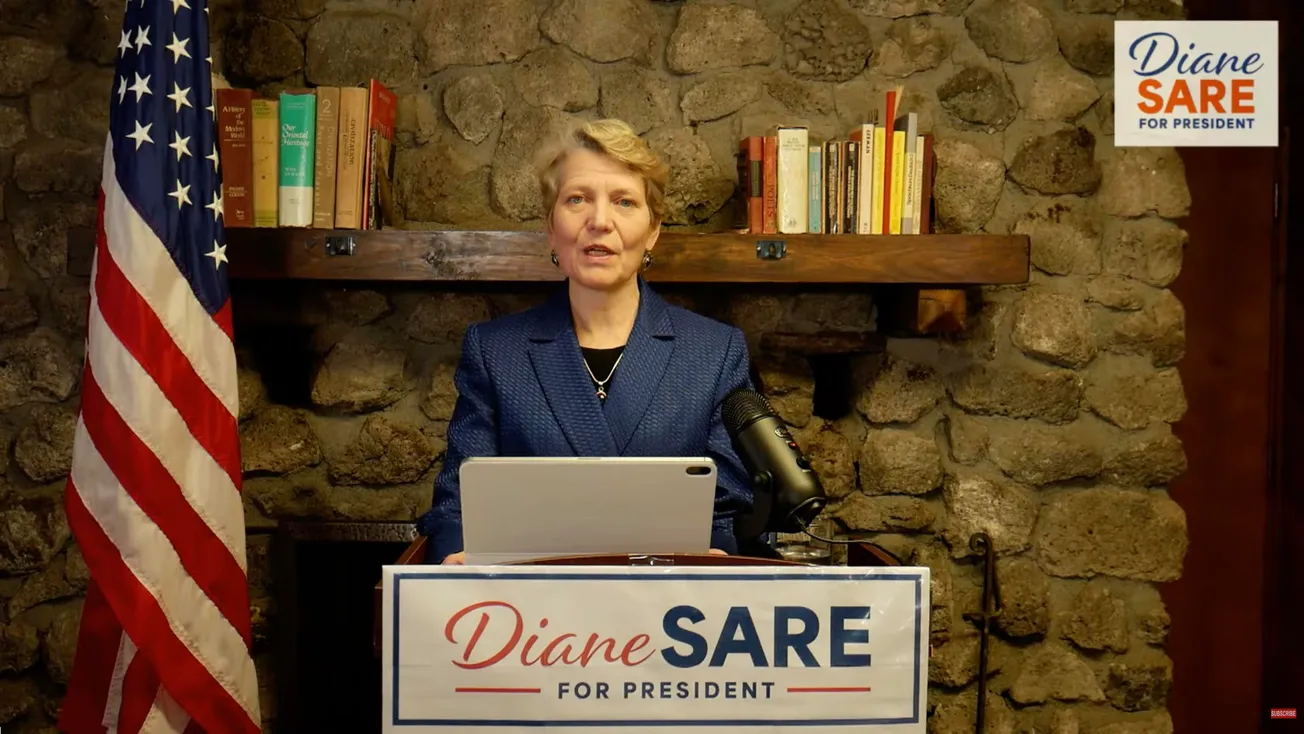
In the political arena in the United States, Diane Sare, candidate for U.S. President, announced on Feb. 21 that she will give her own State of the Union address on Feb. 23, Monday evening at 8 pm (ET), one night before President Trump’s State of the Union (billed as “Strength & Peace") on Feb. 24 at 9 pm (ET). Sare said, “I will present the truth of the crises affecting the American people and our nation, and I will make concrete proposals for how the economic and security-related problems can be solved.”
A key point in this discussion and action process internationally is the March 2 online conference, “Epstein and the Bottomless Depravity of the ‘Elites’; Urgent Need for a Cultural Renaissance!” Registration is open.